THE ADVENTURE COLLECTIVE® · Independent discovery and booking for outdoor travel

Spend a private day on Luxor’s east bank exploring Karnak’s columned halls, the layered history of Luxor Temple, and the curated finds of Luxor Museum. This practical half- to full-day tour bundles logistics and local knowledge into an accessible cultural walk.
Spend a private day on Luxor’s east bank exploring Karnak’s columned halls, the layered history of Luxor Temple, and the curated finds of Luxor Museum. This practical half- to full-day tour bundles logistics and local knowledge into an accessible cultural walk.
The morning opens on the east bank of the Nile with light sliding across stone columns and a river that seems to dare you to slow down. On this full-day private tour visitors move from the forest of towering columns at Karnak to the intimate courtyards of Luxor Temple, then into the cool galleries of Luxor Museum—each site offering a different dialogue between stone, sun and human ritual.
Verified experiences and guided adventures in the surrounding area.
Operated by Ra Egypt Tour Guide · Luxor, Luxor Governorate
The morning opens on the east bank of the Nile with light sliding across stone columns and a river that seems to dare you to slow down. On this full-day private tour visitors move from the forest of towering columns at Karnak to the intimate courtyards of Luxor Temple, then into the cool galleries of Luxor Museum—each site offering a different dialogue between stone, sun and human ritual.
Karnak began as an idea in the Middle Kingdom and grew into a layered complex through pharaonic, Ptolemaic and Roman hands; its hypostyle hall reads like a timeline carved in sandstone. Luxor Temple carries later additions—Ramses II’s pylons and the mosque of Abu al-Haggag—evidence of continuous use and cultural layering. Geologically, the temples sit on Nile alluvium; the stones themselves are sandstone and quarried limestone, smoothed and inscribed by millennia of wind and water.
Practical guidance: this is a largely walking tour with stairs, uneven paving and long sun exposure—expect 5–7 hours on your feet. Mornings are cooler and photo-friendly; mid-day brings harsh light and heat. Guides typically handle permits and logistics, and a private air-conditioned vehicle is included, making transfers manageable.
Plan to wear breathable, conservative clothing that covers shoulders and knees, solid walking shoes, sun protection and a refillable water bottle. Carry small local currency for entrances, tips and snacks. Respect barriers and signage—these monuments are fragile. With a moderate level of fitness and basic preparation, the East Bank offers a compact, revealing slice of ancient Thebes that rewards careful attention with striking architectural moments and a clear sense of history.
moderate.
5–7 hours.
Moderate fitness: able to walk several kilometers over uneven stone and climb short flights of stairs.
This tour description notes that admission to Karnak and Luxor Museum is not included—confirm with the operator and bring cash for tickets.
Yes — the tour includes private air-conditioned vehicle transfers and pickup; you’ll be asked to provide a pickup point at booking.
Expect moderate walking: several hundred meters through temple complexes and museum galleries, with some staircases and uneven surfaces.
Children with supervision can join; limited mobility travelers may find uneven stone and steps challenging—contact the operator to discuss accessibility and vehicle drop-off points.
Luxor and Karnak formed the ceremonial heart of ancient Thebes; many structures were built and reworked from the Middle Kingdom through the Ptolemaic period.
High visitor numbers and environmental salts pose risks to sandstone reliefs—stick to marked paths, avoid touching carvings, and follow guide instructions to help preserve the sites.
Ra Egypt Tour Guide operates guided outdoor trips and adventures with an emphasis on safety, stewardship, and memorable experiences.
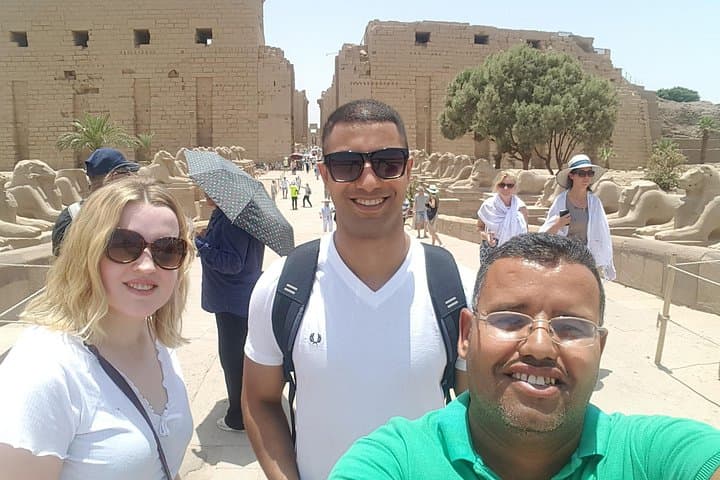
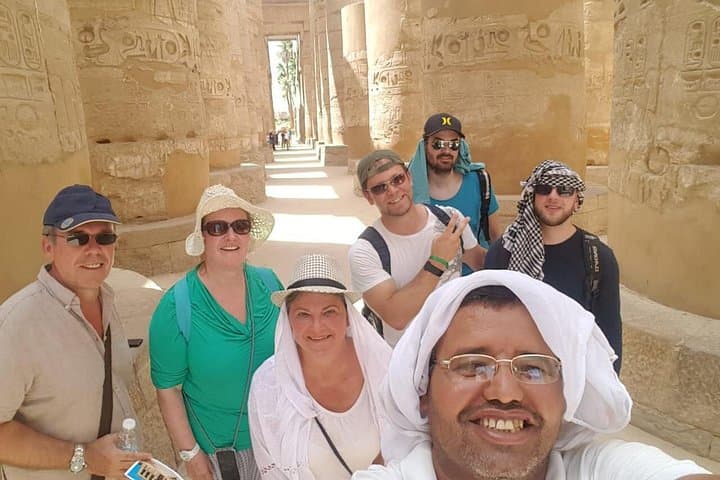
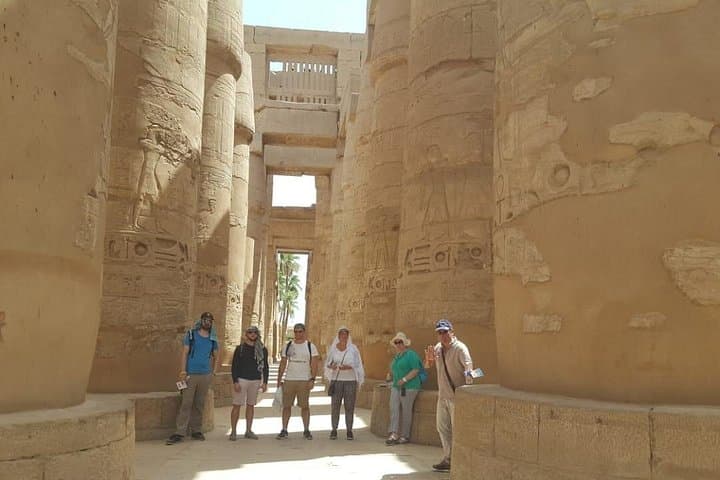
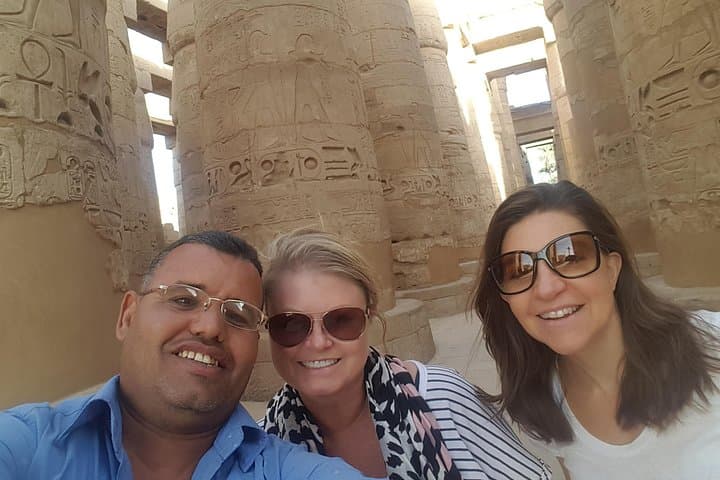
The morning opens on the east bank of the Nile with light sliding across stone columns and a river that seems to dare you to slow down. On this full-day private tour visitors move from the forest of towering columns at Karnak to the intimate courtyards of Luxor Temple, then into the cool galleries of Luxor Museum—each site offering a different dialogue between stone, sun and human ritual.
The morning opens on the east bank of the Nile with light sliding across stone columns and a river that seems to dare you to slow down. On this full-day private tour visitors move from the forest of towering columns at Karnak to the intimate courtyards of Luxor Temple, then into the cool galleries of Luxor Museum—each site offering a different dialogue between stone, sun and human ritual.
Karnak began as an idea in the Middle Kingdom and grew into a layered complex through pharaonic, Ptolemaic and Roman hands; its hypostyle hall reads like a timeline carved in sandstone. Luxor Temple carries later additions—Ramses II’s pylons and the mosque of Abu al-Haggag—evidence of continuous use and cultural layering. Geologically, the temples sit on Nile alluvium; the stones themselves are sandstone and quarried limestone, smoothed and inscribed by millennia of wind and water.
Practical guidance: this is a largely walking tour with stairs, uneven paving and long sun exposure—expect 5–7 hours on your feet. Mornings are cooler and photo-friendly; mid-day brings harsh light and heat. Guides typically handle permits and logistics, and a private air-conditioned vehicle is included, making transfers manageable.
Plan to wear breathable, conservative clothing that covers shoulders and knees, solid walking shoes, sun protection and a refillable water bottle. Carry small local currency for entrances, tips and snacks. Respect barriers and signage—these monuments are fragile. With a moderate level of fitness and basic preparation, the East Bank offers a compact, revealing slice of ancient Thebes that rewards careful attention with striking architectural moments and a clear sense of history.