THE ADVENTURE COLLECTIVE® · Independent discovery and booking for outdoor travel

Beat the crowds and heat with an early-morning visit to My Son Sanctuary from Hoi An. Enjoy a guided walk through Cham temple ruins, a local noodle breakfast and a return boat trip on the Thu Bon River.
Beat the crowds and heat with an early-morning visit to My Son Sanctuary from Hoi An. Enjoy a guided walk through Cham temple ruins, a local noodle breakfast and a return boat trip on the Thu Bon River.
At 6:00 a.m., the valley exhales a cool mist and the brick towers of My Son rise like weathered chapters against a pale sky. Small groups move deliberately along shaded trails; birds call from the palm fringes and the air holds the dry scent of ancient fired brick.
Verified experiences and guided adventures in the surrounding area.
Operated by My Son Tour · Duy Xuyen, Quang Nam
At 6:00 a.m., the valley exhales a cool mist and the brick towers of My Son rise like weathered chapters against a pale sky. Small groups move deliberately along shaded trails; birds call from the palm fringes and the air holds the dry scent of ancient fired brick.
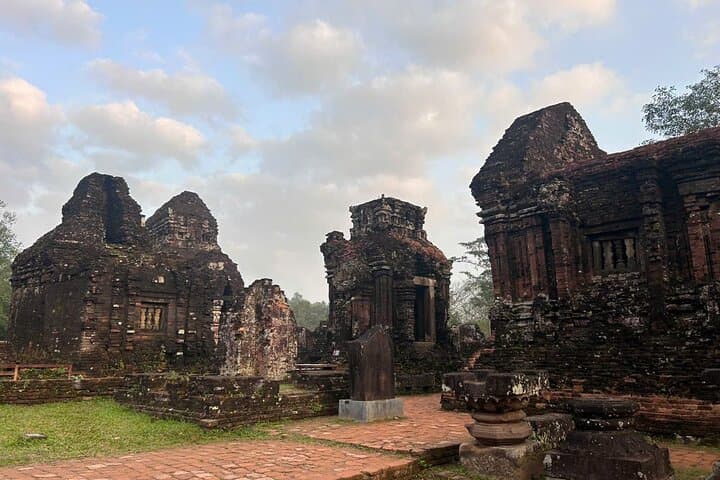
My Son was the religious heart of the Champa kingdoms from the 4th to the 13th century, a cluster of Hindu temples sculpted of red brick and sandstone. Geologically the ruins sit in a river valley carved from alluvial deposits and volcanic clays, which both preserved and complicated the site's conservation. Culturally this is Cham territory — expect explanations of iconography, myth, and the site's wartime damage and restoration.
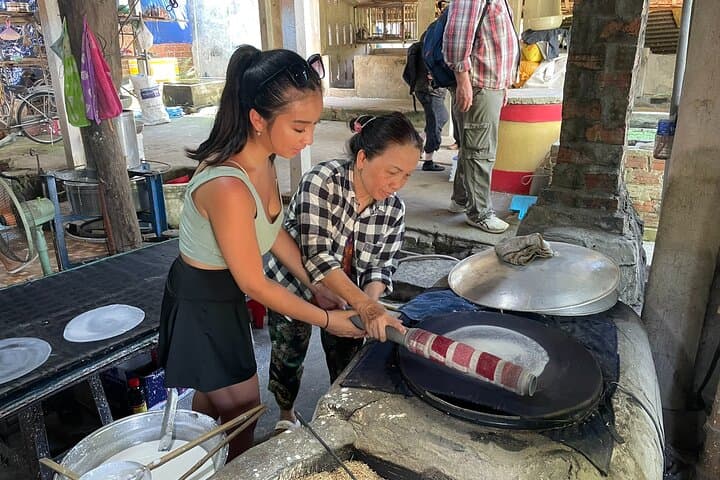
Practically, an early start matters: cooler temperatures, softer light for photography, and far fewer visitors. The itinerary commonly includes a short buggy into the archaeological zone, a guided walk across compacted dirt paths and low stone platforms, then a local breakfast of noodle soup and strong Vietnamese coffee at a nearby eatery. Afterward, many tours stop at a rice-paper demonstration and a calm boat ride on the Thu Bon River back toward Hoi An.
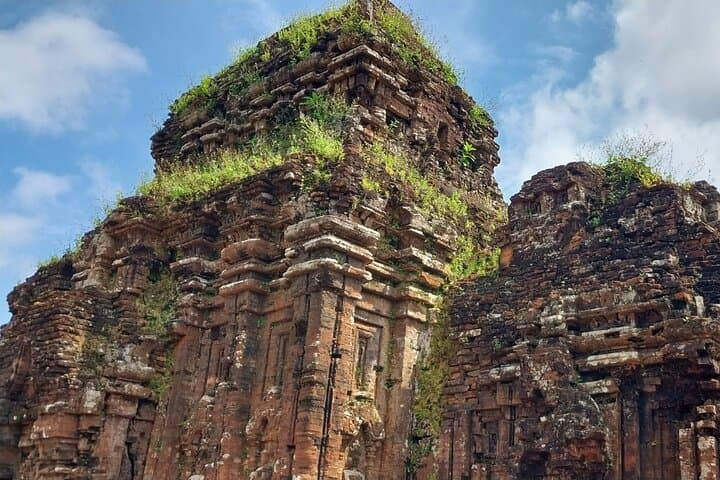
Prepare for uneven footing, sun exposure, and intermittent steps. Respectful dress is required at religious structures (shoulders covered, no shorts that are overly revealing). Bring water, a hat, and a charged camera; moving deliberately through the ruins rewards close-up details — glowing brick reliefs, shadowed lintels, and quiet courtyards where history still feels present.
easy.
2–3 hours.
Suitable for most fitness levels; involves light walking on uneven ground and some low steps.
This listing does not specify admission as included; confirm with the operator at booking—many operators either include the site fee or collect it locally.
Typical visits last about 1.5–2 hours on-site, part of a 2–3 hour morning itinerary including transfers and breakfast.
Yes—this is a low-impact itinerary with short walks and buggy transfers; notify the operator of mobility needs during booking.
Photography is allowed in most outdoor areas; avoid flash in enclosed chambers and follow any signage or guide instructions to protect fragile reliefs.
My Son was the spiritual center for the Cham kingdom from the 4th–13th centuries; many temples reflect Hindu deities and Champa royal patronage, later damaged during 20th-century conflicts and now under phased restoration.
Restoration and site management balance visitor access with fragile brick architecture—stay on marked paths, avoid touching masonry, and support local guides and workshops to help fund conservation.
My Son Tour operates guided outdoor trips and adventures with an emphasis on safety, stewardship, and memorable experiences.
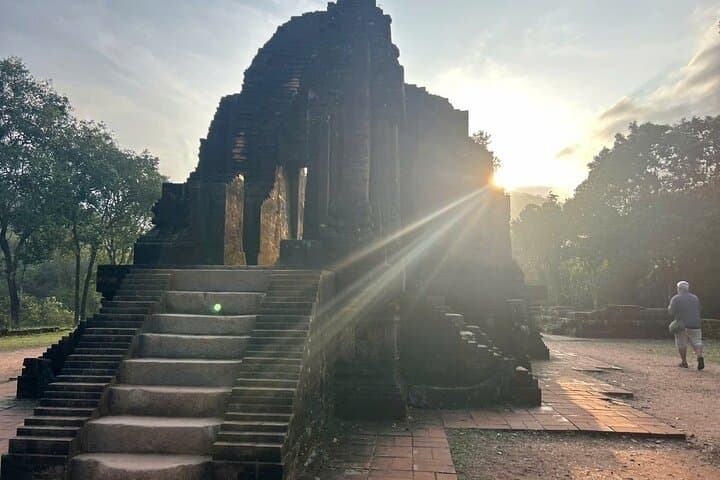
At 6:00 a.m., the valley exhales a cool mist and the brick towers of My Son rise like weathered chapters against a pale sky. Small groups move deliberately along shaded trails; birds call from the palm fringes and the air holds the dry scent of ancient fired brick.
At 6:00 a.m., the valley exhales a cool mist and the brick towers of My Son rise like weathered chapters against a pale sky. Small groups move deliberately along shaded trails; birds call from the palm fringes and the air holds the dry scent of ancient fired brick.
My Son was the religious heart of the Champa kingdoms from the 4th to the 13th century, a cluster of Hindu temples sculpted of red brick and sandstone. Geologically the ruins sit in a river valley carved from alluvial deposits and volcanic clays, which both preserved and complicated the site's conservation. Culturally this is Cham territory — expect explanations of iconography, myth, and the site's wartime damage and restoration.
Practically, an early start matters: cooler temperatures, softer light for photography, and far fewer visitors. The itinerary commonly includes a short buggy into the archaeological zone, a guided walk across compacted dirt paths and low stone platforms, then a local breakfast of noodle soup and strong Vietnamese coffee at a nearby eatery. Afterward, many tours stop at a rice-paper demonstration and a calm boat ride on the Thu Bon River back toward Hoi An.
Prepare for uneven footing, sun exposure, and intermittent steps. Respectful dress is required at religious structures (shoulders covered, no shorts that are overly revealing). Bring water, a hat, and a charged camera; moving deliberately through the ruins rewards close-up details — glowing brick reliefs, shadowed lintels, and quiet courtyards where history still feels present.