THE ADVENTURE COLLECTIVE® · Independent discovery and booking for outdoor travel

Beat the crowds on an early morning private tour of My Son Sanctuary. Walk between 4th–13th century Cham towers with a licensed guide, learn temple-building techniques, and enjoy cool valley light and fewer visitors.
Beat the crowds on an early morning private tour of My Son Sanctuary. Walk between 4th–13th century Cham towers with a licensed guide, learn temple-building techniques, and enjoy cool valley light and fewer visitors.
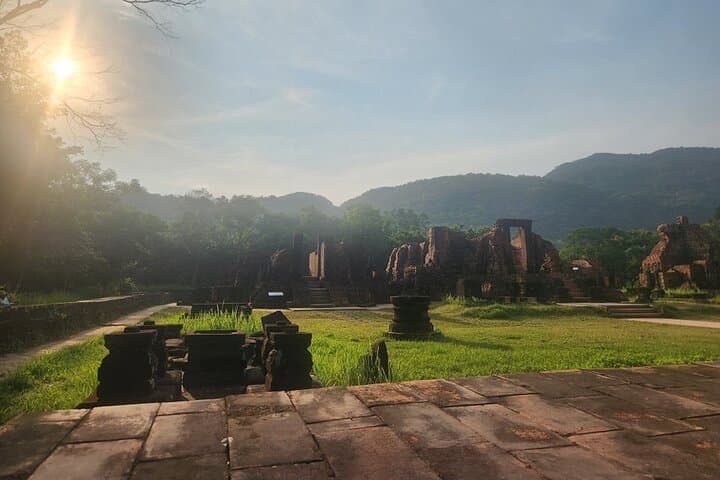
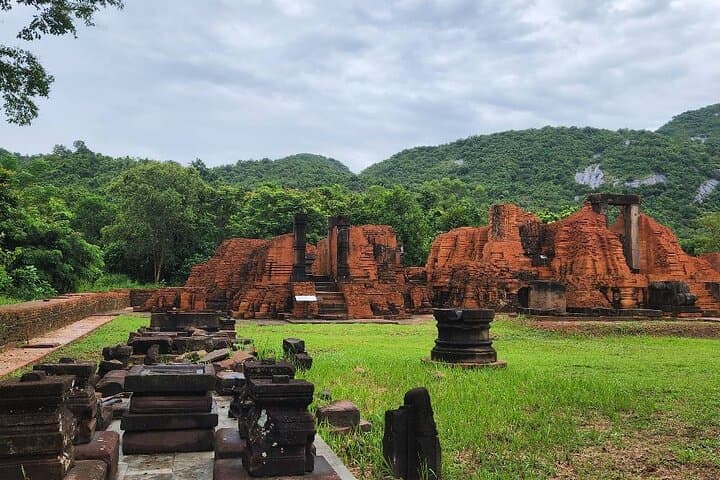
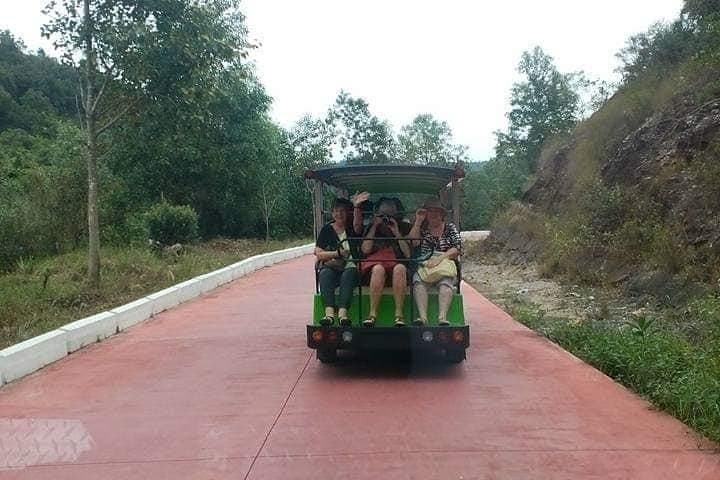
You arrive before the crowds, the valley still cool and the temple towers catching the first light. A shared minivan drops you at a buggy pad; a short walk threads through grass and low jungle to the ruined red-brick sanctuaries. Early morning is when the site feels alive — bird calls weave through open courtyards and the stonework holds a faint warmth from centuries of sun.
Verified experiences and guided adventures in the surrounding area.
Operated by Golden Bridge Tour Da Nang · Duy Phu, Quang Nam
You arrive before the crowds, the valley still cool and the temple towers catching the first light. A shared minivan drops you at a buggy pad; a short walk threads through grass and low jungle to the ruined red-brick sanctuaries. Early morning is when the site feels alive — bird calls weave through open courtyards and the stonework holds a faint warmth from centuries of sun.
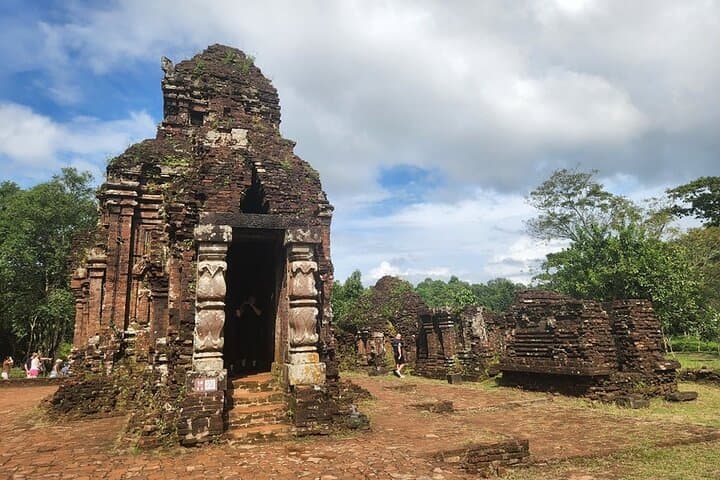
My Son was the religious center of the Cham Kingdom from roughly the 4th to 13th centuries. The clustered towers, rebuilt several times, reveal a building tradition that often used interlocking bricks without mortar. The valley sits on sedimentary foothills at the edge of the Truong Son range; forested slopes frame the complex and make the site feel remote despite its proximity to Hoi An.
A licensed local guide will step through groups B, C, D and more, explaining Cham iconography, Sanskrit inscriptions, and how Hindu and indigenous beliefs shaped the site. Cultural context matters: My Son was repeatedly restored and partly destroyed during wartime, and many sculptures are dispersed between local museums and collections.
Practical guidance: arrive early for soft light and fewer visitors, wear sturdy shoes for uneven steps and packed-earth paths, and bring water and sun protection — the tour returns to Hoi An or Da Nang late morning. Photography is permitted but avoid drone use without permits. Respect rope lines and conservation signs; these ruins are fragile and the quiet of the valley rewards patient exploration.
easy.
4–5 hours.
Suitable for most fitness levels; expect 1–2 hours of walking over uneven terrain and short stair sections.
From Hoi An the drive is roughly 45–60 minutes; from central Da Nang expect 60–90 minutes depending on traffic.
Yes — entrance tickets and bottled water are included in the tour price as listed.
Access is limited: some areas have flat approaches but many temples require steps and uneven walking; infants can be brought in strollers but terrain will restrict movement.
Drone use is restricted without special permits from Vietnamese authorities; check with your operator and the guide before attempting any flights.
My Son served as the religious heart of the Champa Kingdom for centuries; many towers were rebuilt repeatedly and the site contains inscriptions in both Cham and Sanskrit.
Ongoing preservation focuses on structural stabilization and limiting visitor impact; follow pathways and signage to help protect fragile brickwork.
Golden Bridge Tour Da Nang operates guided outdoor trips and adventures with an emphasis on safety, stewardship, and memorable experiences.
You arrive before the crowds, the valley still cool and the temple towers catching the first light. A shared minivan drops you at a buggy pad; a short walk threads through grass and low jungle to the ruined red-brick sanctuaries. Early morning is when the site feels alive — bird calls weave through open courtyards and the stonework holds a faint warmth from centuries of sun.
You arrive before the crowds, the valley still cool and the temple towers catching the first light. A shared minivan drops you at a buggy pad; a short walk threads through grass and low jungle to the ruined red-brick sanctuaries. Early morning is when the site feels alive — bird calls weave through open courtyards and the stonework holds a faint warmth from centuries of sun.
My Son was the religious center of the Cham Kingdom from roughly the 4th to 13th centuries. The clustered towers, rebuilt several times, reveal a building tradition that often used interlocking bricks without mortar. The valley sits on sedimentary foothills at the edge of the Truong Son range; forested slopes frame the complex and make the site feel remote despite its proximity to Hoi An.
A licensed local guide will step through groups B, C, D and more, explaining Cham iconography, Sanskrit inscriptions, and how Hindu and indigenous beliefs shaped the site. Cultural context matters: My Son was repeatedly restored and partly destroyed during wartime, and many sculptures are dispersed between local museums and collections.
Practical guidance: arrive early for soft light and fewer visitors, wear sturdy shoes for uneven steps and packed-earth paths, and bring water and sun protection — the tour returns to Hoi An or Da Nang late morning. Photography is permitted but avoid drone use without permits. Respect rope lines and conservation signs; these ruins are fragile and the quiet of the valley rewards patient exploration.