THE ADVENTURE COLLECTIVE® · Independent discovery and booking for outdoor travel

Beat the crowds and catch My Son in the soft light of dawn. This private early-morning tour from Hoi An or Da Nang pairs a knowledgeable guide, included entrance and transport, and calm hours among Cham temples for crisp photos and clearer history.
Beat the crowds and catch My Son in the soft light of dawn. This private early-morning tour from Hoi An or Da Nang pairs a knowledgeable guide, included entrance and transport, and calm hours among Cham temples for crisp photos and clearer history.
Before the sun clears the rice paddies, the road from Hoi An bends toward a gate of broken red bricks. You arrive while light is thin and shadows still trace the carvings; the ruins don’t so much whisper as hold their breath. Wind from the Thu Bon River teases the grass, daring you to move quietly through courtyards where columns and lintels bear eight centuries of weather.
Verified experiences and guided adventures in the surrounding area.
Operated by Tran Tours · Duy Xuyen, Quang Nam
Before the sun clears the rice paddies, the road from Hoi An bends toward a gate of broken red bricks. You arrive while light is thin and shadows still trace the carvings; the ruins don’t so much whisper as hold their breath. Wind from the Thu Bon River teases the grass, daring you to move quietly through courtyards where columns and lintels bear eight centuries of weather.
My Son was the spiritual heart of the Cham kingdom from the 4th to the 13th century. The site’s red-brick towers, once covered in stucco and sandstone reliefs, reflect a volcanic geology that favored fired-brick construction. During the Vietnam War large sections of Group A were destroyed by bombing; restoration since the 1990s and UNESCO recognition have directed careful reconstruction and documentation.
Local culture still threads through visits: Cham motifs appear in nearby handicrafts, and small family farms dot the approach road. Guides will point out the different temple groups (A through G), explain Cham religious practice, and describe 20th-century scars alongside ancient artistry.
Practical guidance: this private, roughly four-hour tour departs very early (about 6:00 a.m.) from Hoi An or Da Nang with hotel pickup, bottled water, entrance ticket, and an English-speaking guide included. Expect unpaved, uneven surfaces and low walls—good, grippy walking shoes and a headlamp aren’t necessary, but a hat, sunscreen, and mosquito spray are. Sunrise light is best for photos; avoid touching carvings and stay on marked paths to support ongoing conservation.
easy.
4–4.5 hours.
Suitable for most fitness levels; involves moderate walking on uneven surfaces
Yes—private transportation with hotel pickup from Hoi An or Da Nang is included; confirm your pickup point at booking.
Yes, the tour includes entrance tickets to My Son as stated in the inclusions.
The listing notes stroller access and infant seats are available, but terrain around ruins can be uneven—a carrier may be easier for some sections.
Tours can be canceled or rescheduled for heavy rain or unsafe conditions; refunds follow the provider’s 24-hour cancellation policy.
My Son served as the religious and political center of the Champa kingdom from roughly the 4th–13th centuries; many temples were damaged in 20th-century bombings and have been the focus of international restoration.
UNESCO listing and Vietnamese authorities manage visitor flow and restoration; stay on designated paths and avoid touching ancient masonry to protect fragile work.
Tran Tours operates guided outdoor trips and adventures with an emphasis on safety, stewardship, and memorable experiences.
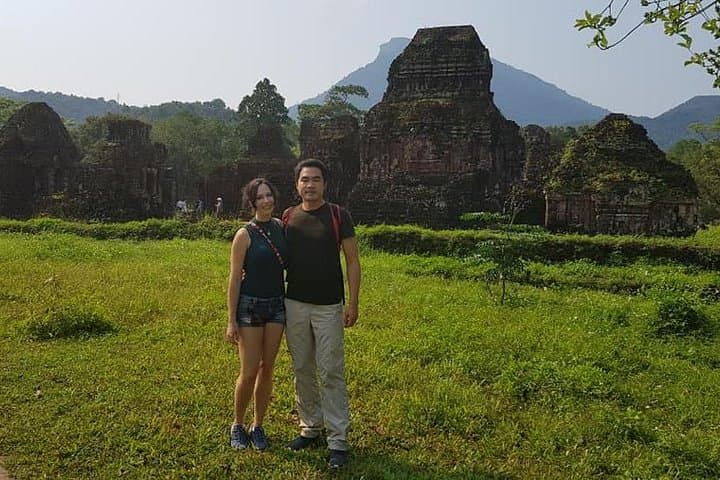


Before the sun clears the rice paddies, the road from Hoi An bends toward a gate of broken red bricks. You arrive while light is thin and shadows still trace the carvings; the ruins don’t so much whisper as hold their breath. Wind from the Thu Bon River teases the grass, daring you to move quietly through courtyards where columns and lintels bear eight centuries of weather.
Before the sun clears the rice paddies, the road from Hoi An bends toward a gate of broken red bricks. You arrive while light is thin and shadows still trace the carvings; the ruins don’t so much whisper as hold their breath. Wind from the Thu Bon River teases the grass, daring you to move quietly through courtyards where columns and lintels bear eight centuries of weather.
My Son was the spiritual heart of the Cham kingdom from the 4th to the 13th century. The site’s red-brick towers, once covered in stucco and sandstone reliefs, reflect a volcanic geology that favored fired-brick construction. During the Vietnam War large sections of Group A were destroyed by bombing; restoration since the 1990s and UNESCO recognition have directed careful reconstruction and documentation.
Local culture still threads through visits: Cham motifs appear in nearby handicrafts, and small family farms dot the approach road. Guides will point out the different temple groups (A through G), explain Cham religious practice, and describe 20th-century scars alongside ancient artistry.
Practical guidance: this private, roughly four-hour tour departs very early (about 6:00 a.m.) from Hoi An or Da Nang with hotel pickup, bottled water, entrance ticket, and an English-speaking guide included. Expect unpaved, uneven surfaces and low walls—good, grippy walking shoes and a headlamp aren’t necessary, but a hat, sunscreen, and mosquito spray are. Sunrise light is best for photos; avoid touching carvings and stay on marked paths to support ongoing conservation.