THE ADVENTURE COLLECTIVE® · Independent discovery and booking for outdoor travel

Move quickly beneath Roman aqueducts at first light on an 11–12 km urban fitwalk that combines steady cardio with a history lesson. Expect ancient arches, community gardens and a Metro ride back to the starting point — capped by a classic Italian breakfast.
Move quickly beneath Roman aqueducts at first light on an 11–12 km urban fitwalk that combines steady cardio with a history lesson. Expect ancient arches, community gardens and a Metro ride back to the starting point — capped by a classic Italian breakfast.
Dawn in Rome softens stone and grass alike; the Claudio Aqueduct throws long shadows across dew-slick lawns as you set off from Pigneto. The group moves at a brisk, purposeful pace — breath visible in cooler months, sneakers whispering over packed earth — with the ancient arches looming like a linear cathedral beside the route.
Verified experiences and guided adventures in the surrounding area.
Operated by Simone Pacini · Rome, Lazio
Dawn in Rome softens stone and grass alike; the Claudio Aqueduct throws long shadows across dew-slick lawns as you set off from Pigneto. The group moves at a brisk, purposeful pace — breath visible in cooler months, sneakers whispering over packed earth — with the ancient arches looming like a linear cathedral beside the route.
This 11–12 km urban fitwalk threads modern neighborhoods, wartime stories and ancient engineering. The park preserves six aqueducts, including Aqua Claudia and the later Acquedotto Felice, structures that once ferried water from the Alban Hills into imperial Rome. You’ll pass informal vegetable plots and vestiges of 20th-century suburbia tucked beneath arches, reminders that Rome’s history stacks eras as neatly as its masonry.
Geology here is simple: limestone bedrock and alluvial soils shaped by drainage and centuries of human use, producing firm tracks punctuated by muddy stretches after rain. Culture arrives in stray radio chatter, the scent of espresso at a wake-up kiosk, and the film-studio skyline near Cinecittà that edges the park.
Practical guidance: bring a transit ticket for the Metro A return, wear grippy trainers for uneven or muddy patches, and carry at least 500–750 ml of water for a morning of steady walking. Start early to avoid heat and mid-morning crowds; in cool months layer up and expect the wind to push through the arches. Finish with the included Italian breakfast — cappuccino and cornetto — a small, well-earned ritual that brings the neighborhood to life.
moderate.
2–3 hours.
Moderate cardiovascular fitness; comfortable with continuous brisk walking for up to 12 km.
Expect roughly 11–12 km over 2–3 hours at a brisk walking pace; terrain is mostly packed earth with occasional muddy patches — suitable for moderately fit walkers.
The itinerary uses Metro A to return to the start; bring a valid transit ticket as it isn’t included automatically.
The operator may cancel if conditions are unsafe or if rain has made routes impassable; their policy allows full refunds if cancelled 24+ hours prior.
Not recommended for travelers with serious cardiovascular issues or for pregnant guests due to the brisk pace and length of the walk.
The park preserves multiple Roman aqueducts — notably Aqua Claudia — and later additions like Acquedotto Felice; some arches sheltered displaced families after WWII.
Stick to established tracks, avoid trampling archaeological features and carry out all litter; the area balances urban use with protection of ancient structures.
Simone Pacini operates guided outdoor trips and adventures with an emphasis on safety, stewardship, and memorable experiences.

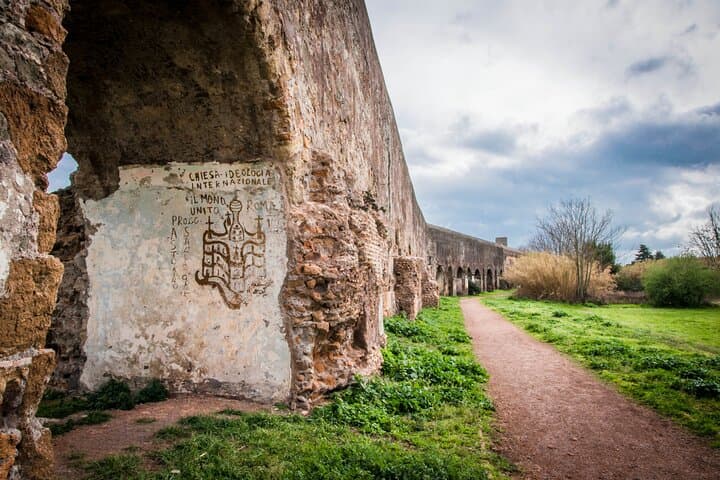

Dawn in Rome softens stone and grass alike; the Claudio Aqueduct throws long shadows across dew-slick lawns as you set off from Pigneto. The group moves at a brisk, purposeful pace — breath visible in cooler months, sneakers whispering over packed earth — with the ancient arches looming like a linear cathedral beside the route.
Dawn in Rome softens stone and grass alike; the Claudio Aqueduct throws long shadows across dew-slick lawns as you set off from Pigneto. The group moves at a brisk, purposeful pace — breath visible in cooler months, sneakers whispering over packed earth — with the ancient arches looming like a linear cathedral beside the route.
This 11–12 km urban fitwalk threads modern neighborhoods, wartime stories and ancient engineering. The park preserves six aqueducts, including Aqua Claudia and the later Acquedotto Felice, structures that once ferried water from the Alban Hills into imperial Rome. You’ll pass informal vegetable plots and vestiges of 20th-century suburbia tucked beneath arches, reminders that Rome’s history stacks eras as neatly as its masonry.
Geology here is simple: limestone bedrock and alluvial soils shaped by drainage and centuries of human use, producing firm tracks punctuated by muddy stretches after rain. Culture arrives in stray radio chatter, the scent of espresso at a wake-up kiosk, and the film-studio skyline near Cinecittà that edges the park.
Practical guidance: bring a transit ticket for the Metro A return, wear grippy trainers for uneven or muddy patches, and carry at least 500–750 ml of water for a morning of steady walking. Start early to avoid heat and mid-morning crowds; in cool months layer up and expect the wind to push through the arches. Finish with the included Italian breakfast — cappuccino and cornetto — a small, well-earned ritual that brings the neighborhood to life.