THE ADVENTURE COLLECTIVE® · Independent discovery and booking for outdoor travel

Experience Tirta Empul before the crowds with a 7:15 AM Melukat purification ceremony. This early-access package includes sarong rental, lockers and an English guide, offering a calmer, more meaningful visit to the temple’s sacred spring.
Experience Tirta Empul before the crowds with a 7:15 AM Melukat purification ceremony. This early-access package includes sarong rental, lockers and an English guide, offering a calmer, more meaningful visit to the temple’s sacred spring.
Before the first tourist buses arrive you stand at the stone steps and hear water moving with intent — the spring at Tirta Empul seems to push the morning forward. At 7:15 AM the temple sits quiet, birds testing the air and priests preparing offerings; the pools glitter like a promise.
Verified experiences and guided adventures in the surrounding area.
Operated by Bali Mundi International · Tampaksiring, Bali
Before the first tourist buses arrive you stand at the stone steps and hear water moving with intent — the spring at Tirta Empul seems to push the morning forward. At 7:15 AM the temple sits quiet, birds testing the air and priests preparing offerings; the pools glitter like a promise.
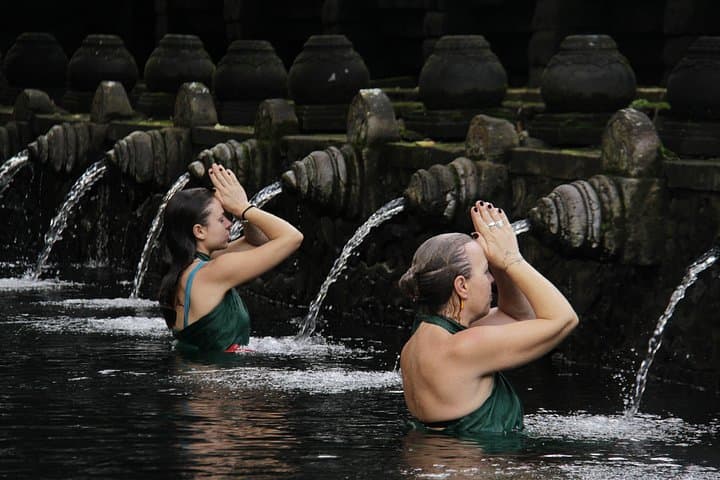
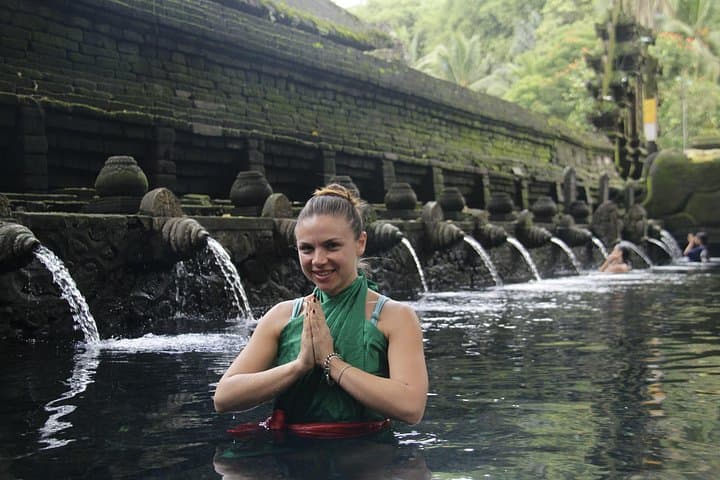
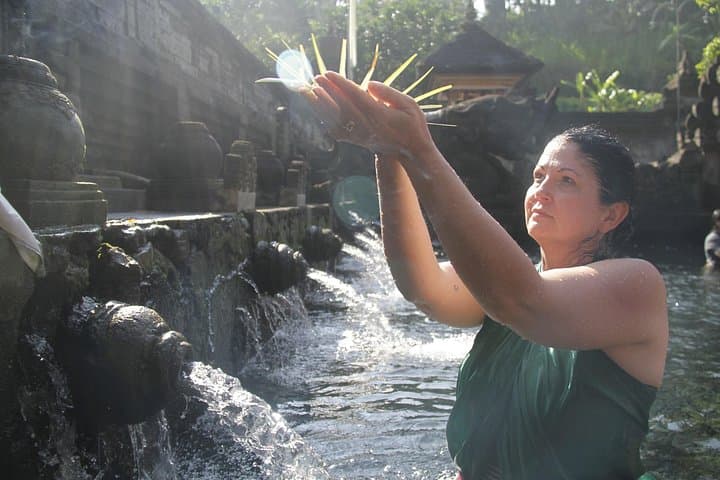
Tirta Empul dates to 962 AD in the Warmadewa era and honors Vishnu through a sacred spring allegedly pierced into being by the god Indra. The Melukat purification ritual channels that legend: worshippers pass through a sequence of carved spouts, submerging and emerging while priests chant and water runs insistently over forehead and shoulders.
The site’s volcanic geology feeds clear, cool water that shaped terraced bathing pools and stone courtyards. Culturally, Melukat is a communal reset — part prayer, part physical cleansing — and the guides here explain gestures, offerings, and the layered etiquette of Balinese Hinduism.
Practicalities are straightforward. The early appointment reduces crowding and includes sarong rental, entrance fee, locker access and a guide; the full experience is 1–2 hours. Wear a top that covers your shoulders, bring a towel and a spare change of clothes, and expect to be barefoot around the pools. Those with heart or spinal issues, pregnant travelers, or anyone menstruating should not enter the cleansing pools.
Photography is allowed in public areas but avoid disrupting prayers. Plan to arrive hydrated and with modest footwear for wet stone. The early light and quieter atmosphere make this version of the Melukat both more contemplative and logistically smooth — a focused encounter with a living ritual rather than a hurried photo stop.
easy.
1–2 hours.
Suitable for most people who can stand and walk short distances; not appropriate for those with serious mobility, cardiac, or spinal issues.
Yes—many ceremonies welcome visitors; the tour provides guidance and a sarong, but you should follow the priest’s instructions and local etiquette.
Yes, the package includes locker access and you must bring a towel and a change of underwear or swimwear to change after the ritual.
Women who are menstruating are strictly not allowed to enter the temple’s inner purification pools; pregnant travelers are also advised not to participate and should not enter the pools.
The full appointment is typically 1–2 hours, with about 60–90 minutes spent at the temple for the guided tour and Melukat ritual.
Built during the Warmadewa dynasty (c. 10th century), Tirta Empul’s spring has been central to Balinese rituals linked to water and royal purification for centuries.
The temple manages a steady flow of natural spring water and limits disruptive access during rituals; visitors are asked to avoid soaps or contaminants and use provided lockers to reduce litter.
Bali Mundi International operates guided outdoor trips and adventures with an emphasis on safety, stewardship, and memorable experiences.
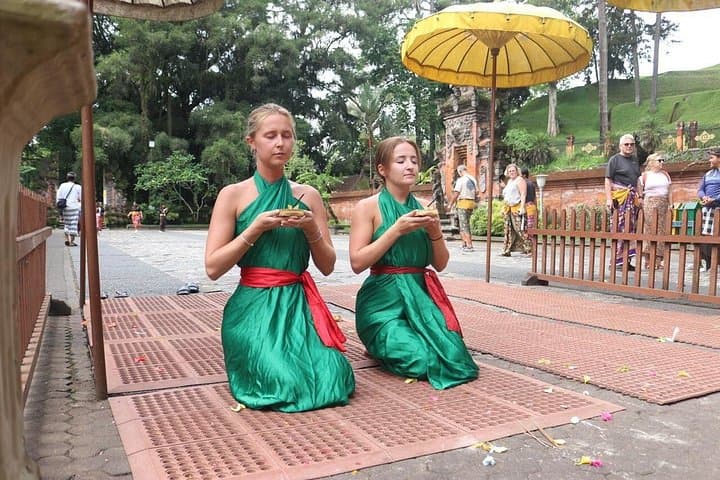
Before the first tourist buses arrive you stand at the stone steps and hear water moving with intent — the spring at Tirta Empul seems to push the morning forward. At 7:15 AM the temple sits quiet, birds testing the air and priests preparing offerings; the pools glitter like a promise.
Before the first tourist buses arrive you stand at the stone steps and hear water moving with intent — the spring at Tirta Empul seems to push the morning forward. At 7:15 AM the temple sits quiet, birds testing the air and priests preparing offerings; the pools glitter like a promise.
Tirta Empul dates to 962 AD in the Warmadewa era and honors Vishnu through a sacred spring allegedly pierced into being by the god Indra. The Melukat purification ritual channels that legend: worshippers pass through a sequence of carved spouts, submerging and emerging while priests chant and water runs insistently over forehead and shoulders.
The site’s volcanic geology feeds clear, cool water that shaped terraced bathing pools and stone courtyards. Culturally, Melukat is a communal reset — part prayer, part physical cleansing — and the guides here explain gestures, offerings, and the layered etiquette of Balinese Hinduism.
Practicalities are straightforward. The early appointment reduces crowding and includes sarong rental, entrance fee, locker access and a guide; the full experience is 1–2 hours. Wear a top that covers your shoulders, bring a towel and a spare change of clothes, and expect to be barefoot around the pools. Those with heart or spinal issues, pregnant travelers, or anyone menstruating should not enter the cleansing pools.
Photography is allowed in public areas but avoid disrupting prayers. Plan to arrive hydrated and with modest footwear for wet stone. The early light and quieter atmosphere make this version of the Melukat both more contemplative and logistically smooth — a focused encounter with a living ritual rather than a hurried photo stop.