THE ADVENTURE COLLECTIVE® · Independent discovery and booking for outdoor travel

Step onto the edge of Ireland and feel the Atlantic push against the cliffs. This guided 2.5-hour experience from Lahinch combines geology, birdlife and local history with 1.5 miles of coastal walking and prime photo viewpoints.
Step onto the edge of Ireland and feel the Atlantic push against the cliffs. This guided 2.5-hour experience from Lahinch combines geology, birdlife and local history with 1.5 miles of coastal walking and prime photo viewpoints.
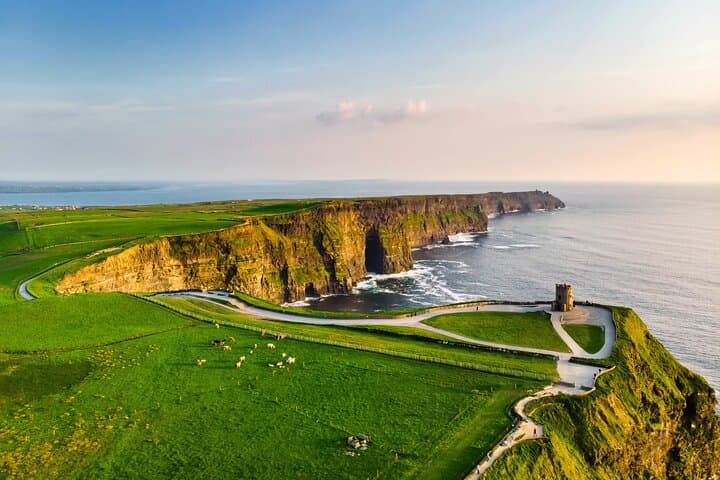
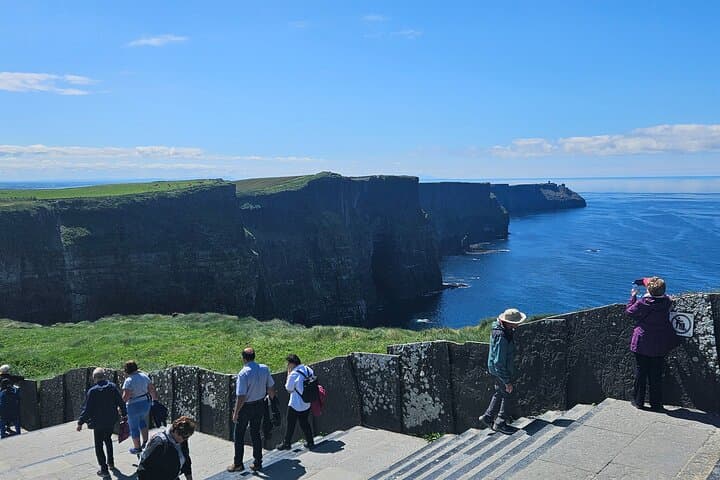
A cold Atlantic wind meets you before the cliffs do — salt-laden air that pushes at your jacket and insists you pay attention. The path winds along grass then tightens to a stony edge; in places the land drops away in a sheer wall of shale and sandstone, roughly 700 feet (about 210 m) above the surf. Your guide walks with an easy cadence, pointing out the Aran Islands low on the horizon and the ragged outline of the Twelve Bens on clearer days.
Verified experiences and guided adventures in the surrounding area.
Operated by LetzGo City Tours · Liscannor, County Clare
A cold Atlantic wind meets you before the cliffs do — salt-laden air that pushes at your jacket and insists you pay attention. The path winds along grass then tightens to a stony edge; in places the land drops away in a sheer wall of shale and sandstone, roughly 700 feet (about 210 m) above the surf. Your guide walks with an easy cadence, pointing out the Aran Islands low on the horizon and the ragged outline of the Twelve Bens on clearer days.
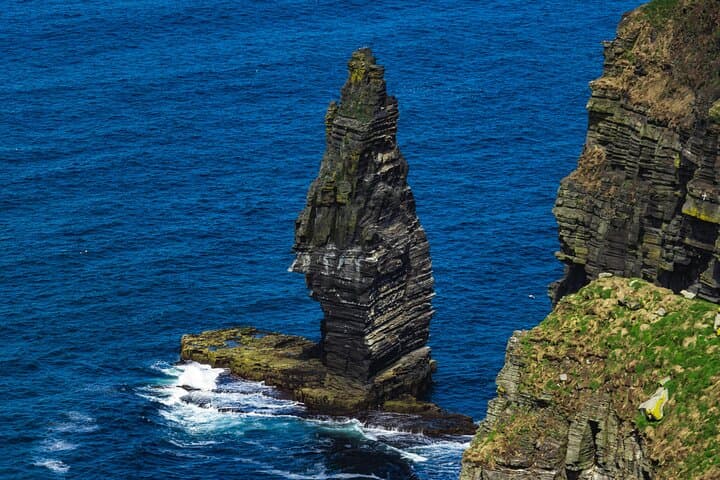
The cliffs are carved from Carboniferous-aged sediment: layers of limestone, shale and sandstone stacked over millions of years. O’Brien’s Tower, built in 1835 by Sir Cornelius O’Brien, punctuates the rim and offers the classic vantage for pictures and stories about the area’s Gaelic lore. The visitor centre provides context — exhibits on geology, nesting seabirds and the human history of County Clare — before you step back out onto the trail.
Expect about 1.5 miles (2.4 km) of walking on uneven surfaces during the guided section, with frequent viewpoints and short stops for interpretation. The cliffs are a working ecosystem: puffins, kittiwakes and coastal plants cling to narrow ledges; the tide and wind shape the experience as much as the rocks.
Practical guidance: dress in windproof layers, wear sturdy footwear, and bring binoculars and a waterproof shell. Start early for lower crowds and clearer light; if visibility drops, the guide will adjust plans. Stay on marked paths to protect nesting birds and fragile soils. With moderate fitness and sensible gear, this compact, interpretive tour delivers one of Ireland’s most dramatic coastal experiences.
moderate.
2–3 hours.
Moderate fitness recommended: able to walk 1.5 miles on uneven ground, handle short inclines and stairs.
The guided portion covers roughly 1.5 miles (about 2.4 km) and is scheduled within a 2.5-hour tour that includes visitor centre time and transfers.
Yes — on a clear day the Aran Islands and the Twelve Bens of Connemara are visible from several viewpoints, especially near O’Brien’s Tower.
Most cliff-edge paths are uneven with steps and narrow sections; wheelchairs and mobility scooters are not recommended for the cliff walk itself, though the visitor centre has accessible exhibits.
Wear sturdy shoes and layered clothing, bring a windproof waterproof jacket, water, and binoculars; weather can change quickly on the exposed coast.
O’Brien’s Tower was built in 1835 by local landlord Sir Cornelius O’Brien as an observation point; the cliffs have long been noted in Irish folklore and local maritime history.
Footpath erosion and nesting seabirds make staying on designated trails crucial; the visitor centre promotes Leave No Trace practices and seasonal restrictions to protect wildlife.
LetzGo City Tours operates guided outdoor trips and adventures with an emphasis on safety, stewardship, and memorable experiences.
A cold Atlantic wind meets you before the cliffs do — salt-laden air that pushes at your jacket and insists you pay attention. The path winds along grass then tightens to a stony edge; in places the land drops away in a sheer wall of shale and sandstone, roughly 700 feet (about 210 m) above the surf. Your guide walks with an easy cadence, pointing out the Aran Islands low on the horizon and the ragged outline of the Twelve Bens on clearer days.
A cold Atlantic wind meets you before the cliffs do — salt-laden air that pushes at your jacket and insists you pay attention. The path winds along grass then tightens to a stony edge; in places the land drops away in a sheer wall of shale and sandstone, roughly 700 feet (about 210 m) above the surf. Your guide walks with an easy cadence, pointing out the Aran Islands low on the horizon and the ragged outline of the Twelve Bens on clearer days.
The cliffs are carved from Carboniferous-aged sediment: layers of limestone, shale and sandstone stacked over millions of years. O’Brien’s Tower, built in 1835 by Sir Cornelius O’Brien, punctuates the rim and offers the classic vantage for pictures and stories about the area’s Gaelic lore. The visitor centre provides context — exhibits on geology, nesting seabirds and the human history of County Clare — before you step back out onto the trail.
Expect about 1.5 miles (2.4 km) of walking on uneven surfaces during the guided section, with frequent viewpoints and short stops for interpretation. The cliffs are a working ecosystem: puffins, kittiwakes and coastal plants cling to narrow ledges; the tide and wind shape the experience as much as the rocks.
Practical guidance: dress in windproof layers, wear sturdy footwear, and bring binoculars and a waterproof shell. Start early for lower crowds and clearer light; if visibility drops, the guide will adjust plans. Stay on marked paths to protect nesting birds and fragile soils. With moderate fitness and sensible gear, this compact, interpretive tour delivers one of Ireland’s most dramatic coastal experiences.