THE ADVENTURE COLLECTIVE® · Independent discovery and booking for outdoor travel

Catch sunrise above Rio with early access to Christ the Redeemer and sweeping panoramas from Sugarloaf. This half-day tour pairs quiet morning views with efficient transport and local insight.
Catch sunrise above Rio with early access to Christ the Redeemer and sweeping panoramas from Sugarloaf. This half-day tour pairs quiet morning views with efficient transport and local insight.
Dawn breaks over Guanabara Bay and the city exhales: the minivan climbs through Tijuca National Park while the ocean still holds the night’s cool. By the time you step onto Corcovado, Christ the Redeemer stands above the city, light catching the statue’s outstretched arms as the crowds thin and the view opens—Copacabana to the right, the jagged line of mountains to the left.
Verified experiences and guided adventures in the surrounding area.
Operated by Guided Tour In Rio · Rio de Janeiro, Rio de Janeiro
Dawn breaks over Guanabara Bay and the city exhales: the minivan climbs through Tijuca National Park while the ocean still holds the night’s cool. By the time you step onto Corcovado, Christ the Redeemer stands above the city, light catching the statue’s outstretched arms as the crowds thin and the view opens—Copacabana to the right, the jagged line of mountains to the left.
The tour threads together two of Rio de Janeiro’s most recognizable landmarks. Christ the Redeemer, completed in 1931, crowns a granite peak formed by ancient tectonic uplifts and erosion; Tijuca is one of the world’s largest urban forests, replanted in the 19th century. Sugarloaf (Pão de Açúcar) is a near-vertical granite monolith whose cable car system is one of the earliest in the world—rising in two stages for panoramic views of the bay and the city’s beaches.
You’ll move between perspectives: the contemplative silence at Corcovado, the theatrical, cinematic sweep from Sugarloaf’s upper terrace, and quick passes by beaches where Cariocas begin their day. Guides add practical context—ticketing logistics, brief cultural notes, and transport back to Copacabana.
Practicalities matter: arrive with light layers, sun protection, and a charged phone for photos; expect short walks and some steps at viewpoints. The itinerary is wheelchair-accessible in many areas but check specific access for cable-car boarding. Early departures reduce waiting time and deliver cooler air and softer light—ideal for photography and a quieter experience of two of Rio’s defining viewpoints.
easy.
4–5 hours.
Suitable for most fitness levels; involves short walks, stairs and standing at viewpoints.
This tour provides transport and a guide; entrance fees or cable car tickets may not be included—confirm at booking and bring any printed vouchers.
Many areas and transport options are wheelchair accessible, but cable car boarding and certain viewpoints may have restrictions—notify the operator at booking to confirm arrangements.
This operator runs tours in English and Spanish; check availability for other languages when you book.
The listed duration is about five hours and includes pick-up/drop-off from selected hotels (Hilton Copacabana and nearby properties); confirm your pickup point at booking.
Corcovado and Sugarloaf were developed as public attractions in the early 20th century; the Christ statue was inaugurated in 1931 and has become a global icon of Rio.
Tijuca is a restored Atlantic Forest—visitors are encouraged to stick to paths, avoid feeding wildlife, and use refillable water bottles to reduce waste.
Guided Tour In Rio operates guided outdoor trips and adventures with an emphasis on safety, stewardship, and memorable experiences.

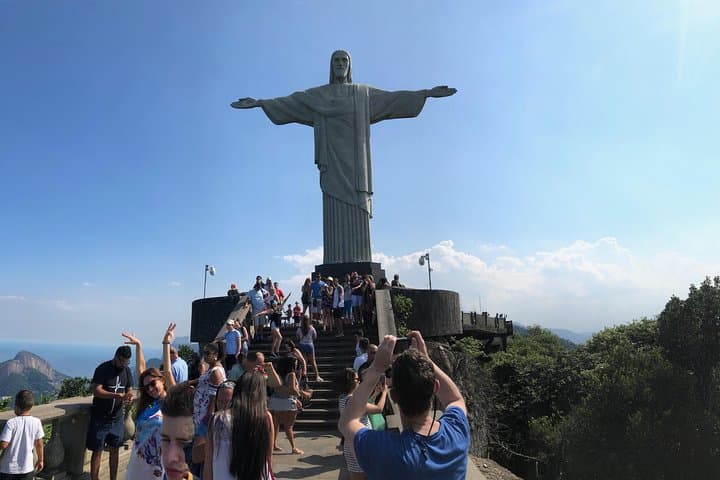


Dawn breaks over Guanabara Bay and the city exhales: the minivan climbs through Tijuca National Park while the ocean still holds the night’s cool. By the time you step onto Corcovado, Christ the Redeemer stands above the city, light catching the statue’s outstretched arms as the crowds thin and the view opens—Copacabana to the right, the jagged line of mountains to the left.
Dawn breaks over Guanabara Bay and the city exhales: the minivan climbs through Tijuca National Park while the ocean still holds the night’s cool. By the time you step onto Corcovado, Christ the Redeemer stands above the city, light catching the statue’s outstretched arms as the crowds thin and the view opens—Copacabana to the right, the jagged line of mountains to the left.
The tour threads together two of Rio de Janeiro’s most recognizable landmarks. Christ the Redeemer, completed in 1931, crowns a granite peak formed by ancient tectonic uplifts and erosion; Tijuca is one of the world’s largest urban forests, replanted in the 19th century. Sugarloaf (Pão de Açúcar) is a near-vertical granite monolith whose cable car system is one of the earliest in the world—rising in two stages for panoramic views of the bay and the city’s beaches.
You’ll move between perspectives: the contemplative silence at Corcovado, the theatrical, cinematic sweep from Sugarloaf’s upper terrace, and quick passes by beaches where Cariocas begin their day. Guides add practical context—ticketing logistics, brief cultural notes, and transport back to Copacabana.
Practicalities matter: arrive with light layers, sun protection, and a charged phone for photos; expect short walks and some steps at viewpoints. The itinerary is wheelchair-accessible in many areas but check specific access for cable-car boarding. Early departures reduce waiting time and deliver cooler air and softer light—ideal for photography and a quieter experience of two of Rio’s defining viewpoints.