THE ADVENTURE COLLECTIVE® · Independent discovery and booking for outdoor travel

A single day takes you from Munich motorways to the hush of Lake Königssee and the precipice of the Eagle's Nest. Expect dramatic alpine scenery paired with clear historical context—salt, film locations, and a careful look at the Obersalzberg legacy.
A single day takes you from Munich motorways to the hush of Lake Königssee and the precipice of the Eagle's Nest. Expect dramatic alpine scenery paired with clear historical context—salt, film locations, and a careful look at the Obersalzberg legacy.
You pull away from Munich before dawn and the city shrinks into a band of taillights as the van eats the A8. By the time the Alps first pin the horizon, the air has changed—thinner, cooler, and scented with spruce. The road up Irschenberg opens the first cinematic view; later, the van glides along the German Alpine Road and the ordinary gives way to vertical limestone walls and glass-clear water.
Verified experiences and guided adventures in the surrounding area.
Operated by Sightseeing Bavaria Exclusive · Berchtesgaden, Bavaria
You pull away from Munich before dawn and the city shrinks into a band of taillights as the van eats the A8. By the time the Alps first pin the horizon, the air has changed—thinner, cooler, and scented with spruce. The road up Irschenberg opens the first cinematic view; later, the van glides along the German Alpine Road and the ordinary gives way to vertical limestone walls and glass-clear water.
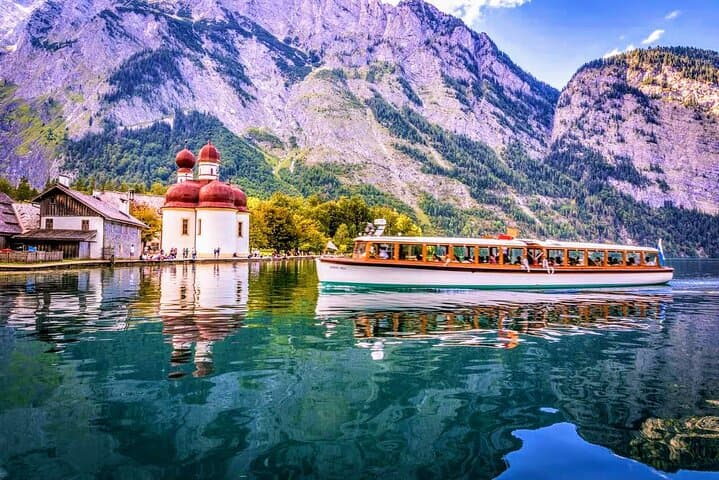
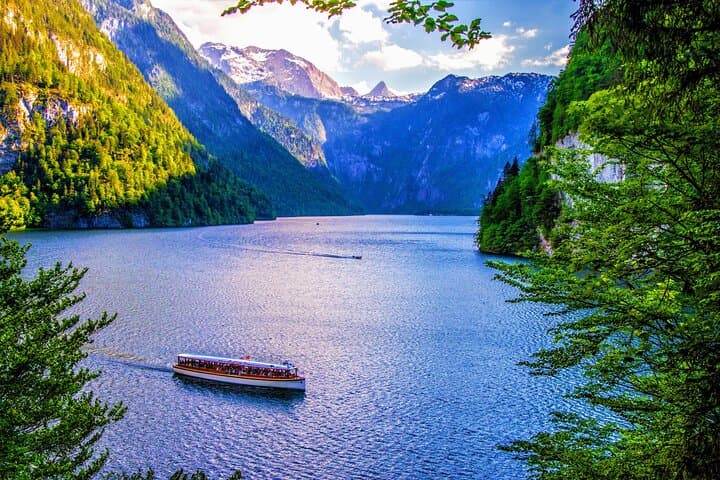
Lake Königssee is the day’s jewel: an 8‑km fjord-like basin hemmed in by sheer rock faces that push the sound—and the silence—back at you. The tour’s historic electric boats move like ghosts across the water; your guide winds together geology and folklore as the engine’s whisper reveals the echo points where a single trumpet blast bounces off the Watzmann east wall. From St. Bartholomä’s red onion domes to the beer garden at the former hunting lodge, the peninsula feels almost otherworldly until you remember it sits in real, complicated history.
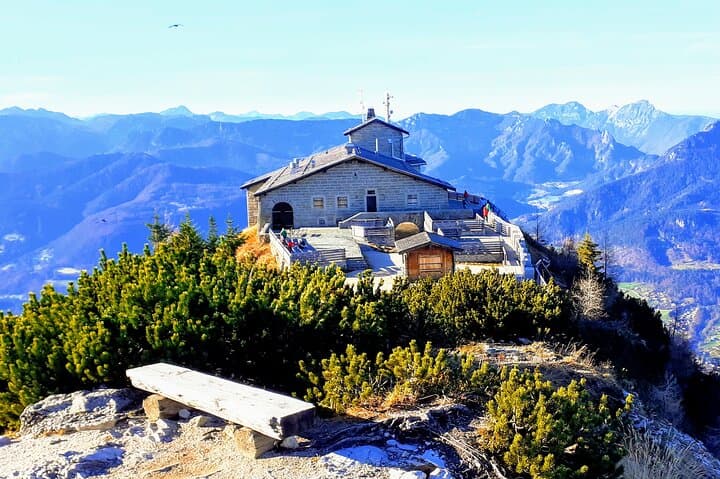
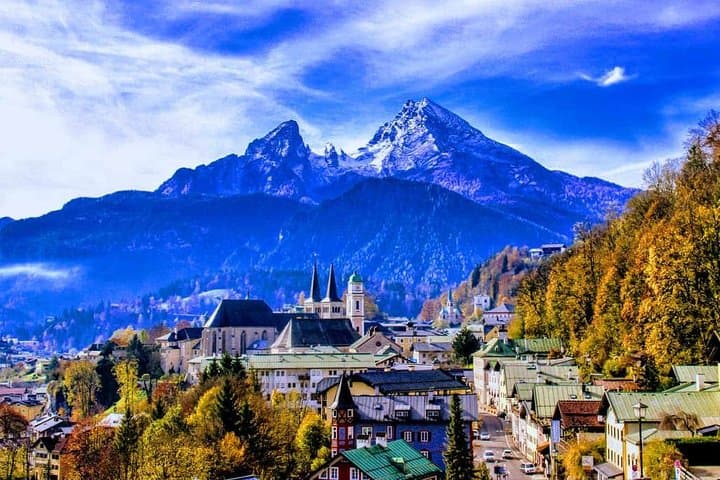
That history is the other, darker thread of the day. Berchtesgaden grew wealthy on salt and mining long before the 20th century, its economy shaped by what locals once called “white gold.” In the 1930s the Obersalzberg was transformed into Hitler’s second seat of power; many structures were destroyed in 1945, but the Eagle’s Nest (Kehlsteinhaus) stands intact at 6,017 ft, reached by a mountain road and a vertical elevator tunneled into rock. The guide frames the site with photos and facts—no glorification, just context—so visitors can read the architecture as evidence of a regime’s reach.
Geology and culture meet on the Panorama Road and in the salt mine: a constant 12°C underground ride through centuries of mining explains why the region mattered long before the Nazis arrived. If you choose Salzburg or the salt mine as an add-on, expect another hour or two of walking and stairs.
Practical guide: this private full‑day excursion runs about 9.5–11 hours with pickup available in Munich or at the airport. Drive time each way is roughly two hours; much of the day is easy walking around town and on the lakeshore, plus stairs and the Kehlsteinhaus elevator. The Eagle’s Nest access depends on snow—shuttle buses operate May–October—and some stops (salt mine, Obersalzberg documentation center, Salzburg) are optional; let your guide know ahead if you want them.
Bring sturdy walking shoes, layered clothing, and a small daypack with water and sunscreen. Respect the sensitive sites: photography is welcome in many spots, but follow signage at memorial areas and in museum exhibits. For a day that stitches alpine grandeur to heavy history, this tour delivers both the view and the context to understand it.
moderate.
9.5–11 hours.
Suitable for travelers with average fitness who can stand and walk for several hours and handle short stair sections.
Expect approximately two hours each way by van, depending on traffic and chosen pickups.
No—access depends on snow; shuttle buses to the Kehlsteinhaus typically run from early May through late October.
Boat tickets are available as skip‑the‑line add‑ons—confirm when booking; otherwise you can buy them on site.
Yes, but it’s marked 'on request'—include it in your booking so the guide can allocate time; expect 30–90 minutes.
Yes; infant seats are available and much of the tour is stroller‑friendly, but note the Eagle's Nest access involves shuttle buses and some walking.
Bottled mineral water is included; meals are not—there are restaurants at St. Bartholomä, Berchtesgaden, and the Kehlsteinhaus if you wish to eat.
Berchtesgaden prospered from salt mining from the Middle Ages onward; in the 1930s the Obersalzberg became a restricted area used by Nazi leadership.
Much of the area sits inside Berchtesgaden National Park where electric boats limit disturbance on the Königssee; follow marked trails and carry out waste to protect fragile alpine ecosystems.
Sightseeing Bavaria Exclusive operates guided outdoor trips and adventures with an emphasis on safety, stewardship, and memorable experiences.
You pull away from Munich before dawn and the city shrinks into a band of taillights as the van eats the A8. By the time the Alps first pin the horizon, the air has changed—thinner, cooler, and scented with spruce. The road up Irschenberg opens the first cinematic view; later, the van glides along the German Alpine Road and the ordinary gives way to vertical limestone walls and glass-clear water.
You pull away from Munich before dawn and the city shrinks into a band of taillights as the van eats the A8. By the time the Alps first pin the horizon, the air has changed—thinner, cooler, and scented with spruce. The road up Irschenberg opens the first cinematic view; later, the van glides along the German Alpine Road and the ordinary gives way to vertical limestone walls and glass-clear water.
Lake Königssee is the day’s jewel: an 8‑km fjord-like basin hemmed in by sheer rock faces that push the sound—and the silence—back at you. The tour’s historic electric boats move like ghosts across the water; your guide winds together geology and folklore as the engine’s whisper reveals the echo points where a single trumpet blast bounces off the Watzmann east wall. From St. Bartholomä’s red onion domes to the beer garden at the former hunting lodge, the peninsula feels almost otherworldly until you remember it sits in real, complicated history.
That history is the other, darker thread of the day. Berchtesgaden grew wealthy on salt and mining long before the 20th century, its economy shaped by what locals once called “white gold.” In the 1930s the Obersalzberg was transformed into Hitler’s second seat of power; many structures were destroyed in 1945, but the Eagle’s Nest (Kehlsteinhaus) stands intact at 6,017 ft, reached by a mountain road and a vertical elevator tunneled into rock. The guide frames the site with photos and facts—no glorification, just context—so visitors can read the architecture as evidence of a regime’s reach.
Geology and culture meet on the Panorama Road and in the salt mine: a constant 12°C underground ride through centuries of mining explains why the region mattered long before the Nazis arrived. If you choose Salzburg or the salt mine as an add-on, expect another hour or two of walking and stairs.
Practical guide: this private full‑day excursion runs about 9.5–11 hours with pickup available in Munich or at the airport. Drive time each way is roughly two hours; much of the day is easy walking around town and on the lakeshore, plus stairs and the Kehlsteinhaus elevator. The Eagle’s Nest access depends on snow—shuttle buses operate May–October—and some stops (salt mine, Obersalzberg documentation center, Salzburg) are optional; let your guide know ahead if you want them.
Bring sturdy walking shoes, layered clothing, and a small daypack with water and sunscreen. Respect the sensitive sites: photography is welcome in many spots, but follow signage at memorial areas and in museum exhibits. For a day that stitches alpine grandeur to heavy history, this tour delivers both the view and the context to understand it.