THE ADVENTURE COLLECTIVE® · Independent discovery and booking for outdoor travel

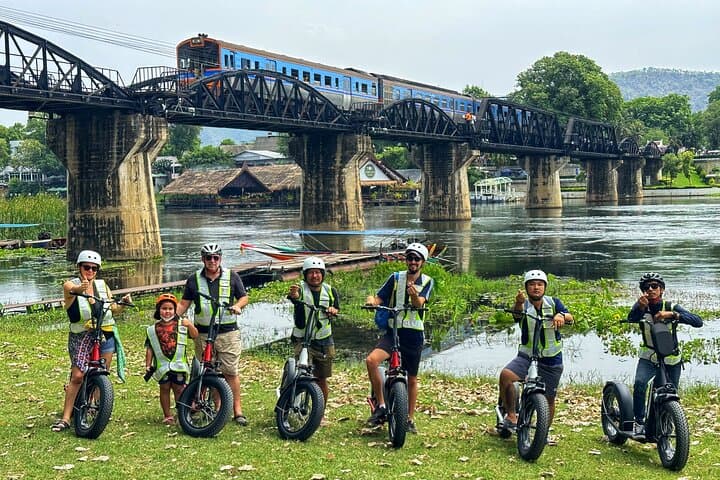
Glide by rice fields and local farms on an easy electric-scooter route that ends at the historic River Kwai Bridge. This concise 60–90 minute trip mixes rural scenery, cultural stops, and a low-impact way to explore Kanchanaburi.
Glide by rice fields and local farms on an easy electric-scooter route that ends at the historic River Kwai Bridge. This concise 60–90 minute trip mixes rural scenery, cultural stops, and a low-impact way to explore Kanchanaburi.
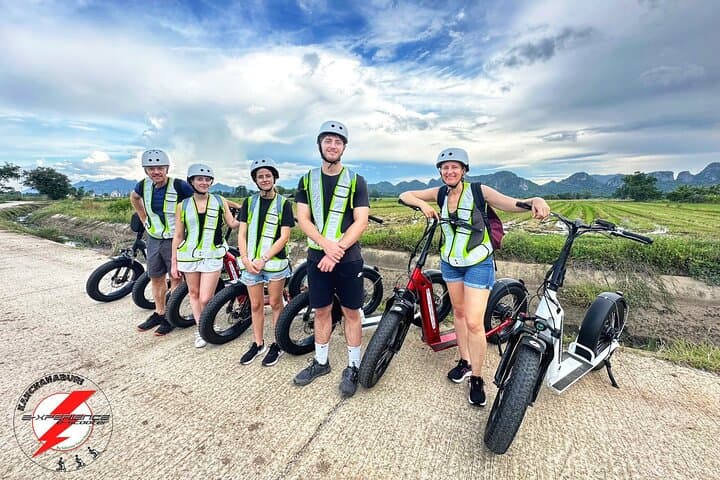
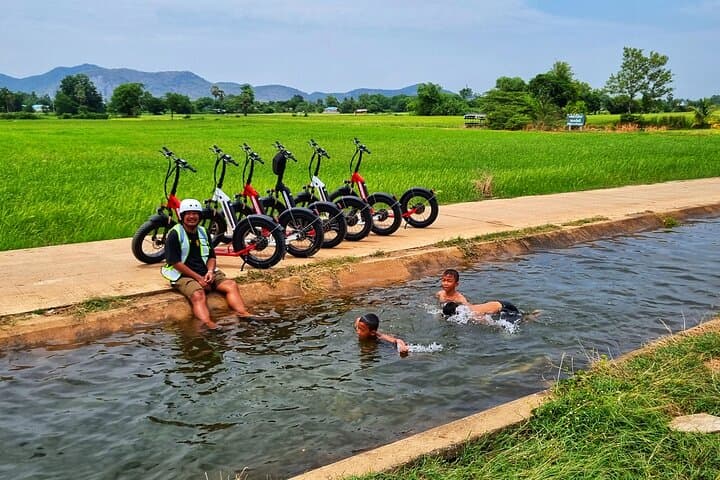
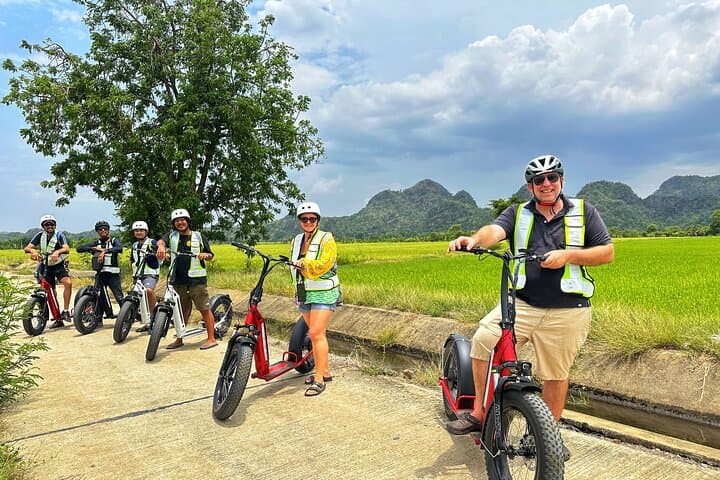
The morning air is humid and bright as you ease onto an electric scooter at the village edge, rice paddies opening like sheets of green on either side. The guide checks helmets and throttle, then you roll—slow enough to notice water buffalo browsing, bold birds slicing the sky, and a monitor lizard sunning itself on a dirt berm. The River Kwai waits ahead, its slow current daring you toward the iconic steel span.
Verified experiences and guided adventures in the surrounding area.
Operated by E-xperience by Safarine · Kanchanaburi, Kanchanaburi Province
The morning air is humid and bright as you ease onto an electric scooter at the village edge, rice paddies opening like sheets of green on either side. The guide checks helmets and throttle, then you roll—slow enough to notice water buffalo browsing, bold birds slicing the sky, and a monitor lizard sunning itself on a dirt berm. The River Kwai waits ahead, its slow current daring you toward the iconic steel span.
Kanchanaburi’s landscape is river plain carved from ancient alluvium; the rail bridge nearby is a heavy reminder of wartime history and the labor that built the Death Railway during World War II. Along the route you pass small farms where seasonal rice cycles and traditional irrigation shape daily life—farm tracks, simple wooden houses, and neighborhood temples with Chinese and Thai architectural details.
The ride blends cultural observation with low-impact adventure: expect compact country roads, occasional gravel, and brief stops—a riverside café terrace, a modest Chinese temple, and, finally, the River Kwai Bridge itself. Guides cover safety and local etiquette before you leave and keep the pace gentle, making this suitable for novices, families with older children, and travelers who prefer an easy, scenic outing.
Practical tips: bring sun protection, a light waterproof layer in the rainy season, and comfortable flat shoes. Stay hydrated—the operator provides bottled water—and follow the guide’s instructions around traffic and narrow sections. Plan this as a 60–90 minute excursion from central Kanchanaburi; it’s short, sensory, and steeped in landscape and history.
easy.
1–1.5 hours.
Suitable for people with basic mobility and balance; minimal exertion required
The tour runs about 60–90 minutes from the meeting point, including safety briefing and short stops.
No; guides teach basic scooter operation and keep the pace gentle for beginners.
Children can join if the operator’s child handlebar setup is used and they meet age/weight guidelines—confirm at booking.
Yes; the itinerary passes the famous Bridge Over the River Kwai with a planned stop for photos.
Kanchanaburi’s bridge is part of the Burma Railway constructed during World War II; the area bears wartime memorials and museums documenting that history.
Stick to designated lanes and avoid trampling paddies; water management and respectful tourism help local farmers and protect fragile irrigation systems.
E-xperience by Safarine operates guided outdoor trips and adventures with an emphasis on safety, stewardship, and memorable experiences.
The morning air is humid and bright as you ease onto an electric scooter at the village edge, rice paddies opening like sheets of green on either side. The guide checks helmets and throttle, then you roll—slow enough to notice water buffalo browsing, bold birds slicing the sky, and a monitor lizard sunning itself on a dirt berm. The River Kwai waits ahead, its slow current daring you toward the iconic steel span.
The morning air is humid and bright as you ease onto an electric scooter at the village edge, rice paddies opening like sheets of green on either side. The guide checks helmets and throttle, then you roll—slow enough to notice water buffalo browsing, bold birds slicing the sky, and a monitor lizard sunning itself on a dirt berm. The River Kwai waits ahead, its slow current daring you toward the iconic steel span.
Kanchanaburi’s landscape is river plain carved from ancient alluvium; the rail bridge nearby is a heavy reminder of wartime history and the labor that built the Death Railway during World War II. Along the route you pass small farms where seasonal rice cycles and traditional irrigation shape daily life—farm tracks, simple wooden houses, and neighborhood temples with Chinese and Thai architectural details.
The ride blends cultural observation with low-impact adventure: expect compact country roads, occasional gravel, and brief stops—a riverside café terrace, a modest Chinese temple, and, finally, the River Kwai Bridge itself. Guides cover safety and local etiquette before you leave and keep the pace gentle, making this suitable for novices, families with older children, and travelers who prefer an easy, scenic outing.
Practical tips: bring sun protection, a light waterproof layer in the rainy season, and comfortable flat shoes. Stay hydrated—the operator provides bottled water—and follow the guide’s instructions around traffic and narrow sections. Plan this as a 60–90 minute excursion from central Kanchanaburi; it’s short, sensory, and steeped in landscape and history.