THE ADVENTURE COLLECTIVE® · Independent discovery and booking for outdoor travel

Leave Tokyo behind for a half-day e-bike loop through Ogawa’s rice fields, washi studios, and small breweries. This accessible ride blends gentle distance with cultural stops—perfect for a compact rural escape.
Leave Tokyo behind for a half-day e-bike loop through Ogawa’s rice fields, washi studios, and small breweries. This accessible ride blends gentle distance with cultural stops—perfect for a compact rural escape.
A low, cool wind moves across the rice paddies as riders roll out from Ogawamachi Station—e-bikes humming, helmets fastened, and a patchwork of riverside roads stretching ahead. Ninety minutes by train from central Tokyo, Ogawa Town feels immediate and different: fields press close to narrow lanes, small temples offer shaded pauses, and family-run workshops open their shutters to curious visitors.
Verified experiences and guided adventures in the surrounding area.
Operated by Cycling Holiday Tokyo · Ogawamachi (Ogawa), Saitama
A low, cool wind moves across the rice paddies as riders roll out from Ogawamachi Station—e-bikes humming, helmets fastened, and a patchwork of riverside roads stretching ahead. Ninety minutes by train from central Tokyo, Ogawa Town feels immediate and different: fields press close to narrow lanes, small temples offer shaded pauses, and family-run workshops open their shutters to curious visitors.
Ogawa has a long history as a paper-making center; its washi craft and seasonal agriculture grew from the town’s clean spring water and gently undulating terrain. Geologically the area is low-lying plains edged by foothills, which creates broad river flats ideal for rice cultivation and small breweries that prize pristine local water in sake production. Culturally, the town combines agricultural practice and craft—visiting a washi studio or roadside farmstand gives a direct look at that living tradition.
Practically, the half-day loop is a relaxed, mostly-flat ride with rolling sections—expect roughly 25–30 km total with cumulative elevation under 300 m—designed for e-assist bikes and repeated short stops (washi studio, brewery, temple, farmstand). Guides provide helmets and basic logistics; luggage should be left in coin lockers at the station. Weather can change fast: tours may cancel for rain, and participants should carry a light rain shell, plenty of water, and closed-toe shoes.
This is a day trip for people who want to slow the pace without losing momentum—photography stops, hands-on craft demos, and tasting local snacks make the ride a practical window into rural Japan.
moderate.
3–4 hours.
Moderate fitness — able to ride 25–30 km over mixed flat and rolling terrain with e-assist; general mobility required.
The loop is roughly 25–30 km over mostly-flat, rolling countryside with cumulative elevation under 300 m; e-assist reduces effort so it’s suitable for riders with basic fitness.
Minimum age is 12 and minimum height is about 150 cm (5 ft) to safely use the e-bikes.
Large luggage should be left in coin lockers at Ogawamachi Station—guides cannot store bags on the tour.
Organizers check weather the day before; tours may be canceled for heavy rain or unsafe conditions, and guides may pause or stop a ride if rain begins during the tour.
Ogawa’s reputation grew from local spring water that supported washi paper production and small-scale sake brewing; organic farming traditions remain strong today.
Local businesses emphasize sustainable agriculture and craft—supporting farm stands and small workshops helps maintain low-impact tourism and traditional livelihoods.
Cycling Holiday Tokyo operates guided outdoor trips and adventures with an emphasis on safety, stewardship, and memorable experiences.
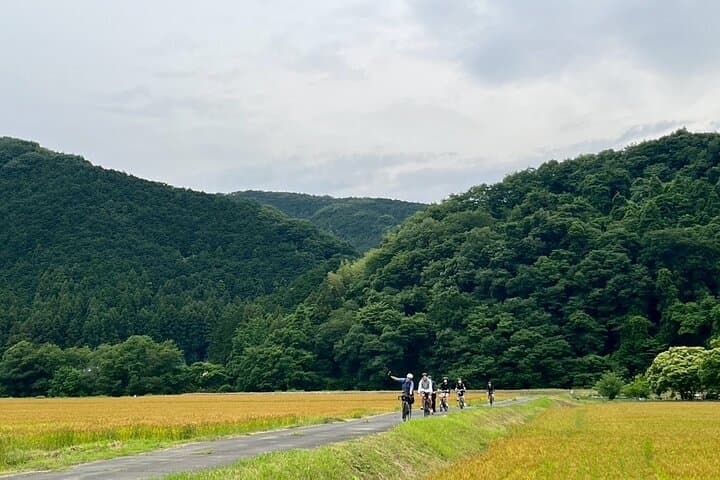
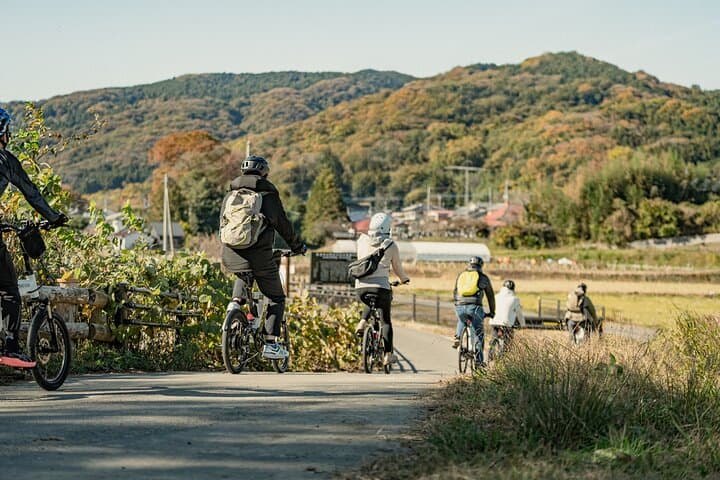
A low, cool wind moves across the rice paddies as riders roll out from Ogawamachi Station—e-bikes humming, helmets fastened, and a patchwork of riverside roads stretching ahead. Ninety minutes by train from central Tokyo, Ogawa Town feels immediate and different: fields press close to narrow lanes, small temples offer shaded pauses, and family-run workshops open their shutters to curious visitors.
A low, cool wind moves across the rice paddies as riders roll out from Ogawamachi Station—e-bikes humming, helmets fastened, and a patchwork of riverside roads stretching ahead. Ninety minutes by train from central Tokyo, Ogawa Town feels immediate and different: fields press close to narrow lanes, small temples offer shaded pauses, and family-run workshops open their shutters to curious visitors.
Ogawa has a long history as a paper-making center; its washi craft and seasonal agriculture grew from the town’s clean spring water and gently undulating terrain. Geologically the area is low-lying plains edged by foothills, which creates broad river flats ideal for rice cultivation and small breweries that prize pristine local water in sake production. Culturally, the town combines agricultural practice and craft—visiting a washi studio or roadside farmstand gives a direct look at that living tradition.
Practically, the half-day loop is a relaxed, mostly-flat ride with rolling sections—expect roughly 25–30 km total with cumulative elevation under 300 m—designed for e-assist bikes and repeated short stops (washi studio, brewery, temple, farmstand). Guides provide helmets and basic logistics; luggage should be left in coin lockers at the station. Weather can change fast: tours may cancel for rain, and participants should carry a light rain shell, plenty of water, and closed-toe shoes.
This is a day trip for people who want to slow the pace without losing momentum—photography stops, hands-on craft demos, and tasting local snacks make the ride a practical window into rural Japan.