THE ADVENTURE COLLECTIVE® · Independent discovery and booking for outdoor travel

Ride Orvieto’s cliff-top streets on an electric bike, exploring Etruscan undergrounds, medieval churches, panoramic terraces and a cellar tasting at Cantina Foresi. This small-group 3–4 hour tour blends easy cycling with cultural stops and local food.
Ride Orvieto’s cliff-top streets on an electric bike, exploring Etruscan undergrounds, medieval churches, panoramic terraces and a cellar tasting at Cantina Foresi. This small-group 3–4 hour tour blends easy cycling with cultural stops and local food.
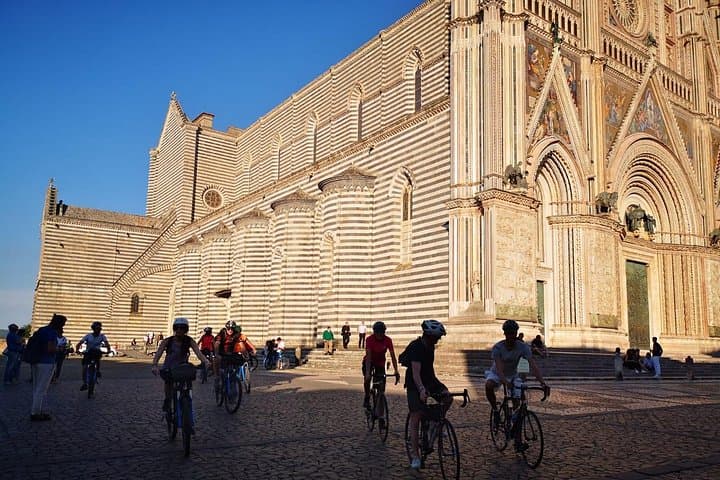
You start on two wheels where the hilltop city meets the sky: Orvieto’s tuff cliffs drop away, the Paglia valley stretches out, and the Duomo’s facade glints as you set off on an electric bike.
Verified experiences and guided adventures in the surrounding area.
Operated by OrvietoBikeTour · Orvieto, Umbria
You start on two wheels where the hilltop city meets the sky: Orvieto’s tuff cliffs drop away, the Paglia valley stretches out, and the Duomo’s facade glints as you set off on an electric bike.
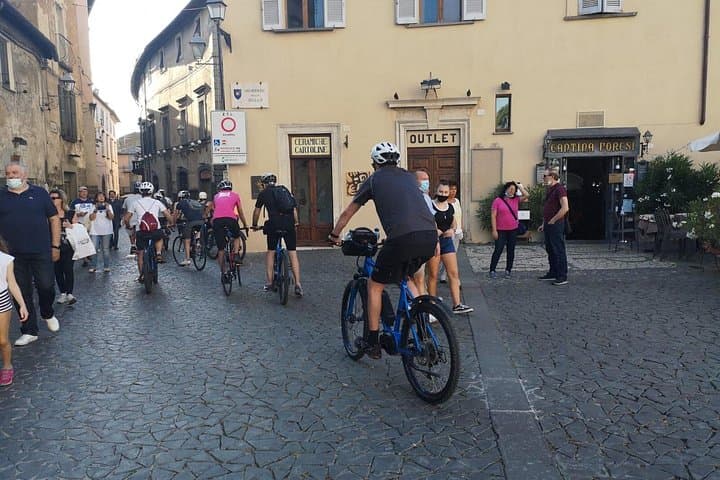
The route threads centuries—Etruscan-cut underground passages hewn from volcanic tuff, medieval alleys lined with artisan workshops, the Romanesque- and Gothic-layered Piazza del Duomo, and the compact Rocca di Albornoz lookout that frames Mount Peglia. Orvieto’s geology is obvious underfoot: soft tuff makes for carved cellars and dramatic cliff edges, while the streets keep the slow rhythm of a hill town that grew around cathedral, market and fortress.
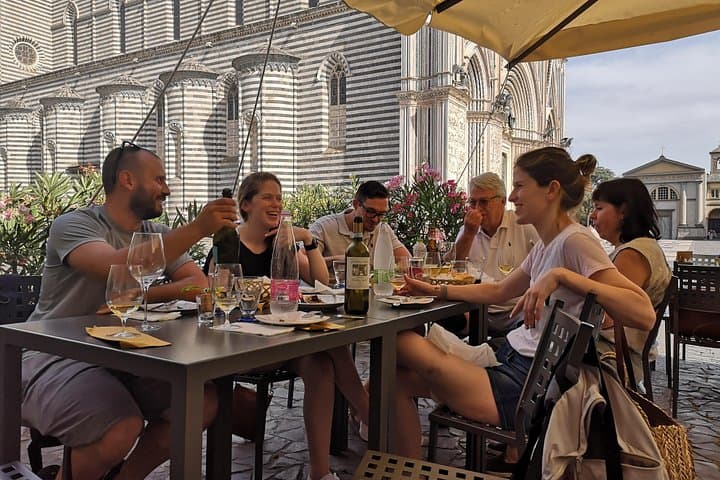
Culturally, expect local wine and cucina: the tour includes a tasting at Cantina Foresi, a cellar carved into rock where Umbrian varietals and simple antipasti pair with the city’s history. Guides point out San Giovenale’s 12th‑century frescoes, Palazzo del Popolo’s civic past, and the medieval Confaloniera that traces the cliff rim.
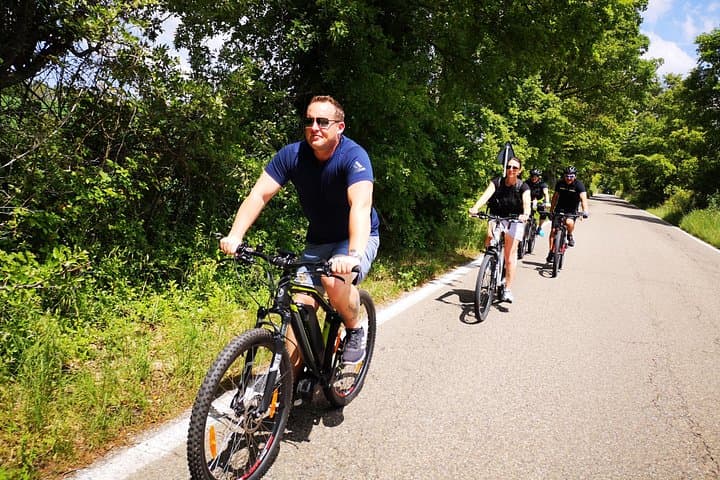
Practically, the small-group ride (typically up to 10) lasts about 3–4 hours and uses comfortable e‑bikes—ideal for mixed fitness levels and cobbled climbs. Wear closed-toe shoes, bring a refillable bottle, and expect short walks off-bike to explore subterranean sites and frescoed churches. Book morning or late-afternoon slots to avoid midday heat in summer, and plan for some standing-room streets in high season. The result is slow, local travel: easy on the legs, rich in detail, and built for conversation as much as scenery.
easy.
3–4 hours.
Suitable for most fitness levels; e‑bike assistance handles climbs but you should be comfortable pedaling short distances and standing for short walks.
Yes—comfortable electric bikes are supplied and included; staff fit bikes and sanitize them before use.
Yes—e‑bike assistance makes the route accessible for beginners and most children, though infants may need to sit on laps or use specialized seats if available.
Guides typically provide commentary in the advertised language and the visit to Orvieto’s underground is included as part of the itinerary.
Yes—there is a stop at Cantina Foresi for a tasting of local wines and typical Umbrian products included in the tour.
Orvieto grew as an Etruscan and then medieval stronghold built atop volcanic tuff; its underground network and cathedral reflect continuous occupation and civic ambition.
The city manages visitor impact by encouraging slow tourism and limiting vehicle access to preserve cobbled streets and fragile underground sites.
OrvietoBikeTour operates guided outdoor trips and adventures with an emphasis on safety, stewardship, and memorable experiences.
You start on two wheels where the hilltop city meets the sky: Orvieto’s tuff cliffs drop away, the Paglia valley stretches out, and the Duomo’s facade glints as you set off on an electric bike.
You start on two wheels where the hilltop city meets the sky: Orvieto’s tuff cliffs drop away, the Paglia valley stretches out, and the Duomo’s facade glints as you set off on an electric bike.
The route threads centuries—Etruscan-cut underground passages hewn from volcanic tuff, medieval alleys lined with artisan workshops, the Romanesque- and Gothic-layered Piazza del Duomo, and the compact Rocca di Albornoz lookout that frames Mount Peglia. Orvieto’s geology is obvious underfoot: soft tuff makes for carved cellars and dramatic cliff edges, while the streets keep the slow rhythm of a hill town that grew around cathedral, market and fortress.
Culturally, expect local wine and cucina: the tour includes a tasting at Cantina Foresi, a cellar carved into rock where Umbrian varietals and simple antipasti pair with the city’s history. Guides point out San Giovenale’s 12th‑century frescoes, Palazzo del Popolo’s civic past, and the medieval Confaloniera that traces the cliff rim.
Practically, the small-group ride (typically up to 10) lasts about 3–4 hours and uses comfortable e‑bikes—ideal for mixed fitness levels and cobbled climbs. Wear closed-toe shoes, bring a refillable bottle, and expect short walks off-bike to explore subterranean sites and frescoed churches. Book morning or late-afternoon slots to avoid midday heat in summer, and plan for some standing-room streets in high season. The result is slow, local travel: easy on the legs, rich in detail, and built for conversation as much as scenery.