THE ADVENTURE COLLECTIVE® · Independent discovery and booking for outdoor travel

Ride quiet hill roads and coastal lanes in West Crete with an electric mountain bike, reaching ancient Polyrrinia without the sweat. This guided trip pairs accessible e-power with local history, village stops, and panoramic sea views.
Ride quiet hill roads and coastal lanes in West Crete with an electric mountain bike, reaching ancient Polyrrinia without the sweat. This guided trip pairs accessible e-power with local history, village stops, and panoramic sea views.
Morning light slants across low olive groves as the e-bike hums awake — a gentle push of power that turns steep, sheep-scratched lanes into inviting climbs. You ride small, quiet roads that thread villages and headlands, the sea a constant, shifting blue at the edge of the view, while goats step aside like local characters in slow motion.
Verified experiences and guided adventures in the surrounding area.
Operated by Fit in Crete · Kissamos, Crete
Morning light slants across low olive groves as the e-bike hums awake — a gentle push of power that turns steep, sheep-scratched lanes into inviting climbs. You ride small, quiet roads that thread villages and headlands, the sea a constant, shifting blue at the edge of the view, while goats step aside like local characters in slow motion.
West Crete carries layers of history: Minoan trade routes gave way to Doric settlements, and the ruined hill of Polyrrinia still watches over the coast as it did for centuries. Geology here is limestone and schist folded into ridgelines, which creates sharp viewpoints and sheltered micro-valleys. Culture is visible in whitewashed houses, roadside chapels, and the casual commerce of village life — expect friendly waves, local bread ovens, and goats grazing on terraced fields.
On a guided e-bike tour you get access to low-traffic backroads that feel private but are historically rich; guides point out ancient masonry, explain grazing patterns, and adjust power delivery so less fit riders still reach the hilltops. Practicalities matter: ride earlier in summer to avoid heat, carry water, and use lower gears on loose descents.
The route balances effortless assisted climbs with short technical sections — nothing extreme, but singletrack shoulders and gravel require attention. Helmets are provided; bring layered clothing for wind on exposed ridges, sunscreen, and a small repair kit. Expect 2–5 hours on the trail depending on the chosen itinerary, with multiple stops for viewpoints and the occasional village café.
easy.
2–5 hours.
Suitable for people who can ride a regular bike; basic stamina and balance recommended
No — the e-bike motor assists climbs and routes use quiet roads; basic bike handling and the ability to ride a standard bike are required.
Yes — high-quality electric mountain bikes, helmets, and basic safety equipment are included with guided bookings.
Tours typically require riders to be able to ride a normal bike and provide height/weight during booking so guides can fit bikes safely; check operator specifics when reserving.
Tours may be canceled for heavy rain or unsafe wind conditions; confirmation and final start time are provided in advance and are weather-dependent.
The Polyrrinia hill site marks an ancient Doric settlement that controlled local sea routes and inland grazing lands; traces of its walls and terraces remain visible.
Stick to paved and designated rural roads to protect fragile terraces and prevent soil erosion; e-bikes lower emissions but follow guide advice to minimize disturbance to grazing areas.
Fit in Crete operates guided outdoor trips and adventures with an emphasis on safety, stewardship, and memorable experiences.
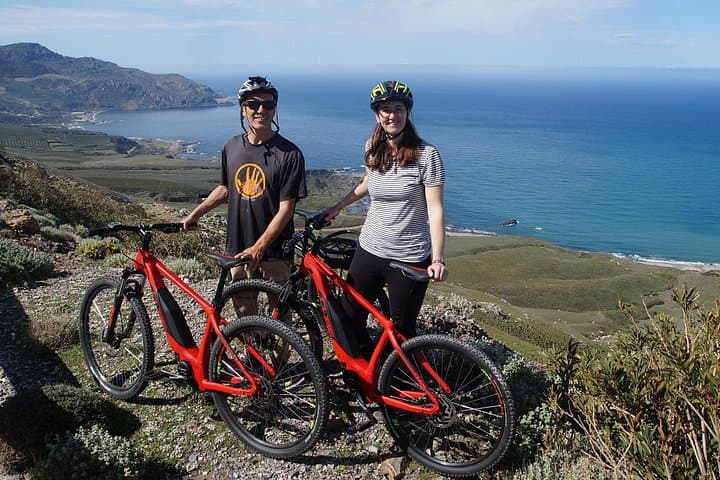
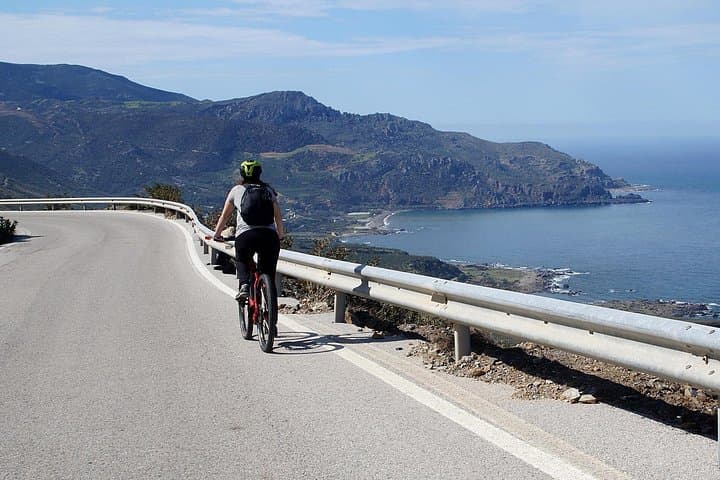
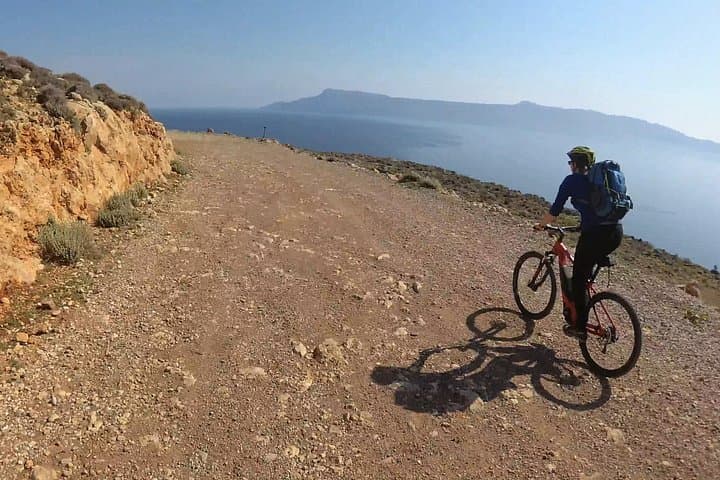
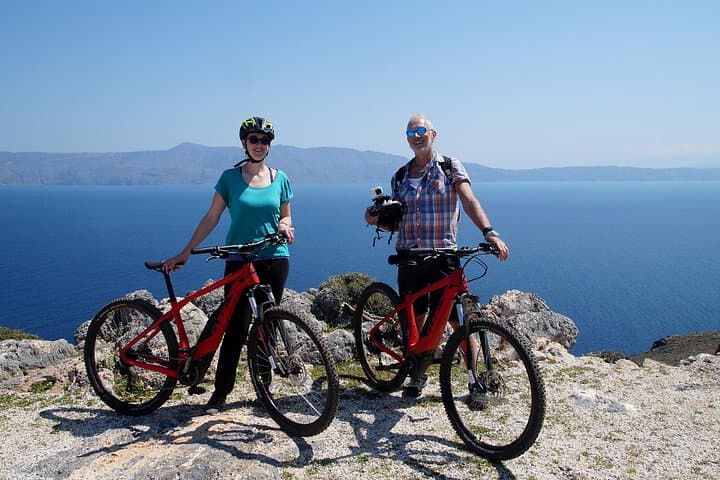
Morning light slants across low olive groves as the e-bike hums awake — a gentle push of power that turns steep, sheep-scratched lanes into inviting climbs. You ride small, quiet roads that thread villages and headlands, the sea a constant, shifting blue at the edge of the view, while goats step aside like local characters in slow motion.
Morning light slants across low olive groves as the e-bike hums awake — a gentle push of power that turns steep, sheep-scratched lanes into inviting climbs. You ride small, quiet roads that thread villages and headlands, the sea a constant, shifting blue at the edge of the view, while goats step aside like local characters in slow motion.
West Crete carries layers of history: Minoan trade routes gave way to Doric settlements, and the ruined hill of Polyrrinia still watches over the coast as it did for centuries. Geology here is limestone and schist folded into ridgelines, which creates sharp viewpoints and sheltered micro-valleys. Culture is visible in whitewashed houses, roadside chapels, and the casual commerce of village life — expect friendly waves, local bread ovens, and goats grazing on terraced fields.
On a guided e-bike tour you get access to low-traffic backroads that feel private but are historically rich; guides point out ancient masonry, explain grazing patterns, and adjust power delivery so less fit riders still reach the hilltops. Practicalities matter: ride earlier in summer to avoid heat, carry water, and use lower gears on loose descents.
The route balances effortless assisted climbs with short technical sections — nothing extreme, but singletrack shoulders and gravel require attention. Helmets are provided; bring layered clothing for wind on exposed ridges, sunscreen, and a small repair kit. Expect 2–5 hours on the trail depending on the chosen itinerary, with multiple stops for viewpoints and the occasional village café.