THE ADVENTURE COLLECTIVE® · Independent discovery and booking for outdoor travel

Explore Toronto’s shifting neighborhoods by e-bike on a guided 3.5-hour ride that visits street art, waterfront parks, and cultural corridors. This tour blends social history, urban renewal, and easy cruising—ideal for curious explorers.
Explore Toronto’s shifting neighborhoods by e-bike on a guided 3.5-hour ride that visits street art, waterfront parks, and cultural corridors. This tour blends social history, urban renewal, and easy cruising—ideal for curious explorers.
You kick off beside the lake, tires humming and city air shifting from salt to coffee as you ride east into pockets of Toronto most visitors miss.
Verified experiences and guided adventures in the surrounding area.
Operated by Toronto Bicycle Tours · Toronto, Ontario
You kick off beside the lake, tires humming and city air shifting from salt to coffee as you ride east into pockets of Toronto most visitors miss.
This guided e-bike route threads Lower Ossington’s converted warehouses and cafes, rolls through the dense human mosaic of St. James Town, and pauses where Bloor’s cultural corridor plants its flags of music and mural. The ride brushes Rosedale’s quiet parkland and the reimagined waterfront at Ontario Place, offering a cross-section of Toronto’s social and urban evolution.
Toronto’s streets are recent geology in human terms: reclaimed shoreline, buried streams, and roadways that follow old concession lines. The city’s growth—19th-century grid overlaid with modern bike lanes—reveals how immigration, industrial booms, and planning debates reshaped neighborhoods. Street art and community projects act like living history markers; CAMH and Trinity Bellwoods reflect policies and public life changing in real time.
Practically, expect a mostly flat 15–20 km loop with short, steeper pitches around Rosedale (roughly 50–100 m cumulative gain). E-bikes flatten effort but bring speed—helmets are provided and bottled water and a snack are included. Riders should be comfortable with mixed traffic, protected bike lanes, and occasional curb cuts.
Aim for morning or late afternoon to avoid rush-hour cycling and to make the most of light on murals and the lake. Bring a charged phone, a light jacket for lake breezes, and an eye for details—the city often reveals itself in a doorway, a mural corner, or a transformed factory lot.
easy.
3–4 hours.
Suitable for most adults who can pedal intermittently for a few hours; e-bike assistance reduces effort but expect standing starts and short climbs.
The tour covers roughly 15–20 km with mostly flat streets and short, steeper sections around Rosedale; cumulative elevation gain is modest (around 50–100 m).
Yes—helmets and e-bikes are included; guides will fit helmets and give a quick safety briefing before departure.
Yes—e-bike assistance makes it accessible for most fitness levels, though riders should be comfortable sharing city streets and following group instructions.
The operator cancels in significant rain or hazardous conditions with a full refund if canceled at least 24 hours prior; check the booking policy for specifics.
The route traces layers of Toronto’s growth—from 19th-century expansion and industrial waterfronts to late-20th-century immigration-driven neighbourhoods and today’s rapid cultural reinvention.
Stick to bike lanes and public paths; avoid littering and respect private property—many revitalized sites were reclaimed from industrial uses and rely on community stewardship.
Toronto Bicycle Tours operates guided outdoor trips and adventures with an emphasis on safety, stewardship, and memorable experiences.
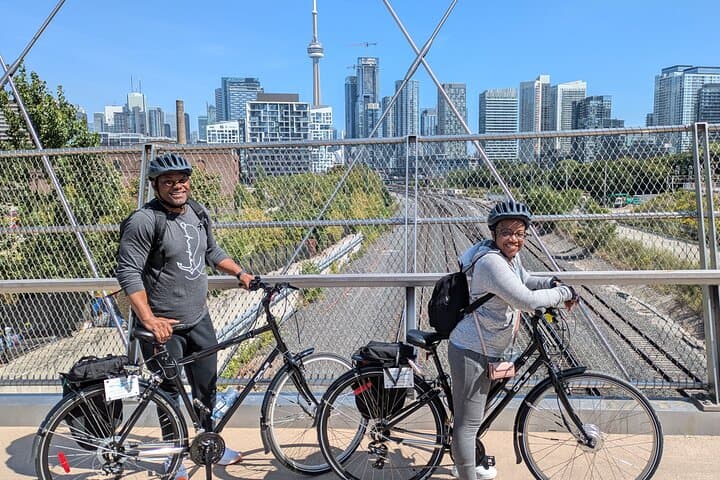
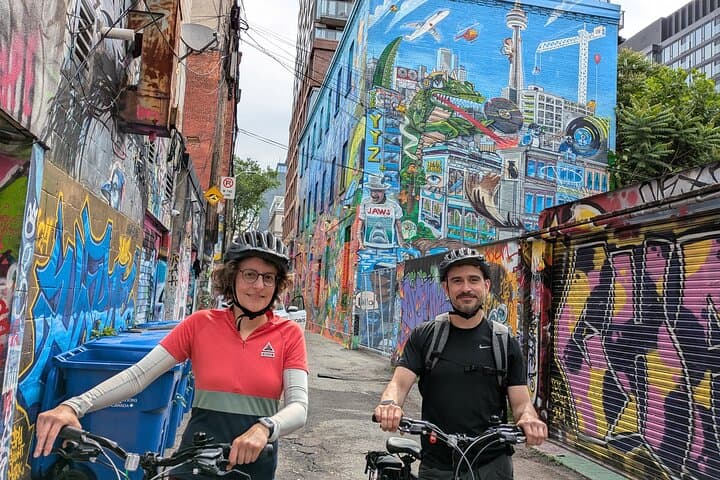
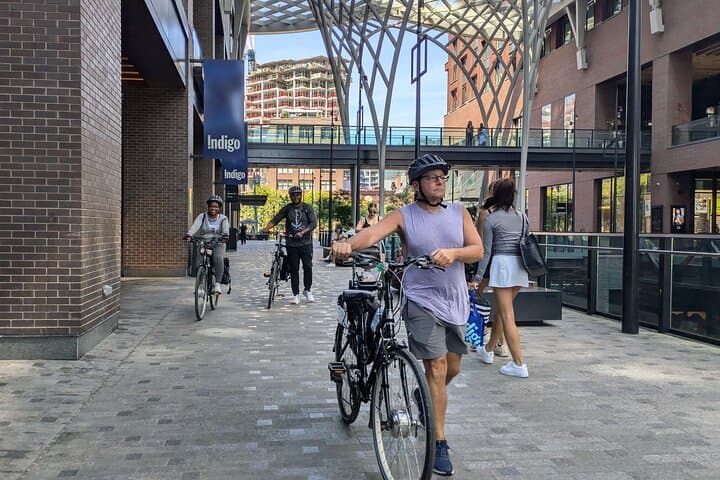
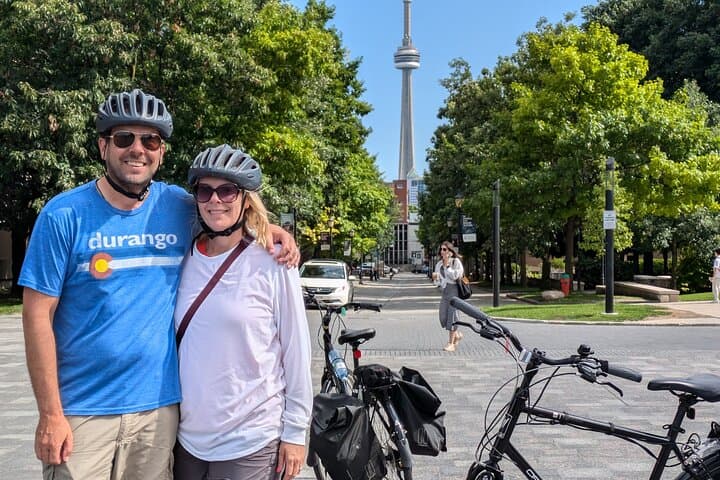
You kick off beside the lake, tires humming and city air shifting from salt to coffee as you ride east into pockets of Toronto most visitors miss.
You kick off beside the lake, tires humming and city air shifting from salt to coffee as you ride east into pockets of Toronto most visitors miss.
This guided e-bike route threads Lower Ossington’s converted warehouses and cafes, rolls through the dense human mosaic of St. James Town, and pauses where Bloor’s cultural corridor plants its flags of music and mural. The ride brushes Rosedale’s quiet parkland and the reimagined waterfront at Ontario Place, offering a cross-section of Toronto’s social and urban evolution.
Toronto’s streets are recent geology in human terms: reclaimed shoreline, buried streams, and roadways that follow old concession lines. The city’s growth—19th-century grid overlaid with modern bike lanes—reveals how immigration, industrial booms, and planning debates reshaped neighborhoods. Street art and community projects act like living history markers; CAMH and Trinity Bellwoods reflect policies and public life changing in real time.
Practically, expect a mostly flat 15–20 km loop with short, steeper pitches around Rosedale (roughly 50–100 m cumulative gain). E-bikes flatten effort but bring speed—helmets are provided and bottled water and a snack are included. Riders should be comfortable with mixed traffic, protected bike lanes, and occasional curb cuts.
Aim for morning or late afternoon to avoid rush-hour cycling and to make the most of light on murals and the lake. Bring a charged phone, a light jacket for lake breezes, and an eye for details—the city often reveals itself in a doorway, a mural corner, or a transformed factory lot.