THE ADVENTURE COLLECTIVE® · Independent discovery and booking for outdoor travel

Leave the city roar for cobbled silence: this e-bike tour pairs a guided visit to the catacombs with a rolling ride along the Appian Way and a walk beneath monumental aqueduct arches. Expect history, countryside views and easy mileage on an assisted bike.
Leave the city roar for cobbled silence: this e-bike tour pairs a guided visit to the catacombs with a rolling ride along the Appian Way and a walk beneath monumental aqueduct arches. Expect history, countryside views and easy mileage on an assisted bike.
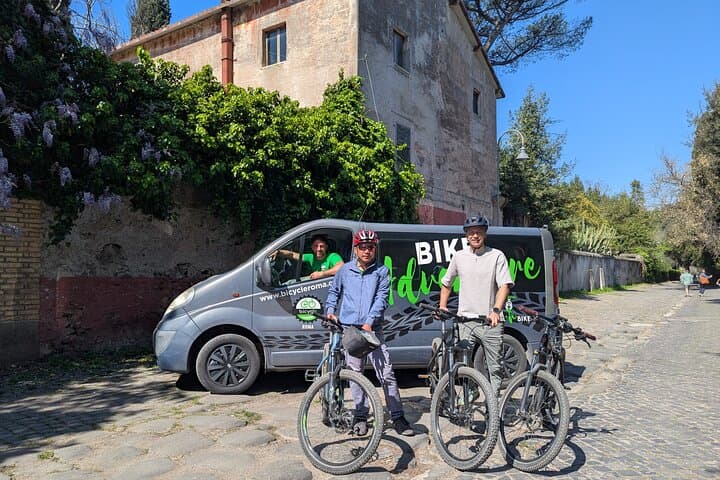
The morning hum of Rome fades as the minivan slips away from Circus Maximus and deposits riders at the ancient stones of the Appian Way. You step onto irregular basalt slabs that have borne carts and legions for two millennia; the air carries dust, pine resin and the distant call of birds that patrol the ruins.
Verified experiences and guided adventures in the surrounding area.
Operated by Bicycle Roma · Rome, Lazio
The morning hum of Rome fades as the minivan slips away from Circus Maximus and deposits riders at the ancient stones of the Appian Way. You step onto irregular basalt slabs that have borne carts and legions for two millennia; the air carries dust, pine resin and the distant call of birds that patrol the ruins.
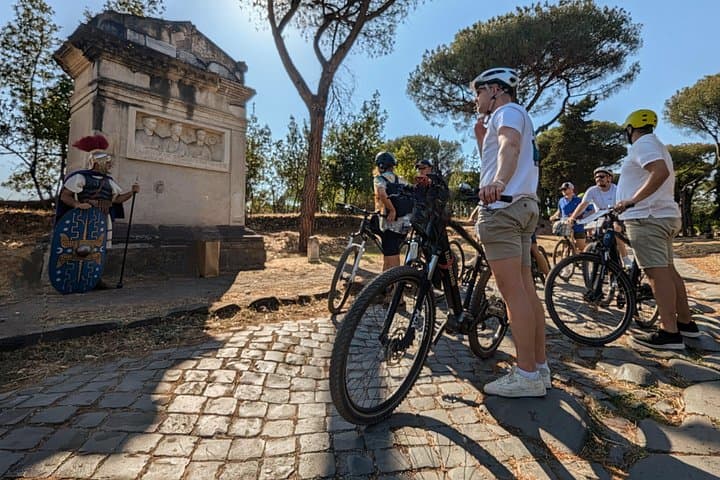
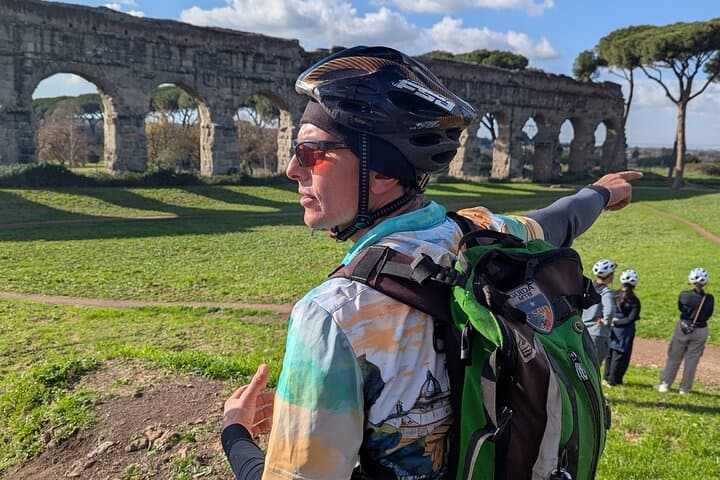
This route—laid out by Appius Claudius in 312 BCE—was Rome’s main artery to the south. Along its route the landscape reads like a compact history lesson: funerary monuments such as the Mausoleum of Cecilia Metella, low-slung catacombs carved into soft tufa, and later imperial aqueduct arches that still channel light across fields. Geology matters here; volcanic tufa and travertine underlie the paving and explain why tombs and tunnels were feasible for Roman engineers.
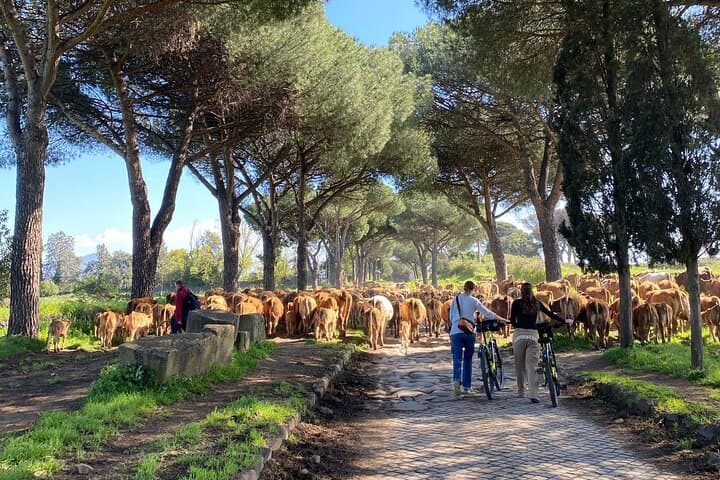
Culturally, the Appian Way has long been a place of ritual, pilgrimage and quiet rebellion against urban noise. Today, e-bikes temper the effort of uneven cobbles and country climbs, letting riders focus on ruins, anecdotes from guides and the surprising quiet of the Roman countryside.
Practical guidance: expect about 4–5 hours total, including a 45-minute catacombs tour and a 60-minute stop at the Aqueduct Park. Wear closed-toe shoes, bring a refillable water bottle, and be ready for short stretches of loose gravel and cobblestones. Guides provide helmets and a briefing; basic bike handling on rough surfaces is required. Time your ride for morning or late afternoon light to avoid midday heat and to see the arches cast long, dramatic shadows.
moderate.
4–5 hours.
Light to moderate cardio fitness; ability to ride an e-bike on uneven cobbles and short climbs.
Total experience is about 4.5 hours: a 20-minute shuttle each way, a 45-minute guided catacombs visit, roughly two hours of e-biking along the Appian Way and stops at aqueducts and parks.
Helmets are provided and guides choose low-traffic roads; basic to medium bike skills are required due to uneven cobbles and short gravel sections.
Infants up to 20 kg can ride in child seats; children under 139 cm use extensions; E-bikes for independent riding are available from age 12.
The operator provides ponchos and may modify the route; cancelations for a full refund are allowed with 24+ hours’ notice per policy.
The Via Appia Antica was begun in 312 BCE under Appius Claudius and became Rome’s principal military and commercial road to the south.
The Appian Way Regional Park is protected to preserve archaeological remains and limit vehicle traffic; stay on marked routes and avoid touching fragile masonry.
Bicycle Roma operates guided outdoor trips and adventures with an emphasis on safety, stewardship, and memorable experiences.
The morning hum of Rome fades as the minivan slips away from Circus Maximus and deposits riders at the ancient stones of the Appian Way. You step onto irregular basalt slabs that have borne carts and legions for two millennia; the air carries dust, pine resin and the distant call of birds that patrol the ruins.
The morning hum of Rome fades as the minivan slips away from Circus Maximus and deposits riders at the ancient stones of the Appian Way. You step onto irregular basalt slabs that have borne carts and legions for two millennia; the air carries dust, pine resin and the distant call of birds that patrol the ruins.
This route—laid out by Appius Claudius in 312 BCE—was Rome’s main artery to the south. Along its route the landscape reads like a compact history lesson: funerary monuments such as the Mausoleum of Cecilia Metella, low-slung catacombs carved into soft tufa, and later imperial aqueduct arches that still channel light across fields. Geology matters here; volcanic tufa and travertine underlie the paving and explain why tombs and tunnels were feasible for Roman engineers.
Culturally, the Appian Way has long been a place of ritual, pilgrimage and quiet rebellion against urban noise. Today, e-bikes temper the effort of uneven cobbles and country climbs, letting riders focus on ruins, anecdotes from guides and the surprising quiet of the Roman countryside.
Practical guidance: expect about 4–5 hours total, including a 45-minute catacombs tour and a 60-minute stop at the Aqueduct Park. Wear closed-toe shoes, bring a refillable water bottle, and be ready for short stretches of loose gravel and cobblestones. Guides provide helmets and a briefing; basic bike handling on rough surfaces is required. Time your ride for morning or late afternoon light to avoid midday heat and to see the arches cast long, dramatic shadows.