THE ADVENTURE COLLECTIVE® · Independent discovery and booking for outdoor travel

Cycle the Appian Way on a pedal‑assist e‑bike, passing monumental aqueduct arches and Imperial tombs before a VR reconstruction brings the Mausoleum of Cecilia Metella back to life. A 3.5‑hour ride that blends Roman history with easy adventure.
Cycle the Appian Way on a pedal‑assist e‑bike, passing monumental aqueduct arches and Imperial tombs before a VR reconstruction brings the Mausoleum of Cecilia Metella back to life. A 3.5‑hour ride that blends Roman history with easy adventure.
Morning light slices across the ancient basoli as you push off from Basilica di San Sebastiano and feel the pedal-assist take the strain. The Appian Way here is wide and quiet — cobbles that once carried legionaries now roll beneath modern tires, trees leaning in to shade the long stones.
Verified experiences and guided adventures in the surrounding area.
Operated by Bicycle Roma · Rome, Lazio
Morning light slices across the ancient basoli as you push off from Basilica di San Sebastiano and feel the pedal-assist take the strain. The Appian Way here is wide and quiet — cobbles that once carried legionaries now roll beneath modern tires, trees leaning in to shade the long stones.
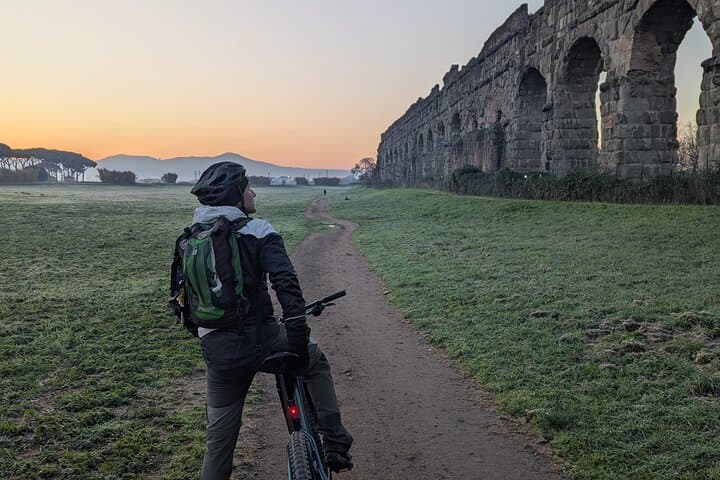
This stretch of the Via Appia Antica threads Roman military logistics, Imperial funerary monuments and late Republican farms. The Aqueduct Park nearby showcases masonry arches that fed Rome; their scale reveals Roman priorities in water engineering and landscape control. At the Mausoleum of Cecilia Metella the tour ties past to present: a VR reconstruction overlays the ruin with its original form, giving visual context to tomb architecture and the adjacent Caetani fortress.
Culturally, the route passes small chapels, country villas and the quieter edges of urban Rome where shepherding fields once met city walls. Geologically the soil is Roman tufa and alluvial terraces—easy rolling for an e-bike but trickier on cobbles.
Practical guidance: bring closed-toe shoes and a water bottle, expect 3.5 hours total with several easy climbs handled by the e-bike. Most of the ride is on cobblestones; maintain a controlled speed and follow your guide’s line across brief road crossings. Helmets are provided, but sunglasses and a light wind shell are useful if wind or sudden showers appear. The experience balances low exertion with technical awareness—ideal for history-minded travelers who want a comfortable, active way to see Rome’s countryside.
moderate.
3.5 hours.
Suitable for travelers in reasonable shape; the e‑bike reduces exertion but you should be comfortable balancing on uneven cobbles for several miles.
The full experience is about 3.5 hours with most of the time spent cycling along the Appian Way and through nearby parks; there are several short stops for sights and the VR session.
Yes — high‑quality pedal‑assist e‑bikes and helmets are included; infant seats and child trailers are available for younger riders.
Riders need basic cycling skill and balance on cobblestones; guides perform a brief assessment and may deny participation for safety reasons.
If the tour doesn’t reach the minimum, the operator will offer an alternative date or a full refund.
The Appian Way was Rome’s principal military and trade artery; along it stand funerary monuments and aqueducts that map imperial priorities in transport and water supply.
The archaeological park is protected—stay on designated routes, avoid climbing ruins and carry out waste to reduce erosion and preserve masonry.
Bicycle Roma operates guided outdoor trips and adventures with an emphasis on safety, stewardship, and memorable experiences.
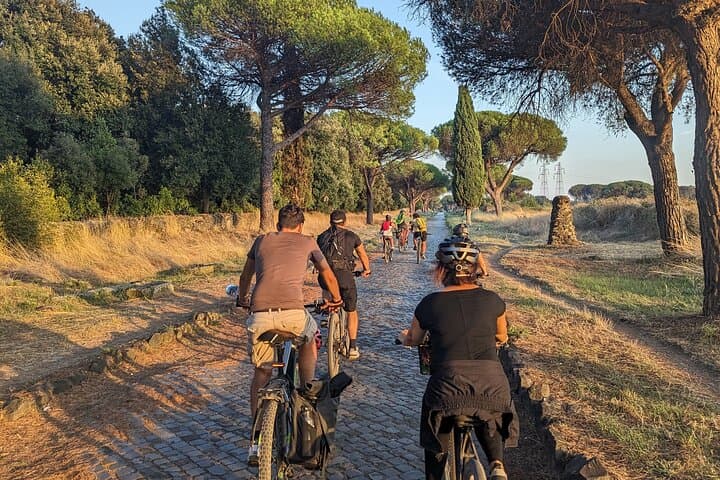
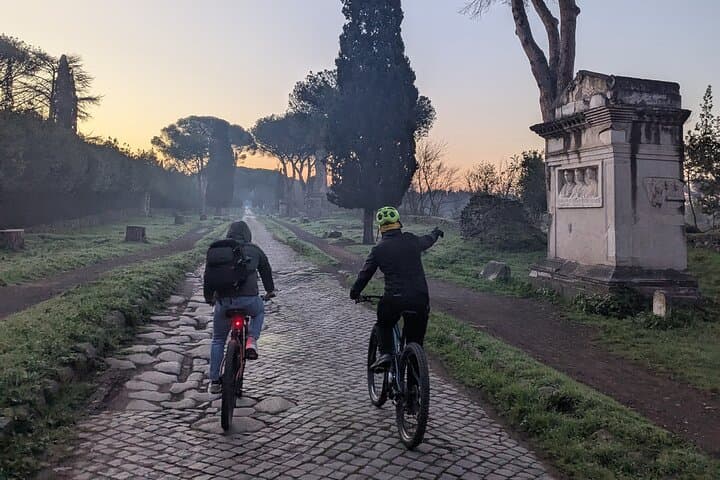
Morning light slices across the ancient basoli as you push off from Basilica di San Sebastiano and feel the pedal-assist take the strain. The Appian Way here is wide and quiet — cobbles that once carried legionaries now roll beneath modern tires, trees leaning in to shade the long stones.
Morning light slices across the ancient basoli as you push off from Basilica di San Sebastiano and feel the pedal-assist take the strain. The Appian Way here is wide and quiet — cobbles that once carried legionaries now roll beneath modern tires, trees leaning in to shade the long stones.
This stretch of the Via Appia Antica threads Roman military logistics, Imperial funerary monuments and late Republican farms. The Aqueduct Park nearby showcases masonry arches that fed Rome; their scale reveals Roman priorities in water engineering and landscape control. At the Mausoleum of Cecilia Metella the tour ties past to present: a VR reconstruction overlays the ruin with its original form, giving visual context to tomb architecture and the adjacent Caetani fortress.
Culturally, the route passes small chapels, country villas and the quieter edges of urban Rome where shepherding fields once met city walls. Geologically the soil is Roman tufa and alluvial terraces—easy rolling for an e-bike but trickier on cobbles.
Practical guidance: bring closed-toe shoes and a water bottle, expect 3.5 hours total with several easy climbs handled by the e-bike. Most of the ride is on cobblestones; maintain a controlled speed and follow your guide’s line across brief road crossings. Helmets are provided, but sunglasses and a light wind shell are useful if wind or sudden showers appear. The experience balances low exertion with technical awareness—ideal for history-minded travelers who want a comfortable, active way to see Rome’s countryside.