THE ADVENTURE COLLECTIVE® · Independent discovery and booking for outdoor travel

Cycle the Itria Valley on an accessible e-bike loop that links Alberobello’s trulli, the white-walled charm of Locorotondo, and a family-run winery tasting. This 2–4 hour ride balances gentle climbs with sensory stops for food and wine.
Cycle the Itria Valley on an accessible e-bike loop that links Alberobello’s trulli, the white-walled charm of Locorotondo, and a family-run winery tasting. This 2–4 hour ride balances gentle climbs with sensory stops for food and wine.
Sunlight slants across dry-stone walls as cyclists push off into the Itria Valley, gears humming beneath the steady pull of an e-bike. The road narrows between whitewashed houses and conical trulli roofs, then opens onto limestone fields where the wind runs like a visible current, urging riders toward Alberobello’s clustered cones and Locorotondo’s circular streets.
Verified experiences and guided adventures in the surrounding area.
Operated by Puglia in Tour · Alberobello, Puglia
Sunlight slants across dry-stone walls as cyclists push off into the Itria Valley, gears humming beneath the steady pull of an e-bike. The road narrows between whitewashed houses and conical trulli roofs, then opens onto limestone fields where the wind runs like a visible current, urging riders toward Alberobello’s clustered cones and Locorotondo’s circular streets.
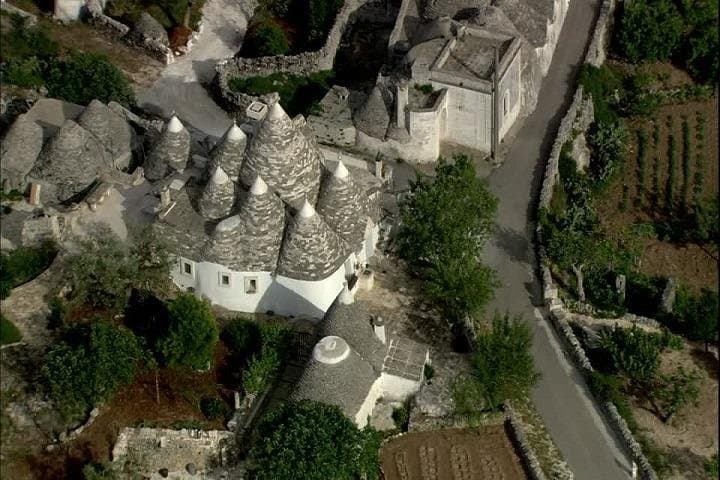
The route threads through karst geology shaped by rain and time; trulli are a practical response to that stone—dry-built with local limestone and whitewashed for reflection. These settlements grew from peasant farms; today their compact centers and flower-bedecked balconies reflect a living, small-town culture shaped by wine and olive oil. The valley’s wineries sit on gentle terraces, a legacy of agricultural practices adapted to thin soils and thermal breezes.
Practicalities matter: this is a mostly paved, rolling landscape with short climbs and panoramic descents—ideal for e-bikes and confident beginners. Expect 2–4 hours on the bike depending on stops; bring a charged phone with GPX, a refillable water bottle, and small cash for markets. Plan rides in spring or fall for cooler temperatures and harvest energy; start early in summer to avoid heat and midday traffic. Respect vineyard gates and local lanes, and leave purchases at the pickup point if arranged.
What this tour offers is simple: sensory travel at human speed—olive aromas, stone roofs, and a winery table where local wine and food turn the valley’s geology and history into flavor. For cyclists looking for accessible adventure with cultural depth, the Itria loop delivers.
easy.
2–4 hours.
Suitable for beginners and casual cyclists; e-bikes reduce effort on climbs but expect short bursts of pedaling
Yes—electric bicycles are provided as part of the package so riders can cover the valley with less effort.
The experience lasts about 2–4 hours depending on stops; with e-bikes it’s classified as easy and suitable for most fitness levels.
A tasting of local food and wine at a partnered winery is included; additional meals can be arranged as extras.
Full refund is available if cancelled at least 24 hours before departure; tours may cancel for bad weather or low bookings.
Trulli in the Itria Valley are dry-stone structures built from local limestone without concrete; many date back to agrarian communities who adapted to karst terrain.
The karst landscape is sensitive—stay on roads, avoid trampling terraces, and support small wineries that practice sustainable land stewardship.
Puglia in Tour operates guided outdoor trips and adventures with an emphasis on safety, stewardship, and memorable experiences.
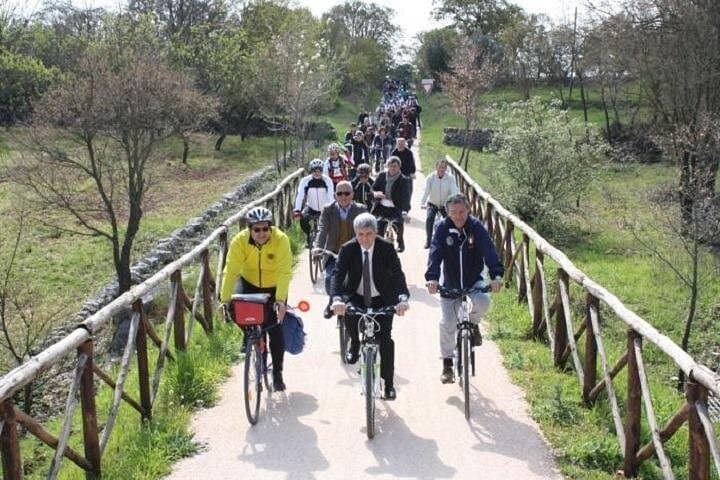
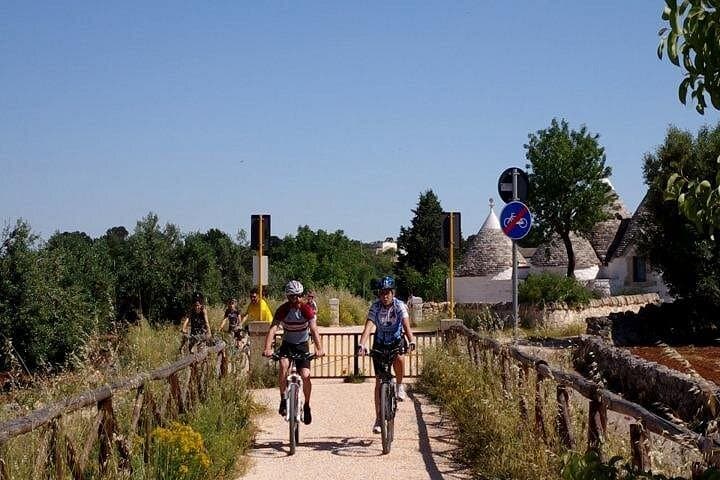
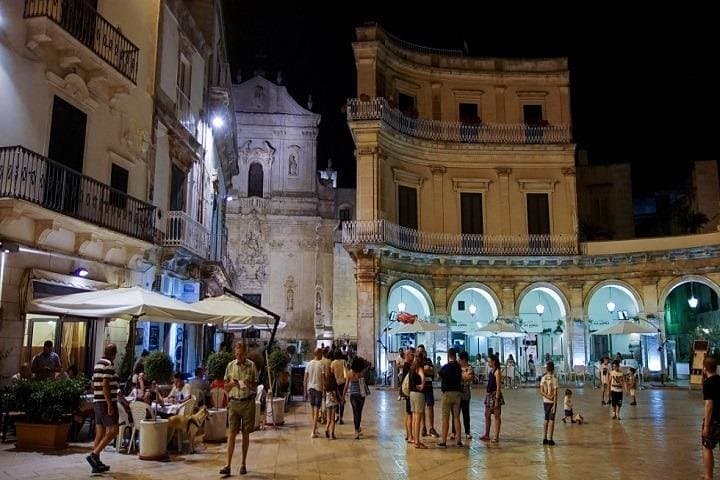
Sunlight slants across dry-stone walls as cyclists push off into the Itria Valley, gears humming beneath the steady pull of an e-bike. The road narrows between whitewashed houses and conical trulli roofs, then opens onto limestone fields where the wind runs like a visible current, urging riders toward Alberobello’s clustered cones and Locorotondo’s circular streets.
Sunlight slants across dry-stone walls as cyclists push off into the Itria Valley, gears humming beneath the steady pull of an e-bike. The road narrows between whitewashed houses and conical trulli roofs, then opens onto limestone fields where the wind runs like a visible current, urging riders toward Alberobello’s clustered cones and Locorotondo’s circular streets.
The route threads through karst geology shaped by rain and time; trulli are a practical response to that stone—dry-built with local limestone and whitewashed for reflection. These settlements grew from peasant farms; today their compact centers and flower-bedecked balconies reflect a living, small-town culture shaped by wine and olive oil. The valley’s wineries sit on gentle terraces, a legacy of agricultural practices adapted to thin soils and thermal breezes.
Practicalities matter: this is a mostly paved, rolling landscape with short climbs and panoramic descents—ideal for e-bikes and confident beginners. Expect 2–4 hours on the bike depending on stops; bring a charged phone with GPX, a refillable water bottle, and small cash for markets. Plan rides in spring or fall for cooler temperatures and harvest energy; start early in summer to avoid heat and midday traffic. Respect vineyard gates and local lanes, and leave purchases at the pickup point if arranged.
What this tour offers is simple: sensory travel at human speed—olive aromas, stone roofs, and a winery table where local wine and food turn the valley’s geology and history into flavor. For cyclists looking for accessible adventure with cultural depth, the Itria loop delivers.