THE ADVENTURE COLLECTIVE® · Independent discovery and booking for outdoor travel

Hop a short ferry from Old Goa and e‑bike across Divar’s fields and riverfronts to reach baroque churches, a Kadamba temple, and tidal sluices. This easy three‑hour tour blends local lore, gentle climbs, and panoramic Mandovi views.
Hop a short ferry from Old Goa and e‑bike across Divar’s fields and riverfronts to reach baroque churches, a Kadamba temple, and tidal sluices. This easy three‑hour tour blends local lore, gentle climbs, and panoramic Mandovi views.
The ferry eases away from Old Goa and the Mandovi opens like a cool shoulder; the hum of electric motors replaces the shudder of an engine as riders clip helmets and set off onto narrow island lanes.
Verified experiences and guided adventures in the surrounding area.
Operated by BLive Electric Bike Tours · Old Goa, Goa
The ferry eases away from Old Goa and the Mandovi opens like a cool shoulder; the hum of electric motors replaces the shudder of an engine as riders clip helmets and set off onto narrow island lanes.
Divar’s flat, field-cut roads roll past paddy plots and Portuguese-era homes, leading to an 18th‑century baroque church perched on a low rise and a submerged Kadamba‑era temple whose stones tell older stories. Geologically, the island sits in the Mandovi estuary: tidal channels, alluvial soils and raised clay mounds create a landscape where sluice gates and bamboo rafters have long managed the push and pull of river and land.
Local life is practical and vocal—fisherfolk mend nets at the sluice, elders recount myths at temple tanks, and captains narrate little-known legends that stitch culture to place. The tour’s route mixes tarmac with compact village tracks, climbs a short hill for a river panorama, and pauses at archaeological fragments and a holy bath site called Porne Tirth.
Expect a three‑hour guided ride covering roughly 8–12 km of easy terrain with 30–80 m of elevation gain at most; the e‑bike’s motor keeps effort low, but you’ll stand for short climbs and walk bikes on some narrow stone steps. Practicalities: ferry timetables and tide can affect departure, the operator enforces a 90 kg weight limit and 5 ft minimum height, and respectful clothing is needed for temple visits. Bring sun protection, a refillable bottle, closed‑toe shoes and a light rain layer in the monsoon—Divar rewards slow attention and simple gear.
easy.
3 hours.
Suitable for most fitness levels; basic cycling balance required and short standing climbs expected
The guided ride totals around 8–12 km on mostly flat roads and village tracks, spread over a three‑hour tour including ferry time and stops.
No—these are electric‑assist bikes suitable for beginners, and guides provide a safety briefing and basic handling tips.
Yes—stops include temples and a holy bathing site; visitors should wear modest clothing and remove shoes where required.
The operator recommends a minimum height of 5 ft and a maximum weight of 90 kg; not suitable for those with serious back problems or pregnancy.
Divar sits within the Konkan estuary and reflects layered histories—Kadamba dynasty remnants, Portuguese colonial churches from the 18th century, and centuries of fishing culture.
Tidal ecology and paddy plots are sensitive to pollution and tourist pressure—stick to paths, avoid single‑use plastics, and follow guide instructions to protect temple grounds and riverbanks.
BLive Electric Bike Tours operates guided outdoor trips and adventures with an emphasis on safety, stewardship, and memorable experiences.
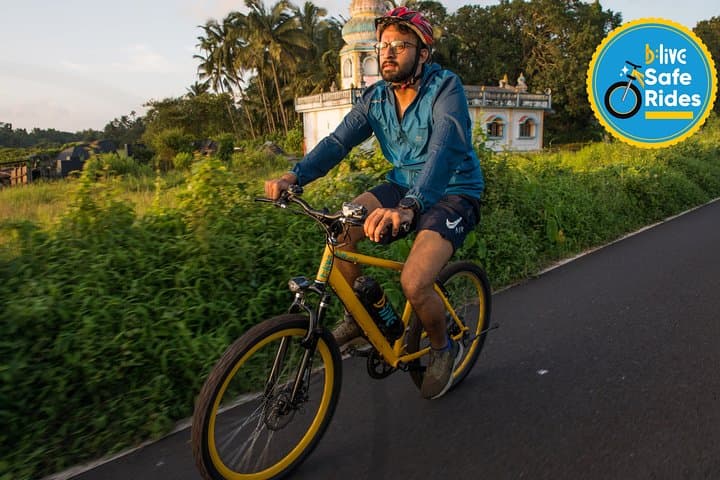
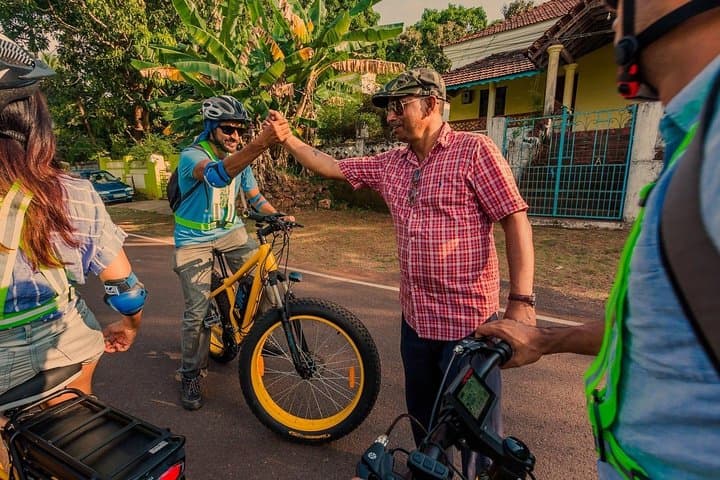
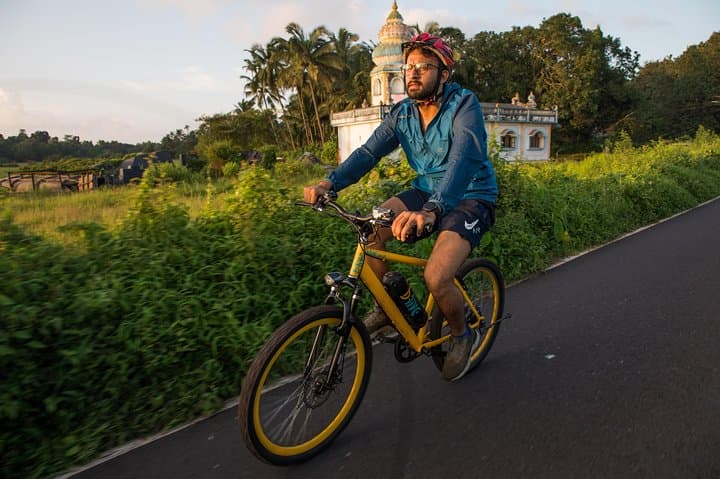
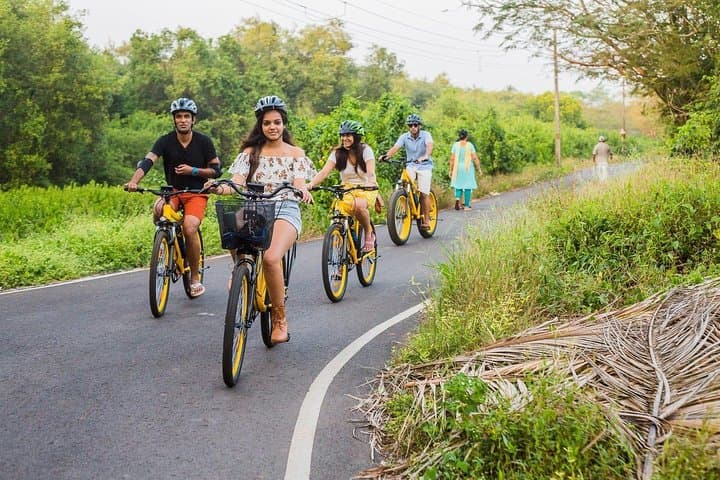
The ferry eases away from Old Goa and the Mandovi opens like a cool shoulder; the hum of electric motors replaces the shudder of an engine as riders clip helmets and set off onto narrow island lanes.
The ferry eases away from Old Goa and the Mandovi opens like a cool shoulder; the hum of electric motors replaces the shudder of an engine as riders clip helmets and set off onto narrow island lanes.
Divar’s flat, field-cut roads roll past paddy plots and Portuguese-era homes, leading to an 18th‑century baroque church perched on a low rise and a submerged Kadamba‑era temple whose stones tell older stories. Geologically, the island sits in the Mandovi estuary: tidal channels, alluvial soils and raised clay mounds create a landscape where sluice gates and bamboo rafters have long managed the push and pull of river and land.
Local life is practical and vocal—fisherfolk mend nets at the sluice, elders recount myths at temple tanks, and captains narrate little-known legends that stitch culture to place. The tour’s route mixes tarmac with compact village tracks, climbs a short hill for a river panorama, and pauses at archaeological fragments and a holy bath site called Porne Tirth.
Expect a three‑hour guided ride covering roughly 8–12 km of easy terrain with 30–80 m of elevation gain at most; the e‑bike’s motor keeps effort low, but you’ll stand for short climbs and walk bikes on some narrow stone steps. Practicalities: ferry timetables and tide can affect departure, the operator enforces a 90 kg weight limit and 5 ft minimum height, and respectful clothing is needed for temple visits. Bring sun protection, a refillable bottle, closed‑toe shoes and a light rain layer in the monsoon—Divar rewards slow attention and simple gear.