THE ADVENTURE COLLECTIVE® · Independent discovery and booking for outdoor travel

Explore Budapest by e‑bike, climbing Castle Hill with electric assist and stopping at 15 landmark viewpoints from Andrássy Avenue to Fisherman’s Bastion. This guided 3.5‑hour route pairs city history with easy pedaling and panoramic Danube views.
Explore Budapest by e‑bike, climbing Castle Hill with electric assist and stopping at 15 landmark viewpoints from Andrássy Avenue to Fisherman’s Bastion. This guided 3.5‑hour route pairs city history with easy pedaling and panoramic Danube views.
Pedaling beneath an open sky, riders thread between neo‑Renaissance boulevards and the steady curve of the Danube, the river daring you to look away from the city’s wide, layered facades. The climb onto Castle Hill feels sudden but short — electric torque turns the ascent into a slow reveal of red roofs and the Parliament’s lacework along the river.
Verified experiences and guided adventures in the surrounding area.
Operated by Budapest Bike Breeze · Budapest, Budapest
Pedaling beneath an open sky, riders thread between neo‑Renaissance boulevards and the steady curve of the Danube, the river daring you to look away from the city’s wide, layered facades. The climb onto Castle Hill feels sudden but short — electric torque turns the ascent into a slow reveal of red roofs and the Parliament’s lacework along the river.
This ride stitches together Budapest’s history: Andrássy Avenue and its 19th‑century expansion that earned UNESCO recognition, the Royal Palace whose battered stones recall Habsburg pageantry and wartime reconstruction, and City Park with its neo‑Baroque bath culture. Geologically, Buda’s elevated district rises from older sedimentary and dolomite formations that give the hill its steep, walkable faces and panoramic overlooks.
Locals move between thermal baths, markets and ruin bars; guides on these tours fold everyday life into the narrative, explaining why the Danube’s west bank became royal seat while Pest grew into the commercial heart.
Practical guidance: the shared route covers central Budapest with roughly a dozen to fifteen brief stops over about 3.5 hours. Helmets and e‑bikes are supplied; expect cobblestone patches and short steep pitches where electric assist matters. Bring a refillable water bottle, closed‑toe shoes, a light rain layer (tours run in variable weather) and a camera with quick access. Midday light makes the best photos along the river; mornings are quieter at Fisherman’s Bastion.
This tour balances relaxed sightseeing with enough mobility to see dispersed landmarks—ideal for riders comfortable in city traffic and curious about Budapest’s layered past.
moderate.
3.5 hours.
Light to moderate: suitable for people who can pedal short distances and stand for walking stops; e‑bikes reduce strain.
Minimum age is 14; younger riders are not permitted due to safety and insurance rules.
Yes—helmets and e‑bikes are provided and fitted by the guide before departure.
Yes—electric assist makes hills manageable and the pace is suitable for riders with basic bike skills.
Tours operate in most weather; dressing appropriately is recommended and cancellation policy allows refunds if canceled more than 24 hours ahead.
Buda Castle was transformed repeatedly over centuries—from medieval royal residence to Habsburg palace and 20th‑century reconstruction—reflecting Budapest’s layered political past.
Cycling tours reduce vehicle traffic and emissions in the city center; stay on paved routes, avoid tram tracks when riding, and respect protected monument signage.
Budapest Bike Breeze operates guided outdoor trips and adventures with an emphasis on safety, stewardship, and memorable experiences.
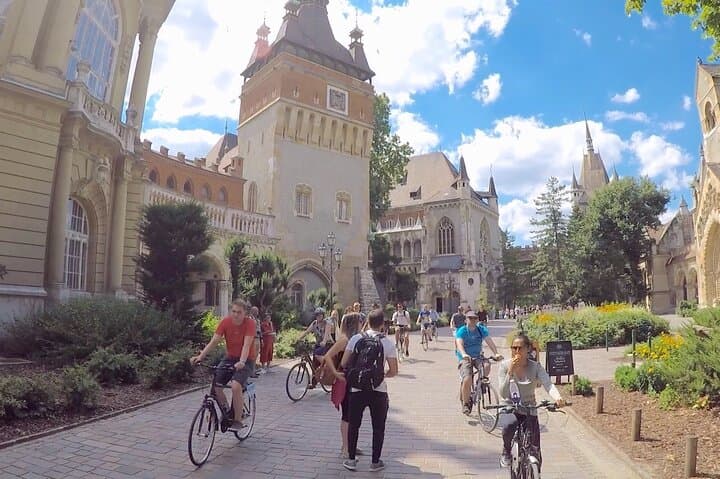
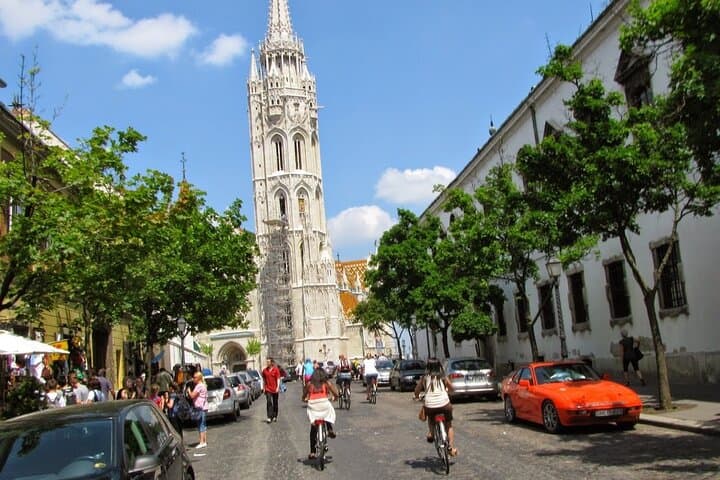
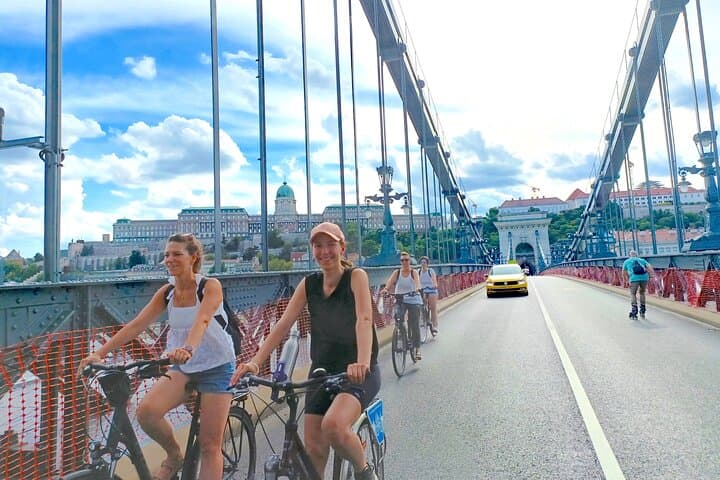
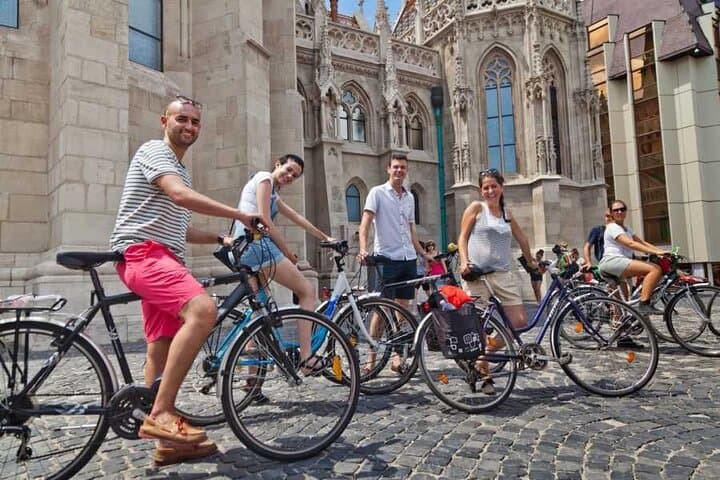
Pedaling beneath an open sky, riders thread between neo‑Renaissance boulevards and the steady curve of the Danube, the river daring you to look away from the city’s wide, layered facades. The climb onto Castle Hill feels sudden but short — electric torque turns the ascent into a slow reveal of red roofs and the Parliament’s lacework along the river.
Pedaling beneath an open sky, riders thread between neo‑Renaissance boulevards and the steady curve of the Danube, the river daring you to look away from the city’s wide, layered facades. The climb onto Castle Hill feels sudden but short — electric torque turns the ascent into a slow reveal of red roofs and the Parliament’s lacework along the river.
This ride stitches together Budapest’s history: Andrássy Avenue and its 19th‑century expansion that earned UNESCO recognition, the Royal Palace whose battered stones recall Habsburg pageantry and wartime reconstruction, and City Park with its neo‑Baroque bath culture. Geologically, Buda’s elevated district rises from older sedimentary and dolomite formations that give the hill its steep, walkable faces and panoramic overlooks.
Locals move between thermal baths, markets and ruin bars; guides on these tours fold everyday life into the narrative, explaining why the Danube’s west bank became royal seat while Pest grew into the commercial heart.
Practical guidance: the shared route covers central Budapest with roughly a dozen to fifteen brief stops over about 3.5 hours. Helmets and e‑bikes are supplied; expect cobblestone patches and short steep pitches where electric assist matters. Bring a refillable water bottle, closed‑toe shoes, a light rain layer (tours run in variable weather) and a camera with quick access. Midday light makes the best photos along the river; mornings are quieter at Fisherman’s Bastion.
This tour balances relaxed sightseeing with enough mobility to see dispersed landmarks—ideal for riders comfortable in city traffic and curious about Budapest’s layered past.