THE ADVENTURE COLLECTIVE® · Independent discovery and booking for outdoor travel

A 60-minute helicopter flight from Te Anau that crosses Lake Manapouri and the main divide into Tamatea / Dusky Sound, including two remote alpine landings and sweeping fjord-to-sea views.
A 60-minute helicopter flight from Te Anau that crosses Lake Manapouri and the main divide into Tamatea / Dusky Sound, including two remote alpine landings and sweeping fjord-to-sea views.
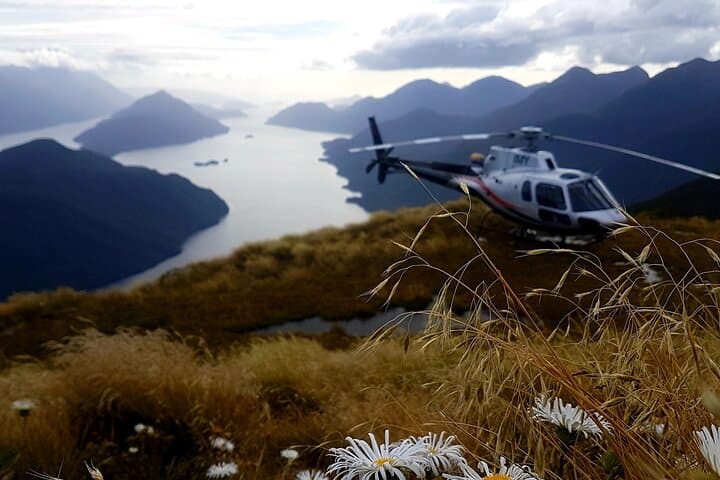
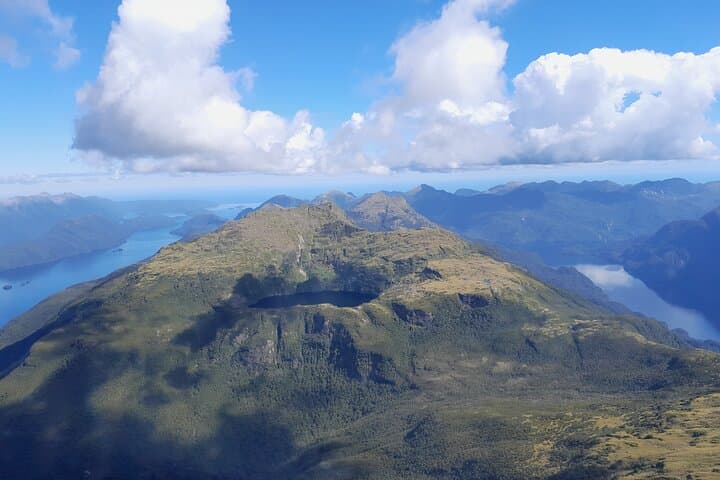
You feel the ground drop away before the world does — Te Anau's patchwork of lakes and farmland opens into a folded map of rivers and ridges. The helicopter banks west and Lake Manapouri shrinks into a polished coin; below, braided rivers carve silver lines through ancient forest. Within minutes the low clouds lift off the peaks and the fjords of Tamatea / Dusky Sound reveal themselves: a raw, glacier-carved coastline cutting inland to arms and islands that rarely see footprints.
Verified experiences and guided adventures in the surrounding area.
Operated by Te Anau Helicopter Services · Te Anau, Southland
You feel the ground drop away before the world does — Te Anau's patchwork of lakes and farmland opens into a folded map of rivers and ridges. The helicopter banks west and Lake Manapouri shrinks into a polished coin; below, braided rivers carve silver lines through ancient forest. Within minutes the low clouds lift off the peaks and the fjords of Tamatea / Dusky Sound reveal themselves: a raw, glacier-carved coastline cutting inland to arms and islands that rarely see footprints.
Dusky Sound bears the layers of human and geological history. Captain Cook charted parts of the fiord in the 1770s, sealing ships later used its sheltered arms, and Māori carried stories and names — Tamatea is the original Māori name for this dramatic stretch of Fiordland. Geologically the sound is a deep incision carved by glaciers, its steep walls dropping into cold, tannin-dark water. Compared to Piopiotahi / Milford Sound, Dusky Sound is broader and more complex — the tour notes it is roughly forty times larger — and because it’s so remote it has retained long stretches of untouched shoreline and canopy.
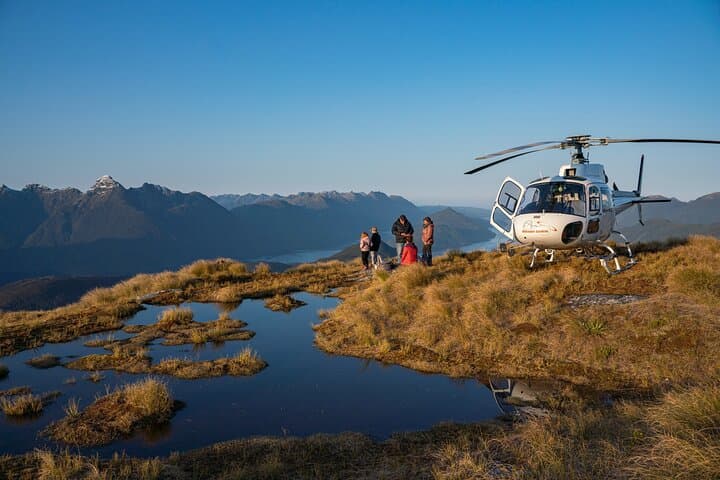
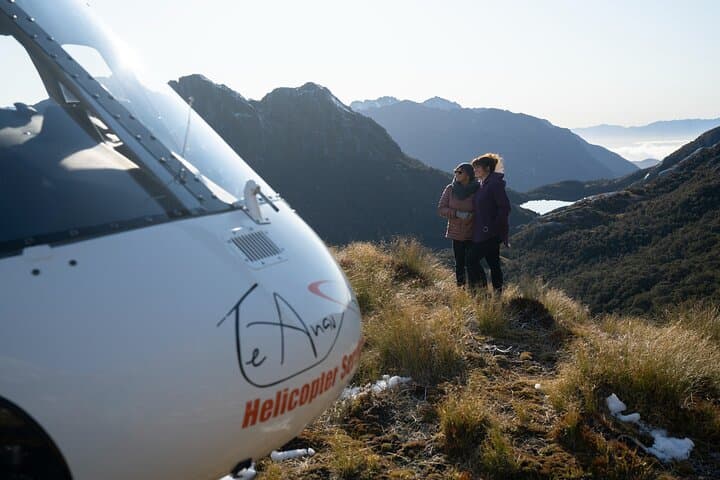
The flight itself is compact but generous. Over roughly 60 minutes you’ll cross alpine tarns, long river valleys, and coastal peaks that, in shoulder seasons, still shoulder snow. The highlight: two remote landings. Stepping onto these ridgelines or beach clears you into silence the way only truly remote places can — wind and bird calls fill the space where roads do not exist. Guides give you time to photograph, breathe, and sense how small the map of our routine life suddenly feels.
Practicalities matter: departures meet at Te Anau Helicopters at Te Anau Airport; this is a manual-confirmation tour so check the weather window the morning of your flight. The operator requests passenger weights when booking for load calculations, and flights cancel in poor weather — a blessing in a place where visibility decides the experience.
Packing-wise, think layers and a stable camera grip. Even on warm days the alpine wind and the helicopter’s downdraft turn lightweight jackets into essentials; footwear should be sturdy enough for short, uneven landings. If you’re prone to motion sickness, choose a seat where forward visibility reduces queasiness and try to limit heavy meals beforehand.
For anyone who wants a condensed but potent encounter with Rua-o-te-Moko Fiordland National Park, this is it: a short flight that opens into an entire coastline’s worth of geology, history, and wildlife. Time it for clear mornings if possible, keep your phone charged and camera at the ready, and accept that some of the best views are only shared with seals and terns.
easy.
1 hour.
Minimal fitness required; able to climb in/out during two short landings (uneven ground).
The tour runs about 60 minutes from Te Anau, including two short remote landings.
Layered clothing with a windproof outer layer and sturdy shoes is best for variable alpine conditions.
The operator lists the flight as wheelchair accessible and stroller accessible, but infants must sit on an adult lap; contact the operator for individual mobility needs.
Yes — photography is encouraged; secure straps and lens protection are recommended due to rotor wash and salt spray.
Flights are cancelled in poor visibility or high winds; the operator offers full refunds for cancellations made at least 24 hours in advance or when the flight is canceled for weather.
Landings occur in alpine and coastal clearings within Tamatea / Dusky Sound that are only accessible by boat, helicopter, or the multi-day Dusky Track.
Tamatea / Dusky Sound carries Māori place names and was charted by European explorers like Captain Cook; sealing and early ship visits shaped its historic human contact.
Part of Te Wahipounamu World Heritage Area, Fiordland is managed for low-impact visitation—stick to landings, take out all rubbish, and follow crew briefings to protect sensitive shoreline habitat.
Te Anau Helicopter Services operates guided outdoor trips and adventures with an emphasis on safety, stewardship, and memorable experiences.
You feel the ground drop away before the world does — Te Anau's patchwork of lakes and farmland opens into a folded map of rivers and ridges. The helicopter banks west and Lake Manapouri shrinks into a polished coin; below, braided rivers carve silver lines through ancient forest. Within minutes the low clouds lift off the peaks and the fjords of Tamatea / Dusky Sound reveal themselves: a raw, glacier-carved coastline cutting inland to arms and islands that rarely see footprints.
You feel the ground drop away before the world does — Te Anau's patchwork of lakes and farmland opens into a folded map of rivers and ridges. The helicopter banks west and Lake Manapouri shrinks into a polished coin; below, braided rivers carve silver lines through ancient forest. Within minutes the low clouds lift off the peaks and the fjords of Tamatea / Dusky Sound reveal themselves: a raw, glacier-carved coastline cutting inland to arms and islands that rarely see footprints.
Dusky Sound bears the layers of human and geological history. Captain Cook charted parts of the fiord in the 1770s, sealing ships later used its sheltered arms, and Māori carried stories and names — Tamatea is the original Māori name for this dramatic stretch of Fiordland. Geologically the sound is a deep incision carved by glaciers, its steep walls dropping into cold, tannin-dark water. Compared to Piopiotahi / Milford Sound, Dusky Sound is broader and more complex — the tour notes it is roughly forty times larger — and because it’s so remote it has retained long stretches of untouched shoreline and canopy.
The flight itself is compact but generous. Over roughly 60 minutes you’ll cross alpine tarns, long river valleys, and coastal peaks that, in shoulder seasons, still shoulder snow. The highlight: two remote landings. Stepping onto these ridgelines or beach clears you into silence the way only truly remote places can — wind and bird calls fill the space where roads do not exist. Guides give you time to photograph, breathe, and sense how small the map of our routine life suddenly feels.
Practicalities matter: departures meet at Te Anau Helicopters at Te Anau Airport; this is a manual-confirmation tour so check the weather window the morning of your flight. The operator requests passenger weights when booking for load calculations, and flights cancel in poor weather — a blessing in a place where visibility decides the experience.
Packing-wise, think layers and a stable camera grip. Even on warm days the alpine wind and the helicopter’s downdraft turn lightweight jackets into essentials; footwear should be sturdy enough for short, uneven landings. If you’re prone to motion sickness, choose a seat where forward visibility reduces queasiness and try to limit heavy meals beforehand.
For anyone who wants a condensed but potent encounter with Rua-o-te-Moko Fiordland National Park, this is it: a short flight that opens into an entire coastline’s worth of geology, history, and wildlife. Time it for clear mornings if possible, keep your phone charged and camera at the ready, and accept that some of the best views are only shared with seals and terns.