THE ADVENTURE COLLECTIVE® · Independent discovery and booking for outdoor travel

Walk Durham from Market Place to Palace Green on a 2.5‑hour guided tour that layers cathedral grandeur with coal‑town grit and true crime. This full city route mixes architecture, river walks and haunting local stories—great for curious walkers.
Walk Durham from Market Place to Palace Green on a 2.5‑hour guided tour that layers cathedral grandeur with coal‑town grit and true crime. This full city route mixes architecture, river walks and haunting local stories—great for curious walkers.
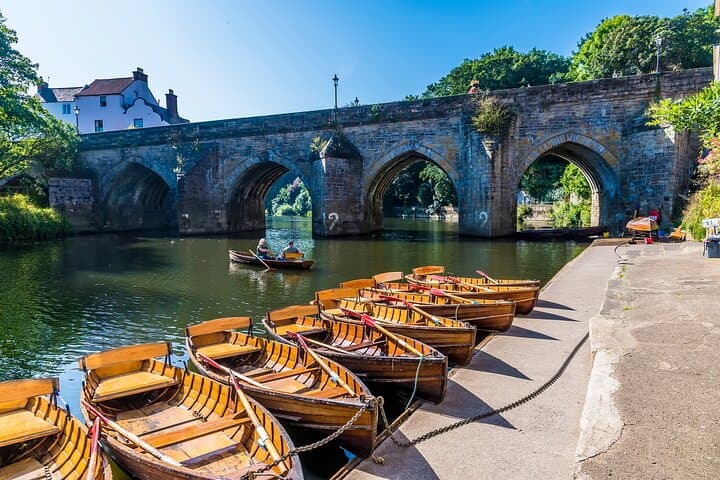
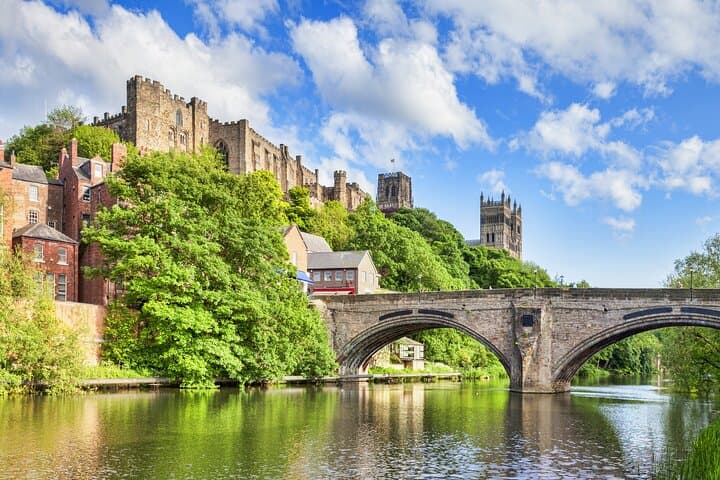
A chill wind from the River Wear threads between stone arches as your small group gathers at Market Place, the 19th-century Town Hall looming above. The guide points across Framwellgate Bridge; beyond it, the cathedral sits like a cliff-top ship, its silhouette carving the skyline. You will walk old mill lanes, cross medieval bridges and trace the line where Norman ambition met Northumbrian life.
Verified experiences and guided adventures in the surrounding area.
Operated by Walkabout Durham · Durham, County Durham
A chill wind from the River Wear threads between stone arches as your small group gathers at Market Place, the 19th-century Town Hall looming above. The guide points across Framwellgate Bridge; beyond it, the cathedral sits like a cliff-top ship, its silhouette carving the skyline. You will walk old mill lanes, cross medieval bridges and trace the line where Norman ambition met Northumbrian life.
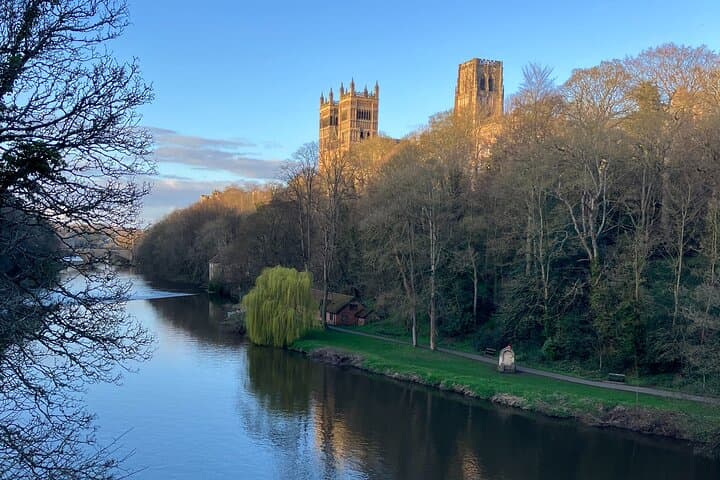
The route unfolds the city’s layered past: Anglo-Saxon kings, the Prince Bishops who governed this border county, and the 200-year story of coal and confinement that reshaped Durham’s people. Geologically the Wear has cut a shallow valley through Carboniferous sandstone and coal measures—stone that built the cathedral and fed the local industry. Culturally, the university and cathedral create a living UNESCO precinct where academic halls rub shoulders with grim prisons and gallows sites.
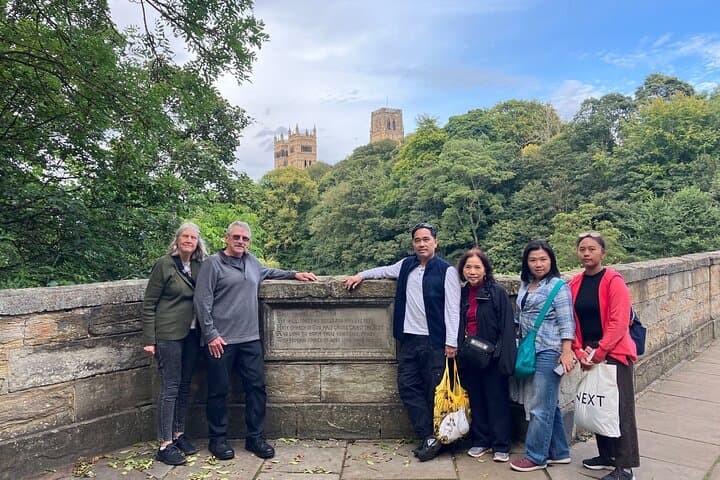
Expect a paced, interpretive walk of roughly 2.5 hours, with stops at Framwellgate Bridge, Prebends Bridge, the Bailey and Palace Green culminating at Durham Cathedral. The tour balances big-picture context—environmental change, mining heritage, border warfare—with local anecdotes about hauntings, famous escapes and student life.
Practical notes: comfortable walking shoes, a warm layer and waterproof shell matter more than speed; many streets are cobbled and river paths can be slick. Public transport links are nearby, dogs are welcome and the group size keeps the experience conversational. Arrive 10 minutes early to hear the opening orientation and get the full narrative arc from market to cathedral.
easy.
2–3 hours.
Suitable for most fitness levels; requires steady walking on uneven surfaces for up to 2.5 hours.
The tour lasts about 2.5 hours and covers roughly 2–3 miles on mostly flat but cobbled and riverside paths.
Yes—dogs are welcome on this tour; keep them on a short lead in busy sections and on bridges.
Infants and small children can use prams and the route is family‑friendly, though some cobbles and steps may require care.
The tour runs in most weather—bring waterproofs; full refunds require 24+ hours cancellation notice as per policy.
Durham’s growth was shaped by its strategic position on the Wear and the power of the Prince Bishops; the cathedral and castle formed a medieval power complex guarding the northern frontier.
The UNESCO World Heritage site requires careful foot traffic management and respect for protected buildings; stick to paths, avoid climbing walls and dispose of litter responsibly.
Walkabout Durham operates guided outdoor trips and adventures with an emphasis on safety, stewardship, and memorable experiences.
A chill wind from the River Wear threads between stone arches as your small group gathers at Market Place, the 19th-century Town Hall looming above. The guide points across Framwellgate Bridge; beyond it, the cathedral sits like a cliff-top ship, its silhouette carving the skyline. You will walk old mill lanes, cross medieval bridges and trace the line where Norman ambition met Northumbrian life.
A chill wind from the River Wear threads between stone arches as your small group gathers at Market Place, the 19th-century Town Hall looming above. The guide points across Framwellgate Bridge; beyond it, the cathedral sits like a cliff-top ship, its silhouette carving the skyline. You will walk old mill lanes, cross medieval bridges and trace the line where Norman ambition met Northumbrian life.
The route unfolds the city’s layered past: Anglo-Saxon kings, the Prince Bishops who governed this border county, and the 200-year story of coal and confinement that reshaped Durham’s people. Geologically the Wear has cut a shallow valley through Carboniferous sandstone and coal measures—stone that built the cathedral and fed the local industry. Culturally, the university and cathedral create a living UNESCO precinct where academic halls rub shoulders with grim prisons and gallows sites.
Expect a paced, interpretive walk of roughly 2.5 hours, with stops at Framwellgate Bridge, Prebends Bridge, the Bailey and Palace Green culminating at Durham Cathedral. The tour balances big-picture context—environmental change, mining heritage, border warfare—with local anecdotes about hauntings, famous escapes and student life.
Practical notes: comfortable walking shoes, a warm layer and waterproof shell matter more than speed; many streets are cobbled and river paths can be slick. Public transport links are nearby, dogs are welcome and the group size keeps the experience conversational. Arrive 10 minutes early to hear the opening orientation and get the full narrative arc from market to cathedral.