THE ADVENTURE COLLECTIVE® · Independent discovery and booking for outdoor travel

Drive the Golden Mile, browse the Indian market and stand beneath Emanuel Cathedral on a half‑day coastal tour of Durban. This vehicle-led route mixes seaside views with cultural stops in Cato Manor and Umhlanga.
Drive the Golden Mile, browse the Indian market and stand beneath Emanuel Cathedral on a half‑day coastal tour of Durban. This vehicle-led route mixes seaside views with cultural stops in Cato Manor and Umhlanga.
A warm breeze off the Indian Ocean carries the rattle of minibus brakes and hawkers as you roll past Durban’s broad beachfront—Golden Mile surf on one side, the harbour and container cranes on the other. The tour moves at a deliberate pace: an air-conditioned vehicle traces the shoreline toward the harbour entrance, pauses at City Hall and the Playhouse Theatre complex, and drops you into the color and noise of the Indian market where spices and textiles crowd narrow aisles.
Verified experiences and guided adventures in the surrounding area.
Operated by Afro Zulu tours · Durban, KwaZulu-Natal
A warm breeze off the Indian Ocean carries the rattle of minibus brakes and hawkers as you roll past Durban’s broad beachfront—Golden Mile surf on one side, the harbour and container cranes on the other. The tour moves at a deliberate pace: an air-conditioned vehicle traces the shoreline toward the harbour entrance, pauses at City Hall and the Playhouse Theatre complex, and drops you into the color and noise of the Indian market where spices and textiles crowd narrow aisles.
This route stitches together Durban’s layered story. It’s a port city shaped by 19th‑century colonial trade, the long arc of Indian Ocean commerce and the Zulu kingdom beyond the escarpment. Geologically the coast rests on ancient dune systems that slope into subtropical sandveld; the Botanical Gardens—established in the 1840s—reflect early acclimatization experiments and colonial botanical science. Culturally, Durban is one of South Africa’s strongest Indian diasporic centers: expect hawkers, herbalists, and temple façades alongside Emanuel Cathedral’s Gothic revival stone.
Practically, the day is vehicle-led with short on-foot stops and mild walking over flat urban surfaces. You’ll visit Cato Manor’s informal settlement outskirts and northern Umhlanga’s seaside neighborhoods if time allows. Bring sun protection, comfortable shoes for market strolls, and a small amount of cash for vendors who prefer notes. The tour suits travelers who want a compact orientation to Durban’s ports, markets and coastal suburbs without long hikes—an efficient introduction before you strike inland to the Drakensberg or north to Hluhluwe-iMfolozi Game Reserve.
easy.
5–6 hours.
Suitable for all fitness levels; mostly seated with short flat walks and light standing.
The tour runs about 5–6 hours, typically a half‑day that covers beachfront, city landmarks and market stops.
Most operators include pickup from central Durban hotels or a nearby meeting point—confirm your pickup point at booking.
This tour is primarily observational with no major admissions; any optional entry (e.g., museum) is usually paid on-site.
Yes—infants may need to sit on a lap during transit and the pace is family-friendly with minimal walking.
Durban’s growth tied to 19th‑century port development and a large Indian labour migration, both of which shaped the city’s architecture and markets.
Coastal development pressures and plastic pollution are local concerns; choose operators who minimize single‑use plastics and respect beach cleanups.
Afro Zulu tours operates guided outdoor trips and adventures with an emphasis on safety, stewardship, and memorable experiences.
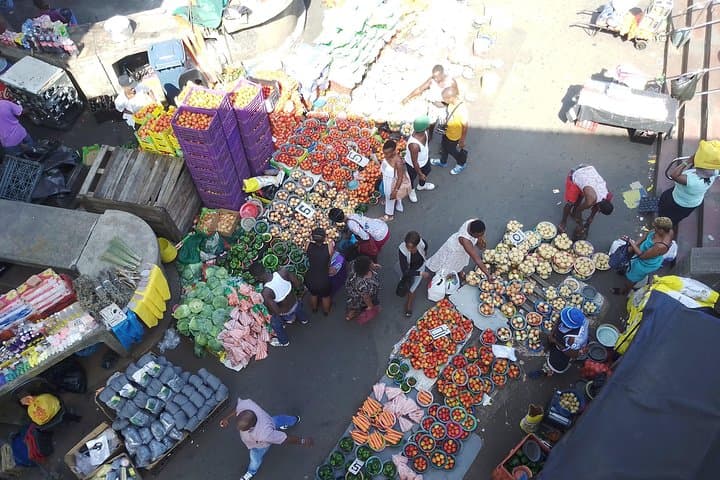
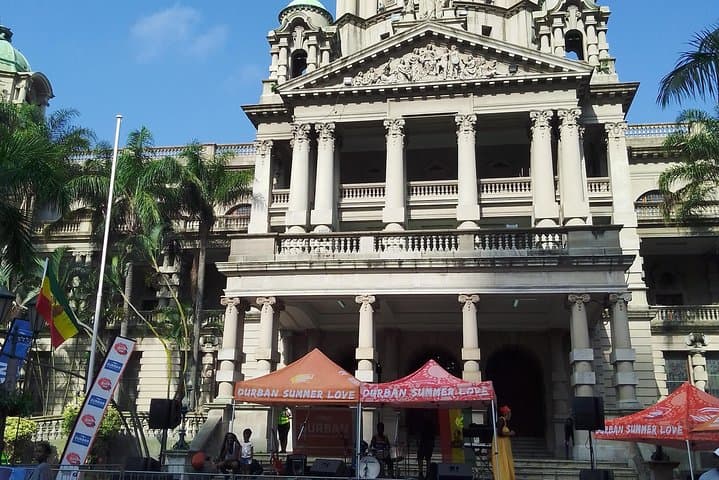
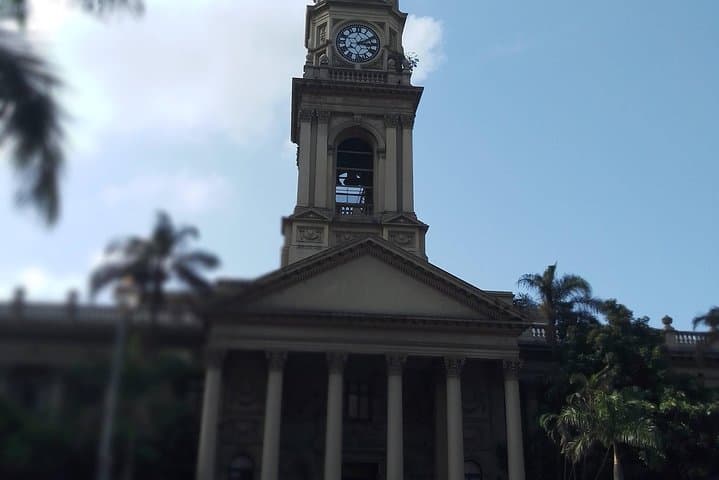
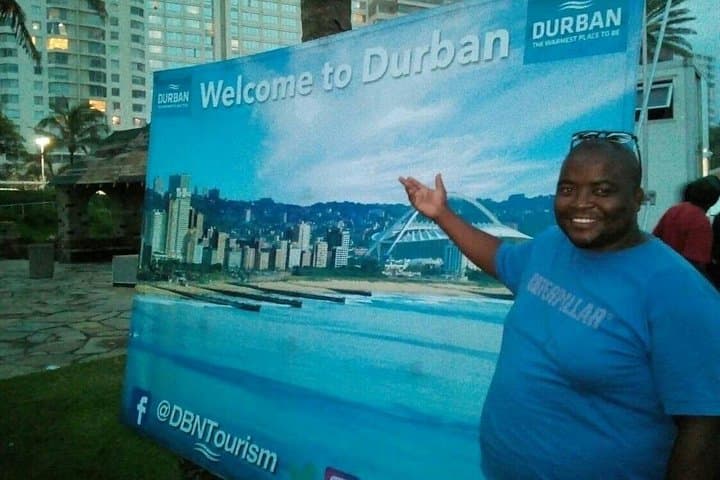
A warm breeze off the Indian Ocean carries the rattle of minibus brakes and hawkers as you roll past Durban’s broad beachfront—Golden Mile surf on one side, the harbour and container cranes on the other. The tour moves at a deliberate pace: an air-conditioned vehicle traces the shoreline toward the harbour entrance, pauses at City Hall and the Playhouse Theatre complex, and drops you into the color and noise of the Indian market where spices and textiles crowd narrow aisles.
A warm breeze off the Indian Ocean carries the rattle of minibus brakes and hawkers as you roll past Durban’s broad beachfront—Golden Mile surf on one side, the harbour and container cranes on the other. The tour moves at a deliberate pace: an air-conditioned vehicle traces the shoreline toward the harbour entrance, pauses at City Hall and the Playhouse Theatre complex, and drops you into the color and noise of the Indian market where spices and textiles crowd narrow aisles.
This route stitches together Durban’s layered story. It’s a port city shaped by 19th‑century colonial trade, the long arc of Indian Ocean commerce and the Zulu kingdom beyond the escarpment. Geologically the coast rests on ancient dune systems that slope into subtropical sandveld; the Botanical Gardens—established in the 1840s—reflect early acclimatization experiments and colonial botanical science. Culturally, Durban is one of South Africa’s strongest Indian diasporic centers: expect hawkers, herbalists, and temple façades alongside Emanuel Cathedral’s Gothic revival stone.
Practically, the day is vehicle-led with short on-foot stops and mild walking over flat urban surfaces. You’ll visit Cato Manor’s informal settlement outskirts and northern Umhlanga’s seaside neighborhoods if time allows. Bring sun protection, comfortable shoes for market strolls, and a small amount of cash for vendors who prefer notes. The tour suits travelers who want a compact orientation to Durban’s ports, markets and coastal suburbs without long hikes—an efficient introduction before you strike inland to the Drakensberg or north to Hluhluwe-iMfolozi Game Reserve.