THE ADVENTURE COLLECTIVE® · Independent discovery and booking for outdoor travel

Walk cliff-top ruins where sea spray scours centuries-old stone, then swap salt air for the smoky warmth of a Royal Lochnagar whisky tasting. This full-day private tour from Aberdeen marries dramatic coastal history with Highland distilling craft.
Walk cliff-top ruins where sea spray scours centuries-old stone, then swap salt air for the smoky warmth of a Royal Lochnagar whisky tasting. This full-day private tour from Aberdeen marries dramatic coastal history with Highland distilling craft.
A salt wind has a way of rewriting memory here. You step off the coach at a narrow path that angles toward a ruined keep perched on a headland, and the North Sea seems to lean in to listen. Dunnottar Castle’s battered stone walls rise from the cliff like a stubborn story: a tower house, a cramped bakery, a brewery with rumors of ghosts, and a lion's den carved into the rock. The path underfoot is a mix of worn flagstones and packed earth; gulls punctuate the horizon with sharp cries as waves try to rewrite the cliff below.
Verified experiences and guided adventures in the surrounding area.
Operated by Cairngorm Tours · Stonehaven, Aberdeenshire
A salt wind has a way of rewriting memory here. You step off the coach at a narrow path that angles toward a ruined keep perched on a headland, and the North Sea seems to lean in to listen. Dunnottar Castle’s battered stone walls rise from the cliff like a stubborn story: a tower house, a cramped bakery, a brewery with rumors of ghosts, and a lion's den carved into the rock. The path underfoot is a mix of worn flagstones and packed earth; gulls punctuate the horizon with sharp cries as waves try to rewrite the cliff below.
This day tour folds two distinct Scottish moods into a single arc—coastal fortitude and Highland refinement. Dunnottar’s medieval bones tell of border wars and dramatic defenses: James IV sheltered the Scottish crown jewels here during Cromwell’s advances. The geology is raw—Old Red Sandstone cliffs eroded into steep faces that force the castle into a dramatic dialogue with the sea. Later, as the van threads through rolling farmland and the gated lanes of Balmoral estate, the landscape shifts: dark spruce and river cuttings lead toward the granite shoulders of the Cairngorms and Royal Lochnagar’s low, warm buildings.
Royal Lochnagar sits at the foot of the hills where spring water from the Scarnock rises cold and clear. The distillery’s history is intimate—once New Lochnagar, it earned a royal title after a visit from Queen Victoria—and the tasting room makes clear how place informs flavor: peat and mineral notes framed by crisp Highland water. A guided tasting and the tour of the mash tuns translate craft into chemistry, and the air carries a different kind of history: trade, family names, and small, repeated work.
Practicalities shape a good day here. The itinerary runs about 6–7 hours with modest walking at Dunnottar (rough, uneven surfaces and cliff edges) and a more relaxed, accessible visit at Lochnagar. Wear sturdy shoes with grip for the castle approach and a windproof layer; weather can change fast, and the cliffs throw a chill even in summer. Bookings often include private transport from Aberdeen and Aberdeenshire points—confirm pickup times—and bring ID for the distillery tasting. If you want photos without other visitors, ask for an earlier pickup; the afternoon can be crowded at the castle.
Respect the site: stick to fenced paths at Dunnottar, and sample whisky responsibly. For planners: the tour includes admission fees and a driver-guide, so you move efficiently between dramatic coastlines and the quieter, peat-scented foothills of Royal Lochnagar—two very different Scottish characters in one day.
moderate.
6–7 hours.
Moderate — able to walk on uneven ground and climb short flights of stone steps.
The tour runs about 6–7 hours including transport, castle admission, a guided distillery tour, and tastings.
Dunnottar has uneven ground, steep steps, and cliff edges—it's not ideal for limited mobility; the distillery visit is more accessible.
Yes—the tour price covers Dunnottar admission and the Lochnagar tour fee as listed in the itinerary inclusions.
The route drives through the Balmoral estate with photo stops outside; access to the royal grounds is restricted.
Children are allowed; note the cliff hazards at Dunnottar and that whisky tastings are restricted to adults with ID.
Yes—private pickup from Aberdeen and Aberdeenshire hotels, harbour or airport is offered; specify your pickup point when booking.
Dunnottar guarded Scotland’s crown jewels during the 17th century; Royal Lochnagar earned its royal prefix after a visit by Queen Victoria in 1848.
Erosion and foot traffic threaten the cliffside ruins—stick to paths and follow site signage; the distillery emphasizes water stewardship in its operations.
Cairngorm Tours operates guided outdoor trips and adventures with an emphasis on safety, stewardship, and memorable experiences.
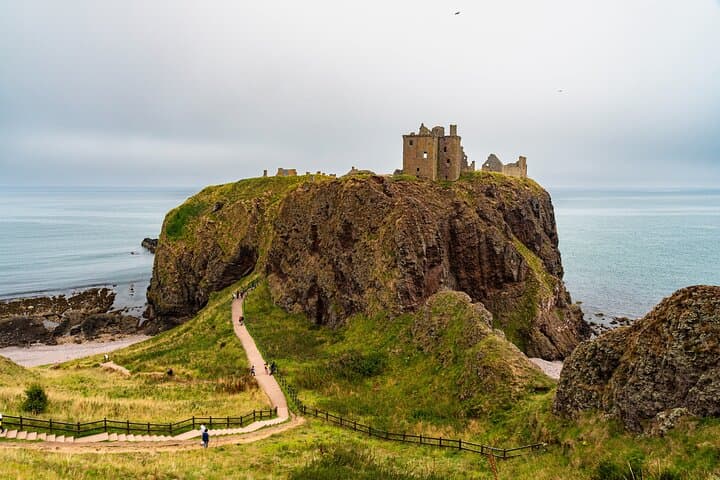
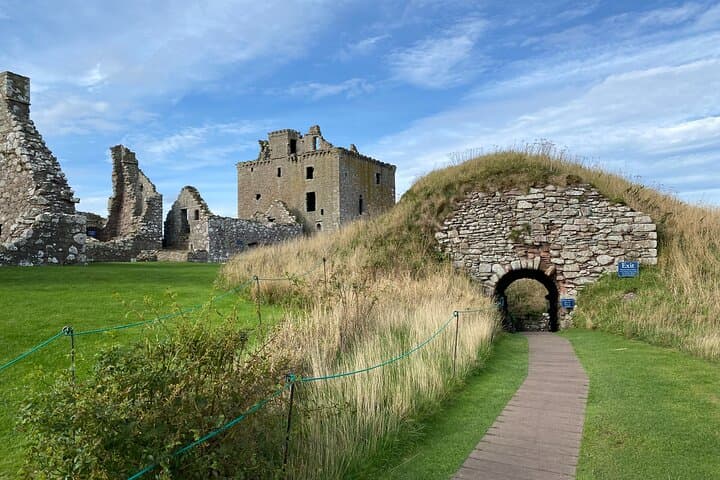
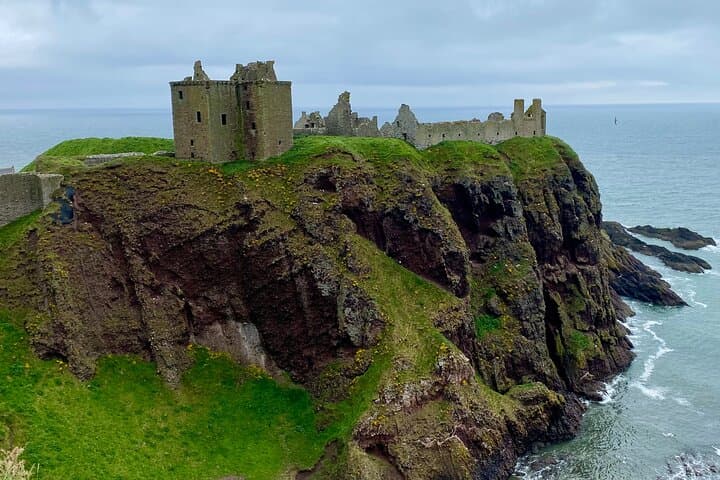
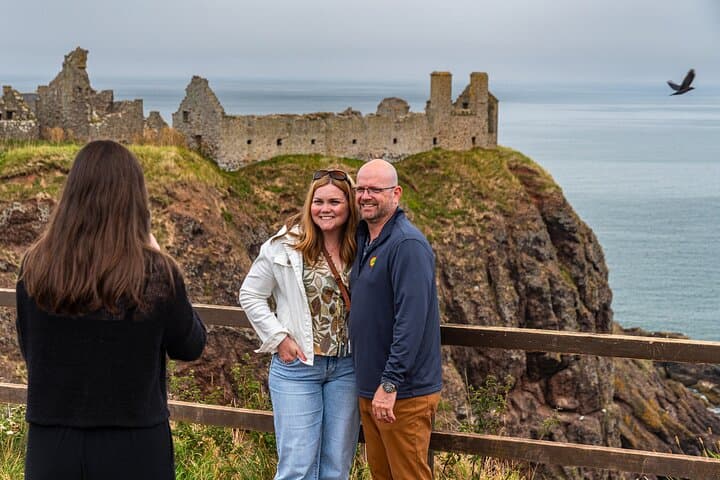
A salt wind has a way of rewriting memory here. You step off the coach at a narrow path that angles toward a ruined keep perched on a headland, and the North Sea seems to lean in to listen. Dunnottar Castle’s battered stone walls rise from the cliff like a stubborn story: a tower house, a cramped bakery, a brewery with rumors of ghosts, and a lion's den carved into the rock. The path underfoot is a mix of worn flagstones and packed earth; gulls punctuate the horizon with sharp cries as waves try to rewrite the cliff below.
A salt wind has a way of rewriting memory here. You step off the coach at a narrow path that angles toward a ruined keep perched on a headland, and the North Sea seems to lean in to listen. Dunnottar Castle’s battered stone walls rise from the cliff like a stubborn story: a tower house, a cramped bakery, a brewery with rumors of ghosts, and a lion's den carved into the rock. The path underfoot is a mix of worn flagstones and packed earth; gulls punctuate the horizon with sharp cries as waves try to rewrite the cliff below.
This day tour folds two distinct Scottish moods into a single arc—coastal fortitude and Highland refinement. Dunnottar’s medieval bones tell of border wars and dramatic defenses: James IV sheltered the Scottish crown jewels here during Cromwell’s advances. The geology is raw—Old Red Sandstone cliffs eroded into steep faces that force the castle into a dramatic dialogue with the sea. Later, as the van threads through rolling farmland and the gated lanes of Balmoral estate, the landscape shifts: dark spruce and river cuttings lead toward the granite shoulders of the Cairngorms and Royal Lochnagar’s low, warm buildings.
Royal Lochnagar sits at the foot of the hills where spring water from the Scarnock rises cold and clear. The distillery’s history is intimate—once New Lochnagar, it earned a royal title after a visit from Queen Victoria—and the tasting room makes clear how place informs flavor: peat and mineral notes framed by crisp Highland water. A guided tasting and the tour of the mash tuns translate craft into chemistry, and the air carries a different kind of history: trade, family names, and small, repeated work.
Practicalities shape a good day here. The itinerary runs about 6–7 hours with modest walking at Dunnottar (rough, uneven surfaces and cliff edges) and a more relaxed, accessible visit at Lochnagar. Wear sturdy shoes with grip for the castle approach and a windproof layer; weather can change fast, and the cliffs throw a chill even in summer. Bookings often include private transport from Aberdeen and Aberdeenshire points—confirm pickup times—and bring ID for the distillery tasting. If you want photos without other visitors, ask for an earlier pickup; the afternoon can be crowded at the castle.
Respect the site: stick to fenced paths at Dunnottar, and sample whisky responsibly. For planners: the tour includes admission fees and a driver-guide, so you move efficiently between dramatic coastlines and the quieter, peat-scented foothills of Royal Lochnagar—two very different Scottish characters in one day.