THE ADVENTURE COLLECTIVE® · Independent discovery and booking for outdoor travel

Explore Dunhuang’s two faces in one day: the ancient painted chambers of the Mogao Grottoes and the raw desert drama of Echoing Sand Mountain and Crescent Moon Spring. This private tour pairs cultural depth with easy desert adventure and local insights.
Explore Dunhuang’s two faces in one day: the ancient painted chambers of the Mogao Grottoes and the raw desert drama of Echoing Sand Mountain and Crescent Moon Spring. This private tour pairs cultural depth with easy desert adventure and local insights.
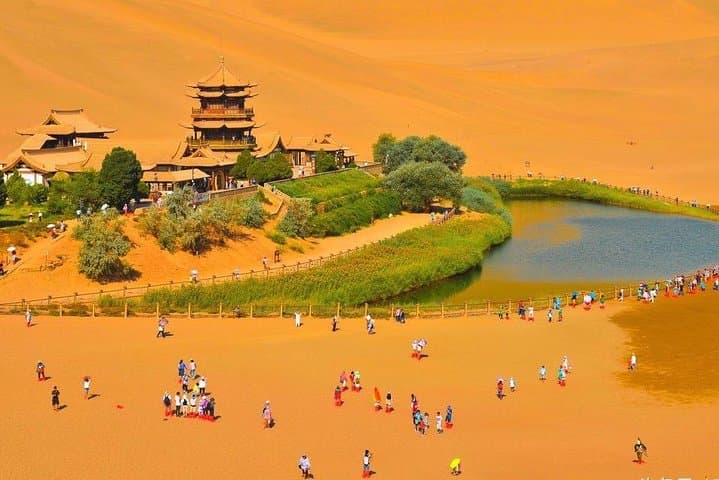
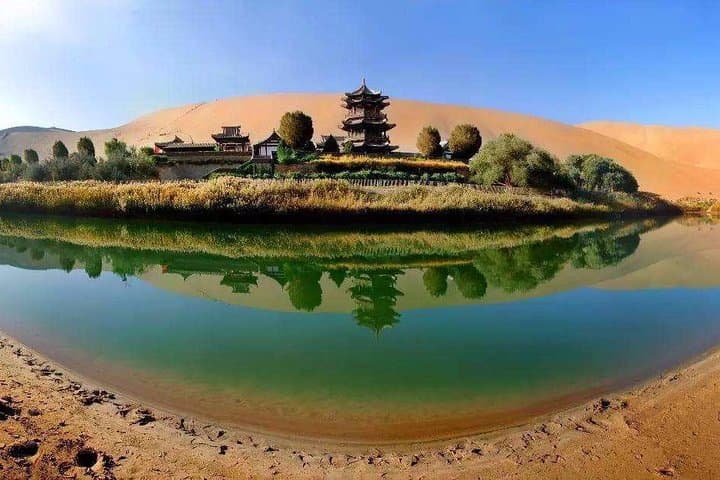
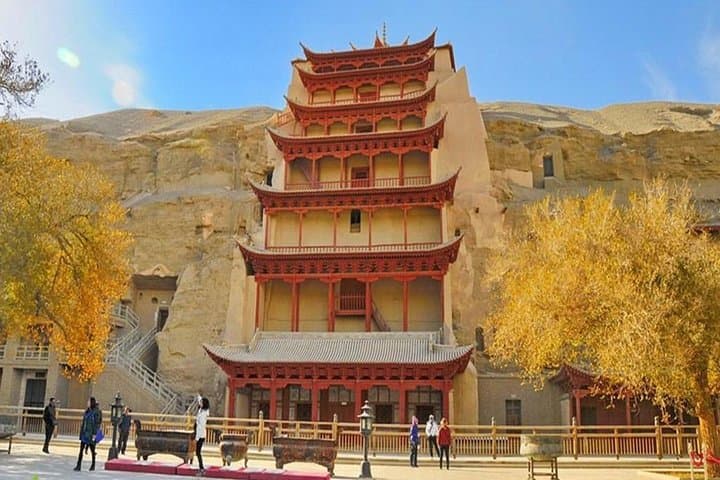
You arrive to light that seems sharpened by sand: the low sun catches painted faces inside rock-cut shrines while a wind off the Gobi tugs at your jacket. The day begins with the hush of Mogao—corridors of painted Buddhas and gilt that have watched caravan traffic along the Silk Road for more than a millennium—and ends with the dry, abrasive music of Echoing Sand Mountain and a clear crescent of water that refuses to be buried.
Verified experiences and guided adventures in the surrounding area.
Operated by Unique Beijing Tours · Dunhuang, Gansu
You arrive to light that seems sharpened by sand: the low sun catches painted faces inside rock-cut shrines while a wind off the Gobi tugs at your jacket. The day begins with the hush of Mogao—corridors of painted Buddhas and gilt that have watched caravan traffic along the Silk Road for more than a millennium—and ends with the dry, abrasive music of Echoing Sand Mountain and a clear crescent of water that refuses to be buried.
Mogao Caves date back to 366 AD and represent changing religious, artistic and commercial currents across Central Asia. Geologically, the site sits where loess and aeolian sands meet compacted gravel, which shaped both the caves and the dunes that sing when wind lifts their grains. Locally, Dunhuang has long been a stop for traders, scribes and pilgrims; the city’s cuisine blends Han, Tibetan and Turkic influences.
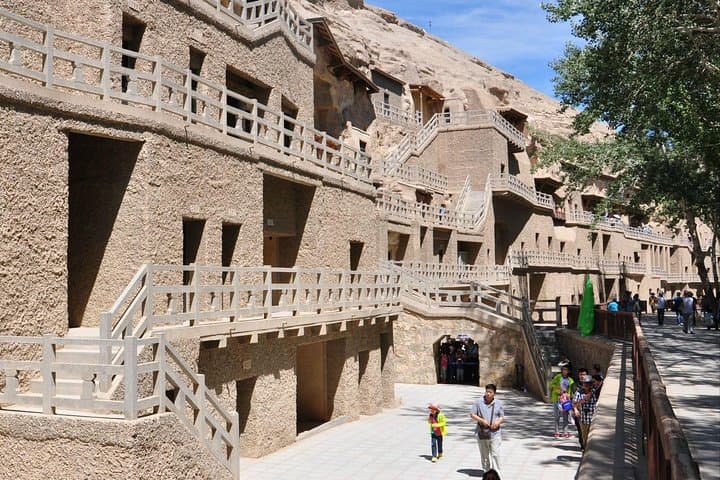
Practically: expect short stair climbs in the caves and loose sand if you choose to climb the dunes. Tours usually include the Mogao Digital Exhibition Center, which helps contextualize murals before you enter the fragile caves. Time your visit for morning cave tours and late-afternoon desert light for photography. Carry at least 1–2 liters of water, sun protection, and wear closed shoes to handle steps and shifting sand. Be mindful of rules—no flash photography in caves—and allow time to absorb both the close detail of mural pigments and the broad, empty sweep of the desert. With an informed guide, the day moves at a steady pace: cultural depth, geological spectacle, and the odd moment when the dune seems to sing just for you.
moderate.
6–8 hours.
Moderate fitness: able to walk stairways in caves and manage short dune climbs in loose sand
This private day tour runs about 6–8 hours and covers Mogao Caves (including the Digital Exhibition Center), Echoing Sand Mountain (Echoing-Sand), and Crescent Moon Spring with hotel pickup and drop-off.
Regular cave entrance fees are included; special or limited-access caves may require an additional on-site fee.
The tour involves short stair climbs in some caves and optional dune climbs; it’s suitable for most fitness levels but requires mobility for steps and uneven sandy ground.
Photography rules vary—flash is generally prohibited to protect pigments; follow your guide and posted restrictions to avoid fines and damage.
Mogao sits at a Silk Road crossroads; carving began in 366 AD and continued for a thousand years, recording cultural exchange across Asia.
The caves’ pigments are extremely fragile—visitor limits, no-flash rules and stabilized boardwalks exist to reduce wear; stay on designated paths and follow guides’ instructions.
Unique Beijing Tours operates guided outdoor trips and adventures with an emphasis on safety, stewardship, and memorable experiences.
You arrive to light that seems sharpened by sand: the low sun catches painted faces inside rock-cut shrines while a wind off the Gobi tugs at your jacket. The day begins with the hush of Mogao—corridors of painted Buddhas and gilt that have watched caravan traffic along the Silk Road for more than a millennium—and ends with the dry, abrasive music of Echoing Sand Mountain and a clear crescent of water that refuses to be buried.
You arrive to light that seems sharpened by sand: the low sun catches painted faces inside rock-cut shrines while a wind off the Gobi tugs at your jacket. The day begins with the hush of Mogao—corridors of painted Buddhas and gilt that have watched caravan traffic along the Silk Road for more than a millennium—and ends with the dry, abrasive music of Echoing Sand Mountain and a clear crescent of water that refuses to be buried.
Mogao Caves date back to 366 AD and represent changing religious, artistic and commercial currents across Central Asia. Geologically, the site sits where loess and aeolian sands meet compacted gravel, which shaped both the caves and the dunes that sing when wind lifts their grains. Locally, Dunhuang has long been a stop for traders, scribes and pilgrims; the city’s cuisine blends Han, Tibetan and Turkic influences.
Practically: expect short stair climbs in the caves and loose sand if you choose to climb the dunes. Tours usually include the Mogao Digital Exhibition Center, which helps contextualize murals before you enter the fragile caves. Time your visit for morning cave tours and late-afternoon desert light for photography. Carry at least 1–2 liters of water, sun protection, and wear closed shoes to handle steps and shifting sand. Be mindful of rules—no flash photography in caves—and allow time to absorb both the close detail of mural pigments and the broad, empty sweep of the desert. With an informed guide, the day moves at a steady pace: cultural depth, geological spectacle, and the odd moment when the dune seems to sing just for you.