THE ADVENTURE COLLECTIVE® · Independent discovery and booking for outdoor travel

An eight-hour circuit from Goa’s beach towns takes you into Mollem National Park to Dudhsagar Falls, followed by a guided stroll through Keri’s spice gardens and a Goan lunch. Expect a bumpy jeep safari, high-volume waterfalls in the monsoon, and rich local flavors.
An eight-hour circuit from Goa’s beach towns takes you into Mollem National Park to Dudhsagar Falls, followed by a guided stroll through Keri’s spice gardens and a Goan lunch. Expect a bumpy jeep safari, high-volume waterfalls in the monsoon, and rich local flavors.
You start before dawn on a potholed road where the jeep’s tires chatter like nervous birds, the air already thick with wet earth and spice. By midmorning the Western Ghats rise up, green and uncompromising; the Mandovi River has carved a path through basalt and laterite, and the sound of Dudhsagar—Milk Sea—reaches you before the falls appear.
Verified experiences and guided adventures in the surrounding area.
Operated by TripBea · Ponda, Goa
You start before dawn on a potholed road where the jeep’s tires chatter like nervous birds, the air already thick with wet earth and spice. By midmorning the Western Ghats rise up, green and uncompromising; the Mandovi River has carved a path through basalt and laterite, and the sound of Dudhsagar—Milk Sea—reaches you before the falls appear.
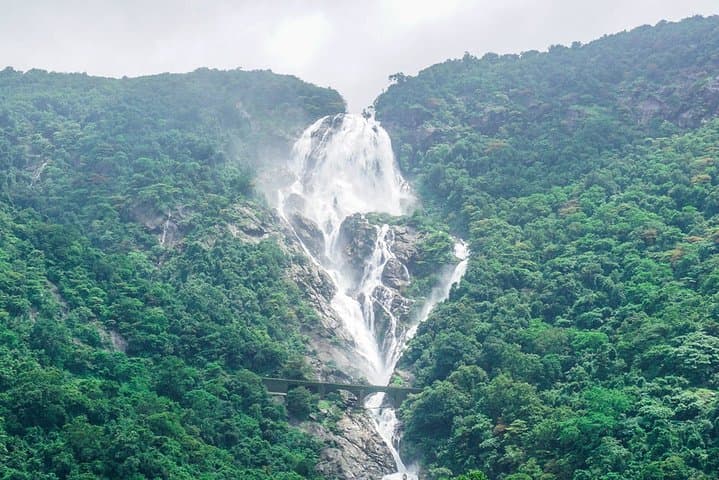
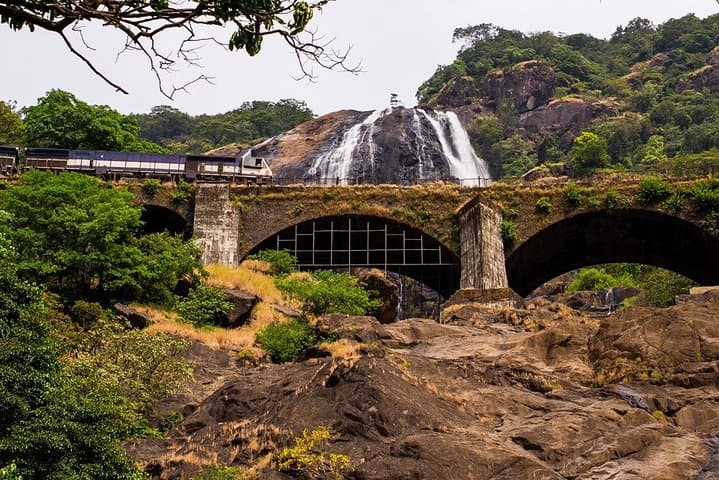
Dudhsagar Falls plunges roughly 310 meters down a rugged gorge fed by monsoon-fed streams. The cascade sits at the eastern edge of Mollem National Park, part of the biodiverse Western Ghats where laterite plateaus and evergreen pockets create sharp contrasts. Nearby Keri village and Ponda reflect Goa’s less-touristed agricultural side: Portuguese-era churches in Old Goa rub shoulders with spice gardens grown for black pepper, cardamom, cinnamon and nutmeg.
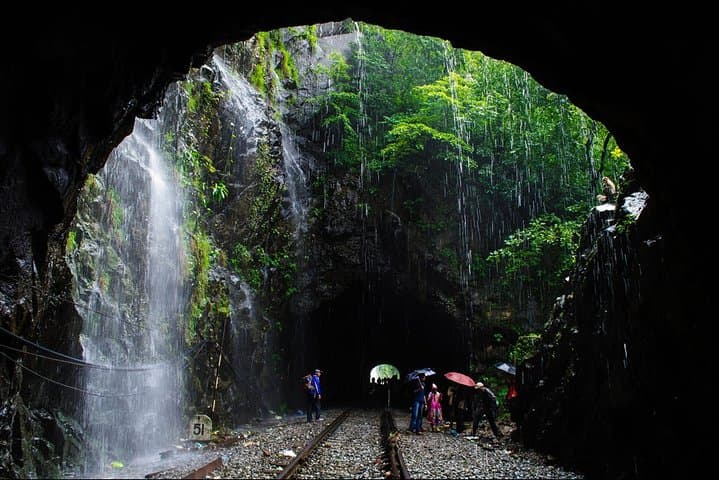
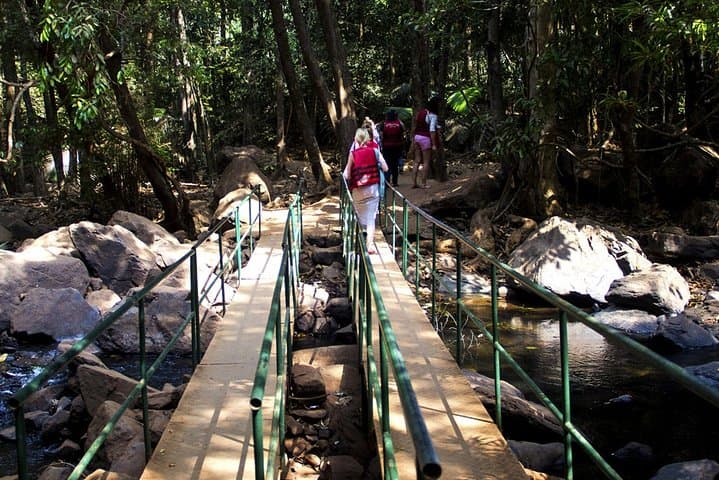
Expect a bumpy jeep safari through forest tracks that occasionally brush a shallow river crossing; guides point out endemic birds and butterflies while explaining local spice cultivation and the area’s colonial history. At the falls, photo opportunities are abundant—bring a lens hood—and a short walk drops you to the splash zone, where swimming is possible but depends on seasonal flows and ranger advisories.
Practical guidance: plan for an eight-hour day with hotel pickup from central beach towns, wear sturdy, closed shoes for the jeep and trails, and carry a reusable water bottle and sun protection. Monsoon months (June–September) deliver the fullest falls but increase slipperiness and cancellation risk. If you want calmer water and easier footing, visit in the drier months (November–March). Stay aware of park rules, follow your guide, and leave no trace—these forests recover slowly.
moderate.
8 hours.
Light to moderate fitness; comfortable with short hikes and getting in/out of jeeps and uneven terrain.
Swimming is permitted at the base in calmer conditions but depends on flow, ranger guidance, and safety—do not enter strong currents.
Pickup is typically provided from central hotels in Baga, Calangute and Candolim; outlying hotels may be given a nearby meeting point.
The jeep ride crosses uneven, bumpy terrain and shallow streams; it’s generally suitable for children but not recommended for infants on laps for long durations.
Yes—operators may cancel in heavy monsoon conditions for safety and will inform you about refunds or rescheduling policies.
The falls and surrounding forests sit within the Western Ghats, a long-occupied corridor of trade and spice cultivation that predates Portuguese presence in coastal Goa.
Mollem is part of a sensitive biodiversity hotspot; stick to marked paths, avoid single-use plastics, and respect local guides to minimize impact.
TripBea operates guided outdoor trips and adventures with an emphasis on safety, stewardship, and memorable experiences.
You start before dawn on a potholed road where the jeep’s tires chatter like nervous birds, the air already thick with wet earth and spice. By midmorning the Western Ghats rise up, green and uncompromising; the Mandovi River has carved a path through basalt and laterite, and the sound of Dudhsagar—Milk Sea—reaches you before the falls appear.
You start before dawn on a potholed road where the jeep’s tires chatter like nervous birds, the air already thick with wet earth and spice. By midmorning the Western Ghats rise up, green and uncompromising; the Mandovi River has carved a path through basalt and laterite, and the sound of Dudhsagar—Milk Sea—reaches you before the falls appear.
Dudhsagar Falls plunges roughly 310 meters down a rugged gorge fed by monsoon-fed streams. The cascade sits at the eastern edge of Mollem National Park, part of the biodiverse Western Ghats where laterite plateaus and evergreen pockets create sharp contrasts. Nearby Keri village and Ponda reflect Goa’s less-touristed agricultural side: Portuguese-era churches in Old Goa rub shoulders with spice gardens grown for black pepper, cardamom, cinnamon and nutmeg.
Expect a bumpy jeep safari through forest tracks that occasionally brush a shallow river crossing; guides point out endemic birds and butterflies while explaining local spice cultivation and the area’s colonial history. At the falls, photo opportunities are abundant—bring a lens hood—and a short walk drops you to the splash zone, where swimming is possible but depends on seasonal flows and ranger advisories.
Practical guidance: plan for an eight-hour day with hotel pickup from central beach towns, wear sturdy, closed shoes for the jeep and trails, and carry a reusable water bottle and sun protection. Monsoon months (June–September) deliver the fullest falls but increase slipperiness and cancellation risk. If you want calmer water and easier footing, visit in the drier months (November–March). Stay aware of park rules, follow your guide, and leave no trace—these forests recover slowly.