THE ADVENTURE COLLECTIVE® · Independent discovery and booking for outdoor travel

A private day tour from Dubrovnik that pairs Mostar’s UNESCO Old Bridge with the plunge pools of Kravice Waterfalls—expect two drives, swimming opportunities, and a compact cultural walk in Mostar’s Old Town.
A private day tour from Dubrovnik that pairs Mostar’s UNESCO Old Bridge with the plunge pools of Kravice Waterfalls—expect two drives, swimming opportunities, and a compact cultural walk in Mostar’s Old Town.
A cool morning in Dubrovnik, the van idles while the Adriatic light slides across the dashboard. You cross the border and the road unfurls into karst hills; by midmorning the Neretva valley opens and the Old Bridge of Mostar appears, arcing like an invitation. Later the river at Kravice gathers itself and then throws itself over travertine ledges, daring you to come closer.
Verified experiences and guided adventures in the surrounding area.
Operated by Du Travel And Tours · Mostar, Herzegovina-Neretva Canton
A cool morning in Dubrovnik, the van idles while the Adriatic light slides across the dashboard. You cross the border and the road unfurls into karst hills; by midmorning the Neretva valley opens and the Old Bridge of Mostar appears, arcing like an invitation. Later the river at Kravice gathers itself and then throws itself over travertine ledges, daring you to come closer.
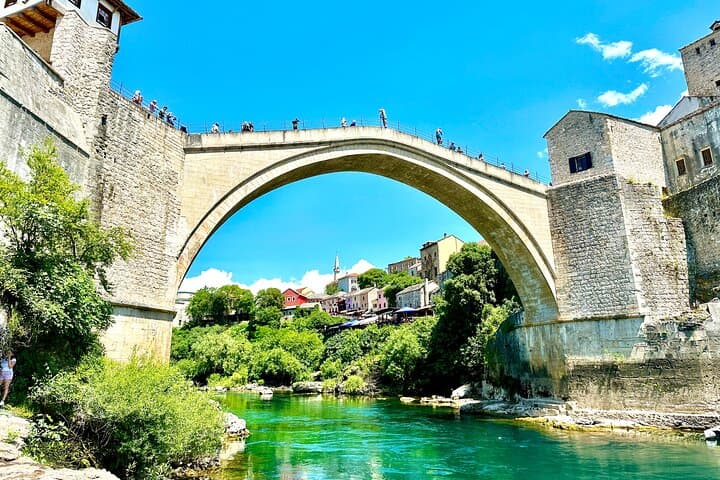
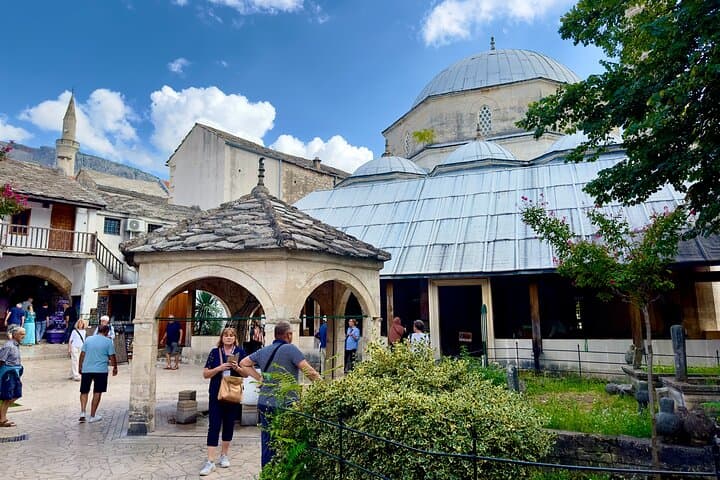
Mostar carries Ottoman-era stonework and a reconstructed 16th-century bridge (Stari Most) that marks the city's layered history—Venetian trade routes, Austro-Hungarian maps and twentieth-century conflict. Kravice itself is a geological show: tufa and travertine formations have built terraced basins where water pools in shades of green and blue. Local life clusters along the river: cafés under plane trees, fish grills, and small markets selling woven goods.
Practical rhythm: expect a roughly nine-hour private tour with two drives of about two hours each from Dubrovnik, a stop at Kravice for swimming or shoreline picnics, and a walking tour of Mostar’s Old Town. Wear sturdy sandals for slick rocks at the falls, bring a passport for border crossings, and carry cash for small vendors. Summer days are warm and crowded—arrive early to beat both heat and buses. The tour is largely low-impact but stay on marked paths, respect swimming restrictions, and pack out trash. Whether you come for the bridge’s history or for the waterfalls’ roar, the day balances cultural depth with a natural recharge—clear water pushing forward, stone holding the past.
easy.
9 hours (approx.).
Suitable for travelers in average physical condition; short walks on uneven surfaces and some standing required.
Yes—this tour crosses the Croatia–Bosnia and Herzegovina border; all travelers must carry a valid passport.
Yes—most itineraries include free time at Kravice for swimming from banked access points when water conditions and rules allow.
Admissions are typically not included—entry fees or parking at Kravice and any museum fees in Mostar should be budgeted separately.
The tour lists accessibility for transport, but terrain at Kravice and cobbled streets in Mostar are uneven; complete accessibility may be limited at specific viewpoints.
Mostar’s Stari Most was built in the 16th century under Ottoman rule and rebuilt after wartime destruction; the bridge is a UNESCO World Heritage symbol of cultural continuity.
Kravice’s travertine pools are sensitive to increased visitor pressure—stay on marked paths, avoid detergent or plastics in the water, and follow local guidelines to protect water quality.
Du Travel And Tours operates guided outdoor trips and adventures with an emphasis on safety, stewardship, and memorable experiences.


A cool morning in Dubrovnik, the van idles while the Adriatic light slides across the dashboard. You cross the border and the road unfurls into karst hills; by midmorning the Neretva valley opens and the Old Bridge of Mostar appears, arcing like an invitation. Later the river at Kravice gathers itself and then throws itself over travertine ledges, daring you to come closer.
A cool morning in Dubrovnik, the van idles while the Adriatic light slides across the dashboard. You cross the border and the road unfurls into karst hills; by midmorning the Neretva valley opens and the Old Bridge of Mostar appears, arcing like an invitation. Later the river at Kravice gathers itself and then throws itself over travertine ledges, daring you to come closer.
Mostar carries Ottoman-era stonework and a reconstructed 16th-century bridge (Stari Most) that marks the city's layered history—Venetian trade routes, Austro-Hungarian maps and twentieth-century conflict. Kravice itself is a geological show: tufa and travertine formations have built terraced basins where water pools in shades of green and blue. Local life clusters along the river: cafés under plane trees, fish grills, and small markets selling woven goods.
Practical rhythm: expect a roughly nine-hour private tour with two drives of about two hours each from Dubrovnik, a stop at Kravice for swimming or shoreline picnics, and a walking tour of Mostar’s Old Town. Wear sturdy sandals for slick rocks at the falls, bring a passport for border crossings, and carry cash for small vendors. Summer days are warm and crowded—arrive early to beat both heat and buses. The tour is largely low-impact but stay on marked paths, respect swimming restrictions, and pack out trash. Whether you come for the bridge’s history or for the waterfalls’ roar, the day balances cultural depth with a natural recharge—clear water pushing forward, stone holding the past.