THE ADVENTURE COLLECTIVE® · Independent discovery and booking for outdoor travel

Skip the crowded coach and take a private Dubrovnik-to-Bosnia transfer that doubles as a short, flexible road trip. Expect Ottoman towns, karst rivers, and the option to hop out for Blagaj, Kravice, Mostar and more—timing shaped to your schedule.
Skip the crowded coach and take a private Dubrovnik-to-Bosnia transfer that doubles as a short, flexible road trip. Expect Ottoman towns, karst rivers, and the option to hop out for Blagaj, Kravice, Mostar and more—timing shaped to your schedule.
You slide into a seven-seat van outside Dubrovnik as the Adriatic's last light fades, and the road unfurls inland—olive terraces give way to limestone ridges and the highway begins to climb. The driver tunes the route to your time and mood: a straight shot to Sarajevo, a detour to Mostar and Blagaj, or a handful of short stops where rivers dare you to step closer.
Verified experiences and guided adventures in the surrounding area.
Operated by Monterrasol Travel · Dubrovnik, Dubrovnik-Neretva County
You slide into a seven-seat van outside Dubrovnik as the Adriatic's last light fades, and the road unfurls inland—olive terraces give way to limestone ridges and the highway begins to climb. The driver tunes the route to your time and mood: a straight shot to Sarajevo, a detour to Mostar and Blagaj, or a handful of short stops where rivers dare you to step closer.
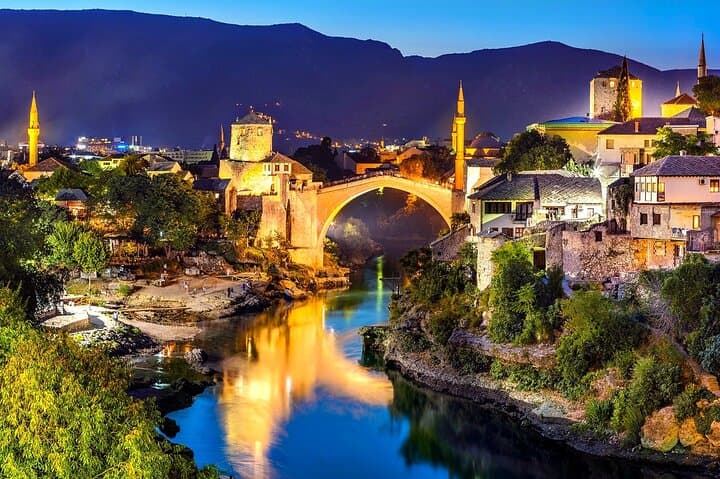
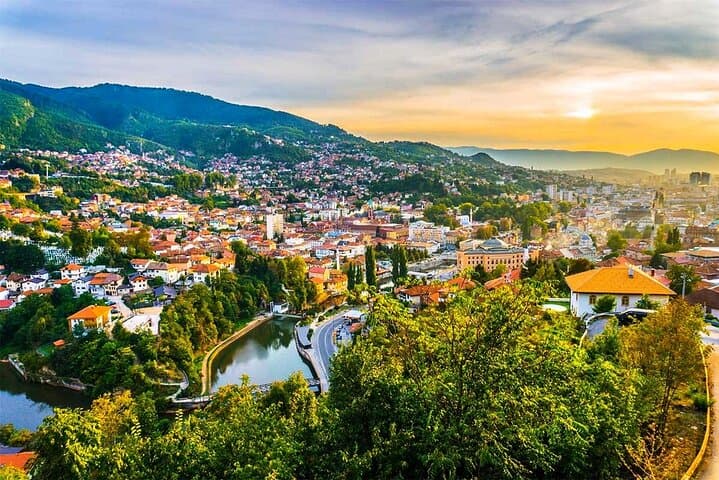
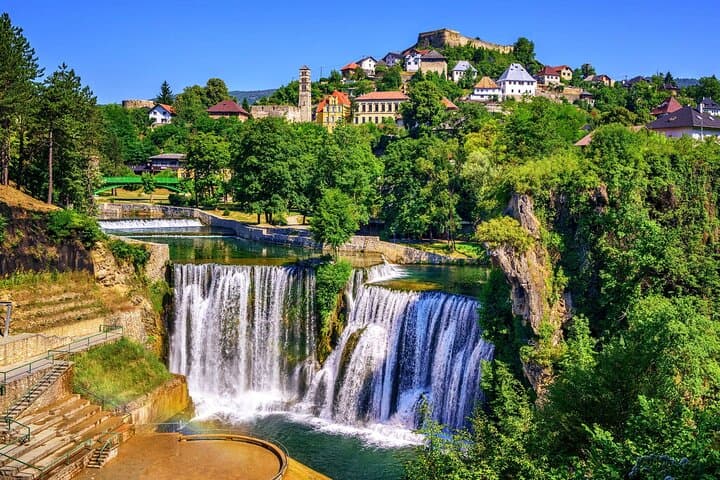
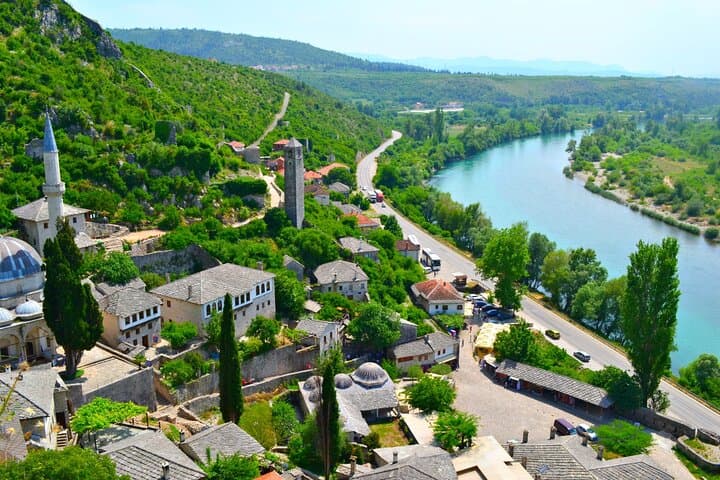
The roads trace layers of history: Ottoman bazaars in Mostar, Austro-Hungarian boulevards in Sarajevo, and medieval fortifications clinging to karst bluffs at Počitelj. Geology shapes the trip—the Dinaric Karst funnels springs and waterfalls (Kravice and Pliva nearby) into dramatic stands of basalt and tufa; rivers carve narrow canyons that have guided traders for centuries.
Culture on display is immediate and tactile: fragrant Bosnian coffee in a stone courtyard, calloused hands selling honey, minarets and church spires forming a lived-in skyline. Local drivers know when to pull off for a quick viewpoint or a short walk to a riverbank where currents push forward, indifferent to schedules.
Practical guidance: plan time, not just miles—Dubrovnik–Mostar is roughly 130 km (2.5–3 hours) and Dubrovnik–Sarajevo about 230 km (4–5 hours) depending on border queues. The vehicle seats up to seven with limited luggage space—confirm oversized bags in advance. Bring passports and any visas, small cash for roadside stops, layered clothing for varying elevations, and expect short, flexible sidetrips if you request them. Drivers speak English and include a 15-minute wait; the operator can often return same-day at a discount if arranged ahead.
easy.
1–10 hours (option-based).
Minimal physical fitness required; must be able to board/exit a vehicle and walk short distances.
Typical driving time is about 2.5–3 hours (≈130 km) depending on border waits and whether you stop en route.
Yes—this operator offers unstructured, flexible stops; agree on timing ahead and note that longer detours extend total trip time.
The van seats up to seven passengers; luggage space is limited—contact the operator if you have oversized items.
Smaller vendors and roadside cafes often prefer Bosnian Convertible Marks (BAM) or cash; cards are accepted in larger towns.
The route threads Ottoman-era towns and Austro-Hungarian influences—Mostar’s bridge and Sarajevo’s bazaar areas reflect centuries of trade and cultural layering.
Karst springs and waterfall sites are ecologically sensitive—stick to marked paths, avoid littering, and respect local water-use rules.
Monterrasol Travel operates guided outdoor trips and adventures with an emphasis on safety, stewardship, and memorable experiences.
You slide into a seven-seat van outside Dubrovnik as the Adriatic's last light fades, and the road unfurls inland—olive terraces give way to limestone ridges and the highway begins to climb. The driver tunes the route to your time and mood: a straight shot to Sarajevo, a detour to Mostar and Blagaj, or a handful of short stops where rivers dare you to step closer.
You slide into a seven-seat van outside Dubrovnik as the Adriatic's last light fades, and the road unfurls inland—olive terraces give way to limestone ridges and the highway begins to climb. The driver tunes the route to your time and mood: a straight shot to Sarajevo, a detour to Mostar and Blagaj, or a handful of short stops where rivers dare you to step closer.
The roads trace layers of history: Ottoman bazaars in Mostar, Austro-Hungarian boulevards in Sarajevo, and medieval fortifications clinging to karst bluffs at Počitelj. Geology shapes the trip—the Dinaric Karst funnels springs and waterfalls (Kravice and Pliva nearby) into dramatic stands of basalt and tufa; rivers carve narrow canyons that have guided traders for centuries.
Culture on display is immediate and tactile: fragrant Bosnian coffee in a stone courtyard, calloused hands selling honey, minarets and church spires forming a lived-in skyline. Local drivers know when to pull off for a quick viewpoint or a short walk to a riverbank where currents push forward, indifferent to schedules.
Practical guidance: plan time, not just miles—Dubrovnik–Mostar is roughly 130 km (2.5–3 hours) and Dubrovnik–Sarajevo about 230 km (4–5 hours) depending on border queues. The vehicle seats up to seven with limited luggage space—confirm oversized bags in advance. Bring passports and any visas, small cash for roadside stops, layered clothing for varying elevations, and expect short, flexible sidetrips if you request them. Drivers speak English and include a 15-minute wait; the operator can often return same-day at a discount if arranged ahead.