THE ADVENTURE COLLECTIVE® · Independent discovery and booking for outdoor travel

Walk King’s Landing’s streets and Dubrovnik’s real history in a brisk 90-minute tour that mixes filming locations with the city’s medieval past. Learn where key scenes were shot while getting context on the city walls, architecture, and local culture.
Walk King’s Landing’s streets and Dubrovnik’s real history in a brisk 90-minute tour that mixes filming locations with the city’s medieval past. Learn where key scenes were shot while getting context on the city walls, architecture, and local culture.
The tour begins where Most visitors gather: beside the Large Onofrio Fountain inside Dubrovnik’s Old Town, a red umbrella marking your guide.
Streets of worn limestone rise and fall beneath your steps, and the Adriatic hangs close, daring you toward the western piers where wildfire scenes and royal farewells were filmed. The guide leads through narrow alleys, across the Pile Gate drawbridge and onto docks that doubled for King’s Landing—each turn revealing a new angle of both set design and real urban life.
Dubrovnik’s story predates television. Once the maritime Republic of Ragusa, the town’s high stone walls (largely medieval with later repairs) were built to repel invaders and control trade; the same fortifications frame the modern filming locations. The geology is coastal karst—hard limestone carved by wind and sea—which gives the streets their distinctive pale, polished look and produces sudden cliffs and viewpoints over the harbor.
Culturally the Old Town is compact and lively: small konobas serve fresh fish, and churches and palaces reflect Venetian and Ottoman-era influences. Local guides weave show trivia with historical facts so the sites make sense on two levels.
Practical tips: the route is a 90-minute walking loop with many steps and uneven stone; comfortable, flat-soled shoes are essential. Tours run year-round but summer crowds and heat peak mid-July–August; mornings or late afternoons are cooler and photograph better. Bring water, sun protection and a charged phone for photos; entrances to paid attractions like the city walls are usually separate, so check access if you want to combine experiences.
Verified experiences and guided adventures in the surrounding area.
Operated by Dubrovnik Walking Tours · Dubrovnik, Dubrovnik-Neretva County
The tour begins where Most visitors gather: beside the Large Onofrio Fountain inside Dubrovnik’s Old Town, a red umbrella marking your guide.
Streets of worn limestone rise and fall beneath your steps, and the Adriatic hangs close, daring you toward the western piers where wildfire scenes and royal farewells were filmed. The guide leads through narrow alleys, across the Pile Gate drawbridge and onto docks that doubled for King’s Landing—each turn revealing a new angle of both set design and real urban life.
Dubrovnik’s story predates television. Once the maritime Republic of Ragusa, the town’s high stone walls (largely medieval with later repairs) were built to repel invaders and control trade; the same fortifications frame the modern filming locations. The geology is coastal karst—hard limestone carved by wind and sea—which gives the streets their distinctive pale, polished look and produces sudden cliffs and viewpoints over the harbor.
Culturally the Old Town is compact and lively: small konobas serve fresh fish, and churches and palaces reflect Venetian and Ottoman-era influences. Local guides weave show trivia with historical facts so the sites make sense on two levels.
Practical tips: the route is a 90-minute walking loop with many steps and uneven stone; comfortable, flat-soled shoes are essential. Tours run year-round but summer crowds and heat peak mid-July–August; mornings or late afternoons are cooler and photograph better. Bring water, sun protection and a charged phone for photos; entrances to paid attractions like the city walls are usually separate, so check access if you want to combine experiences.
easy.
1–1.5 hours.
Suitable for most fitness levels; expect standing, walking on cobbles and climbing stairs.
The guided route runs approximately 90 minutes and covers the main filming locations in the Old Town and western piers; pace is moderate with short stops for photos.
No—this walking tour points out filming locations and historical sites but does not include paid admissions to the city walls or museums; buy those tickets separately if you plan to enter.
Yes—the tour is rated easy, but participants should be able to walk for 90 minutes and handle uneven steps; strollers and mobility aids may be difficult on narrow sections.
The meeting point is by the Large Onofrio Fountain near the Hard Rock Cafe; full refunds are available if you cancel at least 24 hours before departure, and tours may be canceled for severe weather.
Dubrovnik was the Republic of Ragusa, a maritime city-state that prospered through trade and diplomacy; its fortified walls and baroque palaces reflect centuries of coastal commerce and defense.
The Old Town is a UNESCO World Heritage site with high visitor pressure—stick to marked paths, avoid climbing on monuments, and support local businesses to help preservation efforts.
Dubrovnik Walking Tours operates guided outdoor trips and adventures with an emphasis on safety, stewardship, and memorable experiences.
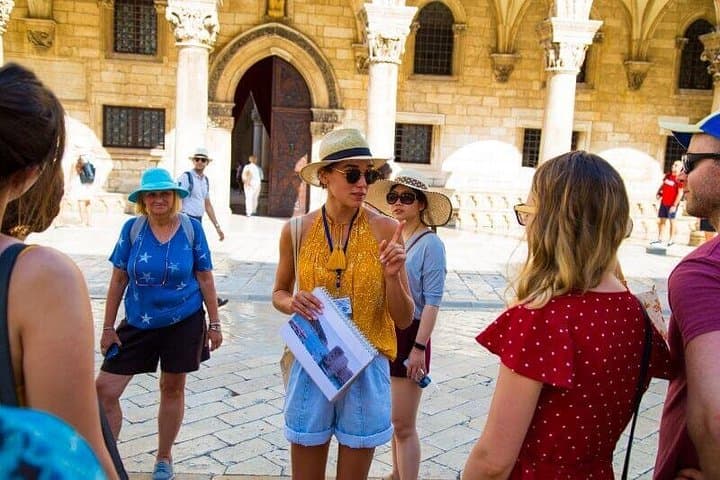

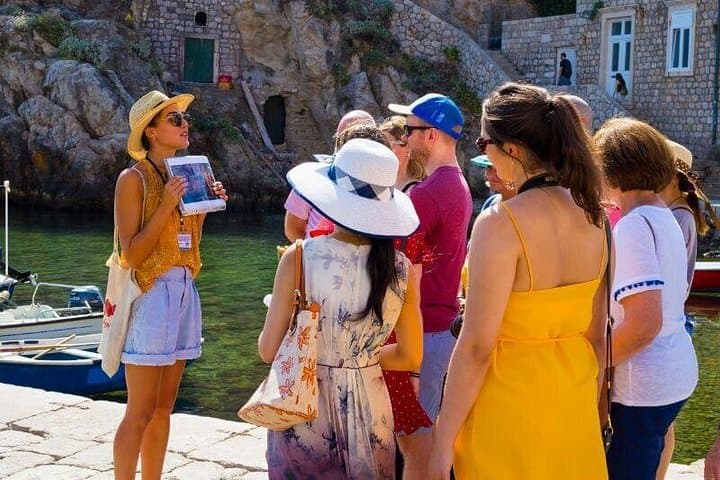
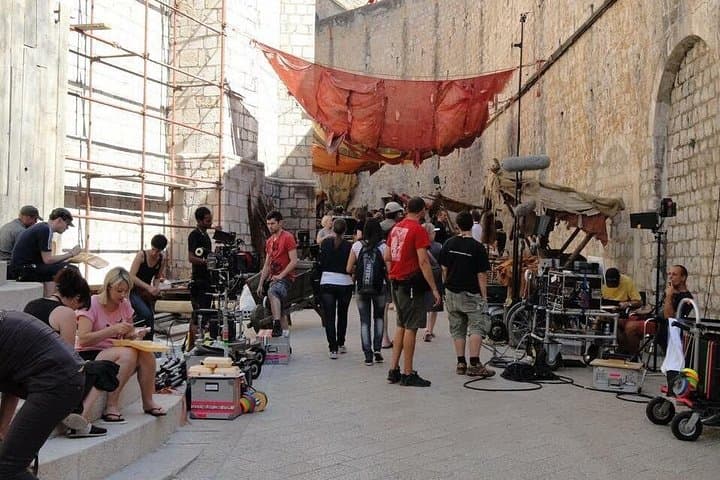
The tour begins where Most visitors gather: beside the Large Onofrio Fountain inside Dubrovnik’s Old Town, a red umbrella marking your guide.
Streets of worn limestone rise and fall beneath your steps, and the Adriatic hangs close, daring you toward the western piers where wildfire scenes and royal farewells were filmed. The guide leads through narrow alleys, across the Pile Gate drawbridge and onto docks that doubled for King’s Landing—each turn revealing a new angle of both set design and real urban life.
Dubrovnik’s story predates television. Once the maritime Republic of Ragusa, the town’s high stone walls (largely medieval with later repairs) were built to repel invaders and control trade; the same fortifications frame the modern filming locations. The geology is coastal karst—hard limestone carved by wind and sea—which gives the streets their distinctive pale, polished look and produces sudden cliffs and viewpoints over the harbor.
Culturally the Old Town is compact and lively: small konobas serve fresh fish, and churches and palaces reflect Venetian and Ottoman-era influences. Local guides weave show trivia with historical facts so the sites make sense on two levels.
Practical tips: the route is a 90-minute walking loop with many steps and uneven stone; comfortable, flat-soled shoes are essential. Tours run year-round but summer crowds and heat peak mid-July–August; mornings or late afternoons are cooler and photograph better. Bring water, sun protection and a charged phone for photos; entrances to paid attractions like the city walls are usually separate, so check access if you want to combine experiences.