THE ADVENTURE COLLECTIVE® · Independent discovery and booking for outdoor travel

Cover three countries in a single long day from Dubrovnik: stroll Trebinje’s Ottoman alleys, boat to Our Lady of the Rocks, and walk Kotor’s UNESCO streets. This full-day private tour combines history, coastal geology and local cuisine with door-to-door transport.
Cover three countries in a single long day from Dubrovnik: stroll Trebinje’s Ottoman alleys, boat to Our Lady of the Rocks, and walk Kotor’s UNESCO streets. This full-day private tour combines history, coastal geology and local cuisine with door-to-door transport.
By the time the Adriatic light sharpens on the old city walls of Dubrovnik, the minivan is already easing out of the harbor traffic and into open road. The day moves in chapters: river valleys, Ottoman stone bridges and a cluster of coastal towns squeezed between the sea and the Dinaric range. You watch a coastline that looks like a fjord but answers to karst geology, where limestone plunges into cold water and towns cling to steep hills like pages in a travel guide.
Verified experiences and guided adventures in the surrounding area.
Operated by Cruiser Taxi · Dubrovnik, Dubrovnik-Neretva County
By the time the Adriatic light sharpens on the old city walls of Dubrovnik, the minivan is already easing out of the harbor traffic and into open road. The day moves in chapters: river valleys, Ottoman stone bridges and a cluster of coastal towns squeezed between the sea and the Dinaric range. You watch a coastline that looks like a fjord but answers to karst geology, where limestone plunges into cold water and towns cling to steep hills like pages in a travel guide.
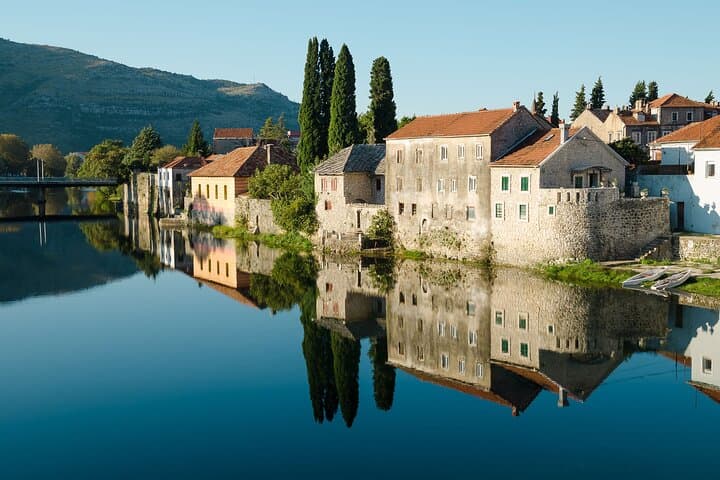
The tour first drops you in Trebinje, across the border in Herzegovina. Here the streets narrow, the clock tower swivels above, and Arslanagića Bridge arches over the slow Trebišnjica like a memory of Ottoman engineering. Climb up to Herzegovinian Gračanica and the view opens: red roofs, river bends and a landscape that has been a crossroads of empires for centuries. The guide points to layers of history—Ottoman bazaars replaced by Austro-Hungarian facades—each government leaving a different punctuation mark.
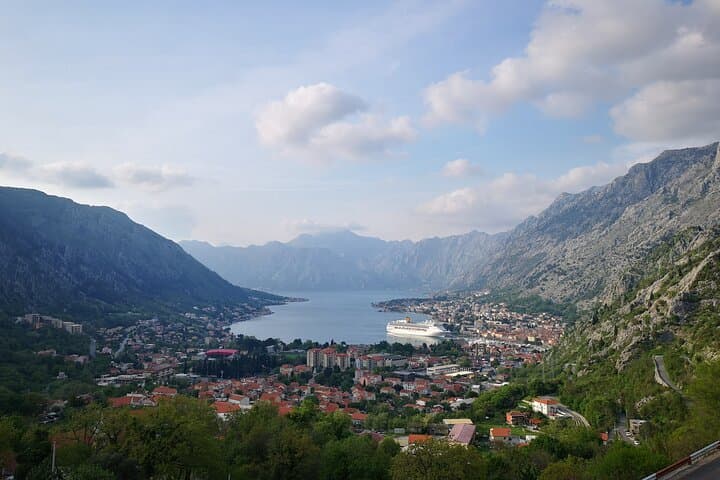
By late morning the itinerary swings south into Montenegro and the Bay of Kotor, a drowned river canyon carved in the same limestone that makes the region so dramatic. Herceg Novi’s palms and fortresses feel Mediterranean; Perast, with its baroque mansions, looks like a Venetian painting come to life. The highlight is Our Lady of the Rocks, a tiny man-made islet formed by sailors who, for centuries, threw rocks into the bay after safe returns. A quick boat ride and a chapel museum make an effective pause in a fast day.
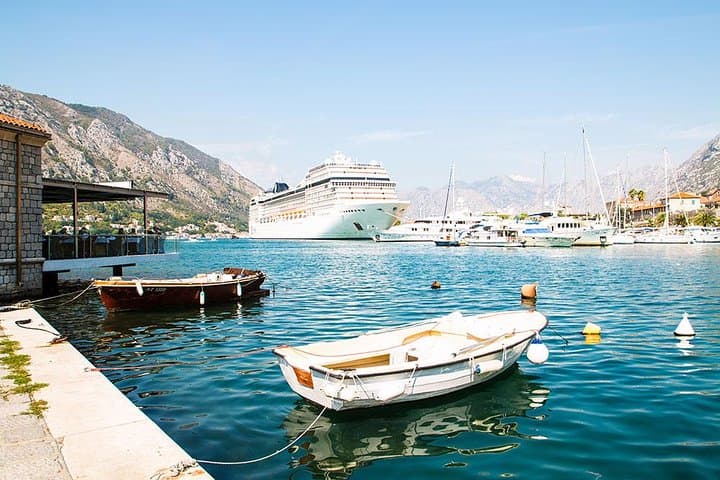
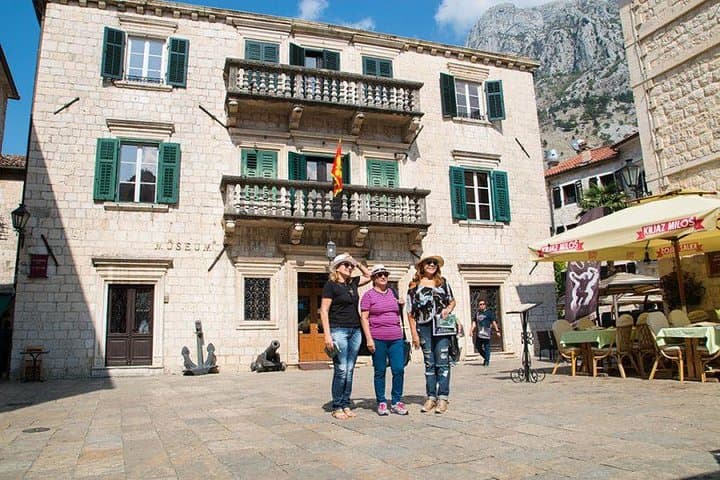
Kotor, a UNESCO World Heritage site, arrives like a steep postcard: narrow alleys, St. Tryphon’s Romanesque cathedral, and a city wall that climbs the spine of the mountain. If you have energy, the hike up to the castle ruins takes 45–60 minutes and rewards you with a broad view of the bay’s architectural and geological drama.
Practical edge: this is a long, logistics-heavy day—expect 10–11 hours including border checks and short walking windows in each town. Carry your passport, euros and a small amount of Bosnian convertible marks if you want local cafés in Trebinje to accept cash easily. Wear supportive walking shoes; cobbles and short staircases dominate old towns. Hydrate and plan for sun or rain—weather can flip between sunlit heat on the coast and cool, breezy hilltops.
The trip threads history, geology and maritime culture into one kinetic day. It’s transportive without being rushed—if you time it for early pickup and midweek travel, the towns feel expansive rather than crowded. For travelers who want multiple countries’ character in one practical loop from Dubrovnik, this is an efficient, vivid primer on the eastern Adriatic.
moderate.
10–11 hours.
Good for travelers comfortable with a long day of driving plus multiple short walks; ability to climb stairs and a 45–60 minute uphill walk recommended.
Yes—this itinerary crosses two international borders; everyone must carry a passport and any necessary visas.
Expect multiple short walks of 20–60 minutes in towns; there’s also an optional 45–60 minute uphill hike at Kotor for panoramic views.
Euros are widely accepted in Montenegro and Croatia; bring some Bosnian convertible marks or a card for small vendors in Trebinje.
No—meals and entrance fees are generally not included; the tour allows stops where you can sample local cafés and seafood.
Border crossings can add 10–30 minutes depending on traffic and season; private transport helps minimize waiting time.
The itinerary includes a visit but confirm if the local boat transfer and church admission are covered or require a small extra payment.
This corridor bears Venetian, Ottoman and Austro-Hungarian layers—maritime wealth from Venetian rule shaped Perast and Kotor, while Ottoman rule influenced inland towns like Trebinje.
The Bay of Kotor is ecologically sensitive; stick to marked paths, avoid single-use plastics and respect local boat traffic regulations to limit disturbance.
Cruiser Taxi operates guided outdoor trips and adventures with an emphasis on safety, stewardship, and memorable experiences.
By the time the Adriatic light sharpens on the old city walls of Dubrovnik, the minivan is already easing out of the harbor traffic and into open road. The day moves in chapters: river valleys, Ottoman stone bridges and a cluster of coastal towns squeezed between the sea and the Dinaric range. You watch a coastline that looks like a fjord but answers to karst geology, where limestone plunges into cold water and towns cling to steep hills like pages in a travel guide.
By the time the Adriatic light sharpens on the old city walls of Dubrovnik, the minivan is already easing out of the harbor traffic and into open road. The day moves in chapters: river valleys, Ottoman stone bridges and a cluster of coastal towns squeezed between the sea and the Dinaric range. You watch a coastline that looks like a fjord but answers to karst geology, where limestone plunges into cold water and towns cling to steep hills like pages in a travel guide.
The tour first drops you in Trebinje, across the border in Herzegovina. Here the streets narrow, the clock tower swivels above, and Arslanagića Bridge arches over the slow Trebišnjica like a memory of Ottoman engineering. Climb up to Herzegovinian Gračanica and the view opens: red roofs, river bends and a landscape that has been a crossroads of empires for centuries. The guide points to layers of history—Ottoman bazaars replaced by Austro-Hungarian facades—each government leaving a different punctuation mark.
By late morning the itinerary swings south into Montenegro and the Bay of Kotor, a drowned river canyon carved in the same limestone that makes the region so dramatic. Herceg Novi’s palms and fortresses feel Mediterranean; Perast, with its baroque mansions, looks like a Venetian painting come to life. The highlight is Our Lady of the Rocks, a tiny man-made islet formed by sailors who, for centuries, threw rocks into the bay after safe returns. A quick boat ride and a chapel museum make an effective pause in a fast day.
Kotor, a UNESCO World Heritage site, arrives like a steep postcard: narrow alleys, St. Tryphon’s Romanesque cathedral, and a city wall that climbs the spine of the mountain. If you have energy, the hike up to the castle ruins takes 45–60 minutes and rewards you with a broad view of the bay’s architectural and geological drama.
Practical edge: this is a long, logistics-heavy day—expect 10–11 hours including border checks and short walking windows in each town. Carry your passport, euros and a small amount of Bosnian convertible marks if you want local cafés in Trebinje to accept cash easily. Wear supportive walking shoes; cobbles and short staircases dominate old towns. Hydrate and plan for sun or rain—weather can flip between sunlit heat on the coast and cool, breezy hilltops.
The trip threads history, geology and maritime culture into one kinetic day. It’s transportive without being rushed—if you time it for early pickup and midweek travel, the towns feel expansive rather than crowded. For travelers who want multiple countries’ character in one practical loop from Dubrovnik, this is an efficient, vivid primer on the eastern Adriatic.