THE ADVENTURE COLLECTIVE® · Independent discovery and booking for outdoor travel

Spend a day trading Dublin’s streets for the raw ridges and lakes of County Wicklow. This private luxury tour combines Powerscourt Gardens, Powerscourt Waterfall, Lough Tay (Guinness Lake) and Glendalough with guided local insight and comfortable transport.
Spend a day trading Dublin’s streets for the raw ridges and lakes of County Wicklow. This private luxury tour combines Powerscourt Gardens, Powerscourt Waterfall, Lough Tay (Guinness Lake) and Glendalough with guided local insight and comfortable transport.
A low, grey Irish sky parts as the coach slips out of Dublin, the city’s hum folding behind you. The road follows Dublin Bay, then climbs into the rolling blank of the Wicklow Mountains—peaty ridgelines, stone walls, and sudden, clean drops of water. The tour moves at a measured pace: long coastal views, a two‑hour stop at Powerscourt Gardens, a brief visit to the 121‑metre Powerscourt Waterfall, a drive-by glimpse of Lough Tay (Guinness Lake), and an hour among the ruins and lakes of Glendalough.
Verified experiences and guided adventures in the surrounding area.
Operated by Dublux Irish Tours · Glendalough, County Wicklow
A low, grey Irish sky parts as the coach slips out of Dublin, the city’s hum folding behind you. The road follows Dublin Bay, then climbs into the rolling blank of the Wicklow Mountains—peaty ridgelines, stone walls, and sudden, clean drops of water. The tour moves at a measured pace: long coastal views, a two‑hour stop at Powerscourt Gardens, a brief visit to the 121‑metre Powerscourt Waterfall, a drive-by glimpse of Lough Tay (Guinness Lake), and an hour among the ruins and lakes of Glendalough.
Geology here is immediate—granite and schist under thin soils, shaped by glacial troughs that now hold the Wicklow loughs. Culturally, this is Ireland’s monastic heartland: Glendalough’s round tower and St. Kevin’s monastic remains date to the 6th century and speak to centuries of pilgrimage and rural life.
Practical details: expect about eight hours total, mostly seated transport with short walks—Glendalough’s popular trails range from easy 1–3 km circuits to steeper 5–8 km routes with 150–300 m elevation gain if you choose to extend. Wear waterproof layers and sturdy shoes; weather can change in minutes. Bring a camera and small binoculars for raptors and upland vistas. Powerscourt Gardens typically requires separate entry fees unless noted; the itinerary lists some admissions as included—confirm at booking. Lunch is usually arranged at a local restaurant.
Timing tips: start early for softer light at Lough Tay, or later for quieter monastery ruins. Stay on marked paths to protect peatlands and historic structures—these landscapes respond quickly to heavy foot traffic.
easy.
8 hours.
Suitable for travelers with general mobility; short, mostly easy walks—no advanced fitness required unless you choose extended hiking at Glendalough.
Yes—private, air‑conditioned transport is included as part of this private day tour; pick‑up details are provided after booking.
The itinerary notes some admissions as included and others not; verify the specific inclusions on your booking confirmation or with the operator before travel.
You can choose short flat circuits of 1–3 km around the lower lake, or longer 5–8 km hikes with up to ~300 m elevation gain—guides can tailor stops to your ability.
The tour is family‑friendly; strollers can be used in many areas but some uneven terrain and steps at historic sites limit access—infants may need to sit on laps during transport.
Glendalough preserves a 6th‑century monastic settlement founded by St. Kevin; its round tower and church ruins reflect early medieval Irish monastic life.
The Wicklow uplands contain fragile peatlands and mixed upland habitats—stick to marked trails, avoid disturbing nesting birds, and carry out any litter.
Dublux Irish Tours operates guided outdoor trips and adventures with an emphasis on safety, stewardship, and memorable experiences.
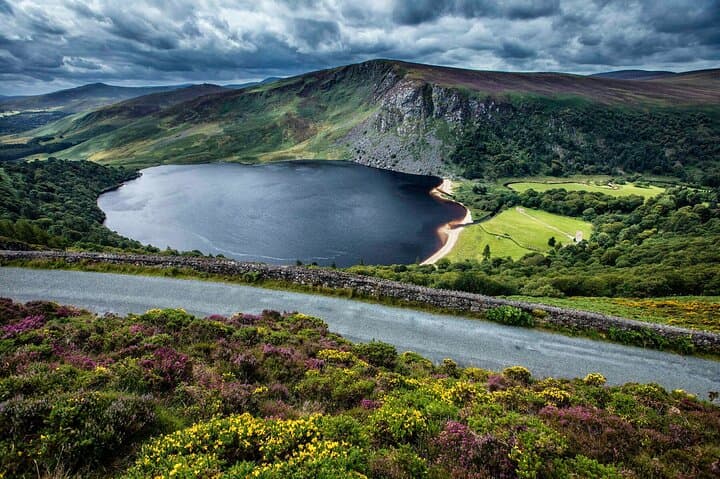
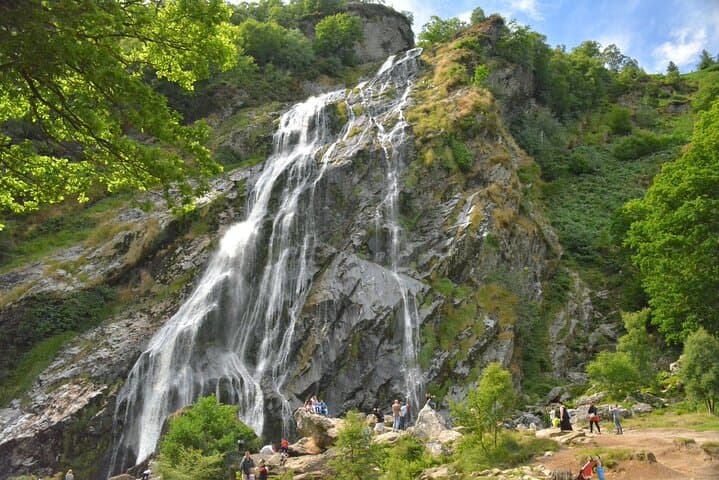
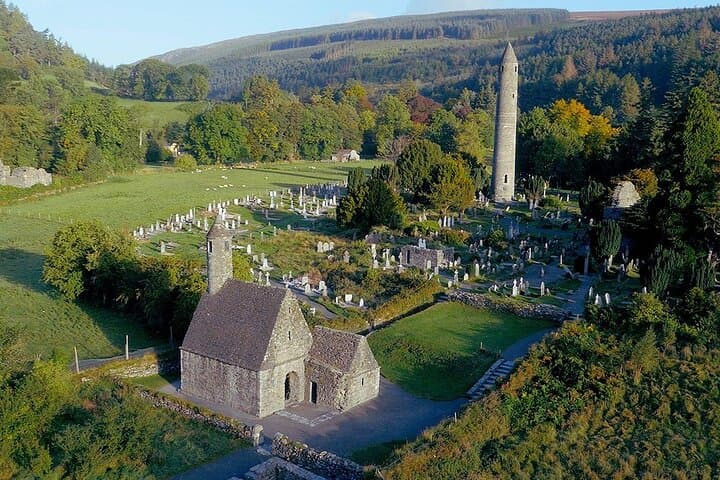
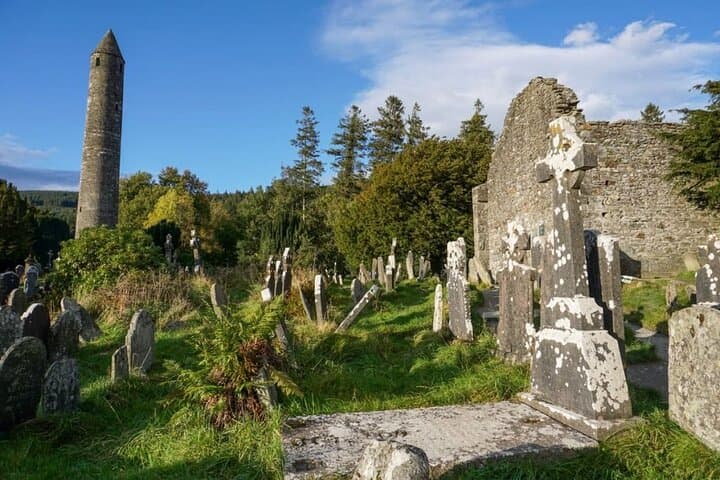
A low, grey Irish sky parts as the coach slips out of Dublin, the city’s hum folding behind you. The road follows Dublin Bay, then climbs into the rolling blank of the Wicklow Mountains—peaty ridgelines, stone walls, and sudden, clean drops of water. The tour moves at a measured pace: long coastal views, a two‑hour stop at Powerscourt Gardens, a brief visit to the 121‑metre Powerscourt Waterfall, a drive-by glimpse of Lough Tay (Guinness Lake), and an hour among the ruins and lakes of Glendalough.
A low, grey Irish sky parts as the coach slips out of Dublin, the city’s hum folding behind you. The road follows Dublin Bay, then climbs into the rolling blank of the Wicklow Mountains—peaty ridgelines, stone walls, and sudden, clean drops of water. The tour moves at a measured pace: long coastal views, a two‑hour stop at Powerscourt Gardens, a brief visit to the 121‑metre Powerscourt Waterfall, a drive-by glimpse of Lough Tay (Guinness Lake), and an hour among the ruins and lakes of Glendalough.
Geology here is immediate—granite and schist under thin soils, shaped by glacial troughs that now hold the Wicklow loughs. Culturally, this is Ireland’s monastic heartland: Glendalough’s round tower and St. Kevin’s monastic remains date to the 6th century and speak to centuries of pilgrimage and rural life.
Practical details: expect about eight hours total, mostly seated transport with short walks—Glendalough’s popular trails range from easy 1–3 km circuits to steeper 5–8 km routes with 150–300 m elevation gain if you choose to extend. Wear waterproof layers and sturdy shoes; weather can change in minutes. Bring a camera and small binoculars for raptors and upland vistas. Powerscourt Gardens typically requires separate entry fees unless noted; the itinerary lists some admissions as included—confirm at booking. Lunch is usually arranged at a local restaurant.
Timing tips: start early for softer light at Lough Tay, or later for quieter monastery ruins. Stay on marked paths to protect peatlands and historic structures—these landscapes respond quickly to heavy foot traffic.