THE ADVENTURE COLLECTIVE® · Independent discovery and booking for outdoor travel

Explore Dublin’s bold murals and hidden histories on a two-hour guided walk from Smithfield to Temple Bar. Learn about the stories, artists, and conservation efforts behind the city’s most striking street art.
Explore Dublin’s bold murals and hidden histories on a two-hour guided walk from Smithfield to Temple Bar. Learn about the stories, artists, and conservation efforts behind the city’s most striking street art.
The guide opens the route at Smithfield Square, where painted walls and painted alleys press close and colour dares you to look longer. Walkers move under the watch of old lamp posts, the River Liffey threading past like a quicksilver neighbor that occasionally throws light on the bridges ahead.
Verified experiences and guided adventures in the surrounding area.
Operated by Guydeez · Dublin, Dublin
The guide opens the route at Smithfield Square, where painted walls and painted alleys press close and colour dares you to look longer. Walkers move under the watch of old lamp posts, the River Liffey threading past like a quicksilver neighbor that occasionally throws light on the bridges ahead.
This route traces Dublin’s layered history — Smithfield’s market roots and Georgian redress, St. Michan’s medieval stones and its storied crypts, the Four Courts’ 18th-century architecture and its role in 1916-era conflict — then finishes in Temple Bar, a neighborhood where galleries and pubs share the same cobbles. Geologically, the city sits on glacial and river-deposited sediments that make for compact, slightly uneven paving; culturally, Dublin’s street art grew from political posters and tradesmen’s signage into a curated urban gallery.
Expect murals that comment on local life, stenciled portraits, and ephemeral installations that change with commissions and weather. Guides will point out technique, attribution, and the local artists behind pieces while explaining how conservation and city permits shape what survives.
Practicalities: this is an easy, two-hour walking tour on cobbles and paved sidewalks — comfortable shoes and a rain layer are essential. Photography is welcome but avoid touching works or photographing private courtyards without permission. The route is largely wheelchair accessible, though some narrow lanes and steps in nearby older streets may be present if you wander off the main path. Aim for morning or late afternoon light for the best photos and fewer crowds.
easy.
2 hours.
Suitable for most fitness levels; light walking and standing for short periods; ability to handle uneven city pavements recommended
The tour begins near Play Park at Smithfield Square; exact meeting details are provided on booking confirmation and the guide will be nearby 10 minutes before start.
Most of the route follows paved, wheelchair-accessible streets; however, some detours into narrow alleys or stepped areas are avoided to maintain accessibility.
Guides are available in English, Spanish, French, and Italian for private bookings — confirm language preference when you book.
Full refunds are available if you cancel at least 24 hours before the scheduled departure time; see booking confirmation for details.
Smithfield was a medieval market square that evolved through industrialization; the Four Courts played a central role during the 1916 Rising and subsequent conflicts.
Many murals are produced under city programs or contracts; do not touch art, and support local conservation by avoiding spray paints or adhesives and by patronizing nearby businesses.
Guydeez operates guided outdoor trips and adventures with an emphasis on safety, stewardship, and memorable experiences.

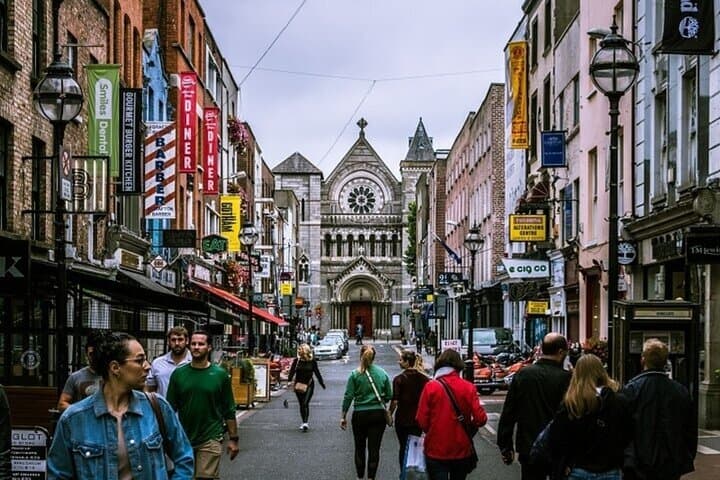
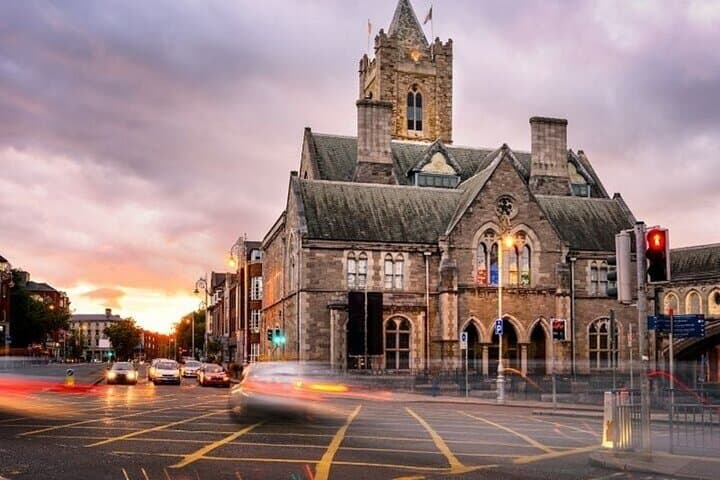
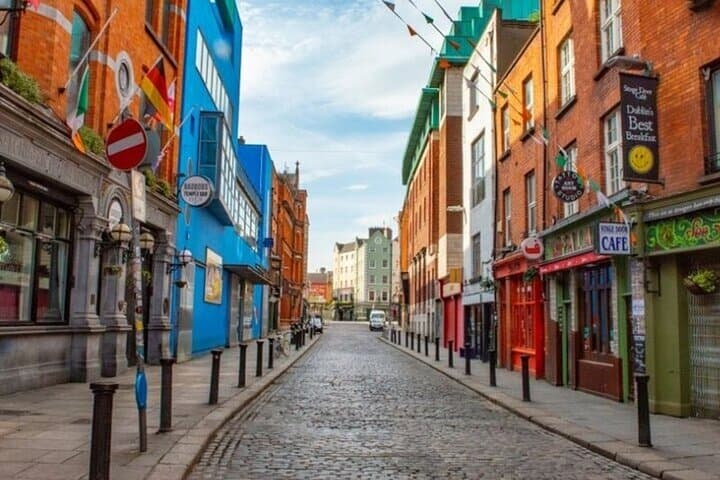
The guide opens the route at Smithfield Square, where painted walls and painted alleys press close and colour dares you to look longer. Walkers move under the watch of old lamp posts, the River Liffey threading past like a quicksilver neighbor that occasionally throws light on the bridges ahead.
The guide opens the route at Smithfield Square, where painted walls and painted alleys press close and colour dares you to look longer. Walkers move under the watch of old lamp posts, the River Liffey threading past like a quicksilver neighbor that occasionally throws light on the bridges ahead.
This route traces Dublin’s layered history — Smithfield’s market roots and Georgian redress, St. Michan’s medieval stones and its storied crypts, the Four Courts’ 18th-century architecture and its role in 1916-era conflict — then finishes in Temple Bar, a neighborhood where galleries and pubs share the same cobbles. Geologically, the city sits on glacial and river-deposited sediments that make for compact, slightly uneven paving; culturally, Dublin’s street art grew from political posters and tradesmen’s signage into a curated urban gallery.
Expect murals that comment on local life, stenciled portraits, and ephemeral installations that change with commissions and weather. Guides will point out technique, attribution, and the local artists behind pieces while explaining how conservation and city permits shape what survives.
Practicalities: this is an easy, two-hour walking tour on cobbles and paved sidewalks — comfortable shoes and a rain layer are essential. Photography is welcome but avoid touching works or photographing private courtyards without permission. The route is largely wheelchair accessible, though some narrow lanes and steps in nearby older streets may be present if you wander off the main path. Aim for morning or late afternoon light for the best photos and fewer crowds.