THE ADVENTURE COLLECTIVE® · Independent discovery and booking for outdoor travel

Walk from Trinity College to Dublin Castle with a history postgraduate guide who compresses a millennium of Irish history into two revealing hours. Expect Viking docks, Georgian parliament buildings, and clear, contextual storytelling with practical stops for photographs and questions.
Walk from Trinity College to Dublin Castle with a history postgraduate guide who compresses a millennium of Irish history into two revealing hours. Expect Viking docks, Georgian parliament buildings, and clear, contextual storytelling with practical stops for photographs and questions.
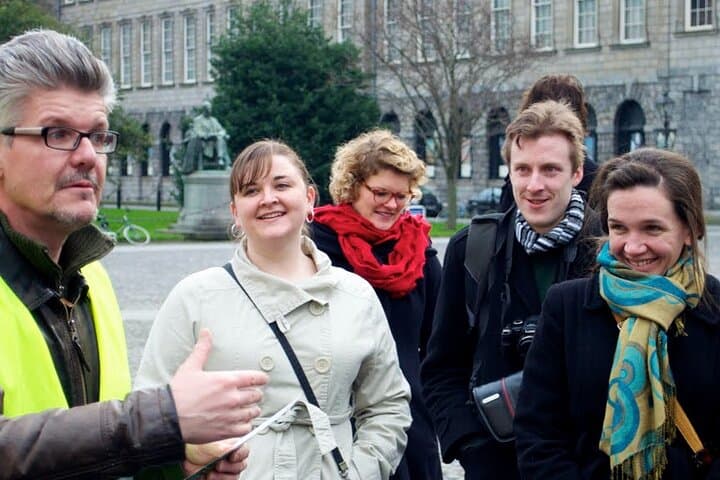
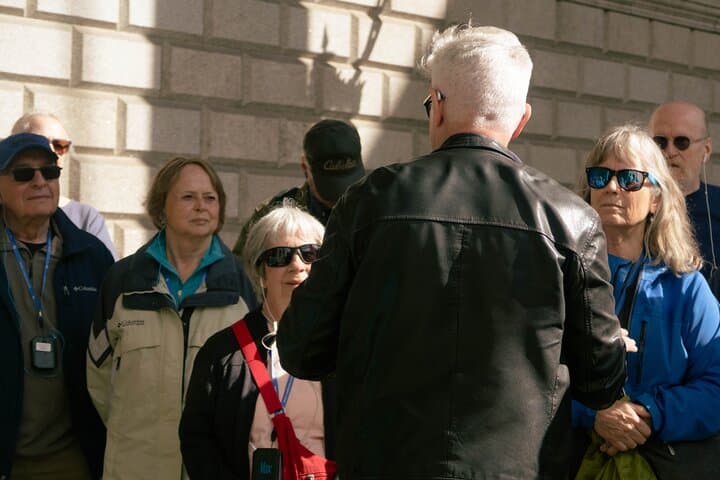
You meet at the Grattan statue on College Green and the city opens up like a book: cobbled streets, granite facades, and the River Liffey threading the centre. The guide—an academic with a knack for narrative—leads the group through Trinity’s gates, past the hush of the Old Library, and out into the streets where layers of conflict and commerce are written into stone.
Verified experiences and guided adventures in the surrounding area.
Operated by Historical Walking Tours of Dublin · Dublin, Dublin
You meet at the Grattan statue on College Green and the city opens up like a book: cobbled streets, granite facades, and the River Liffey threading the centre. The guide—an academic with a knack for narrative—leads the group through Trinity’s gates, past the hush of the Old Library, and out into the streets where layers of conflict and commerce are written into stone.
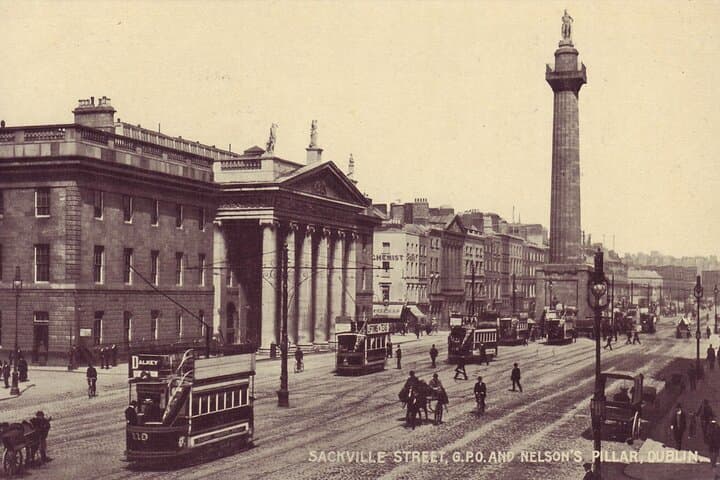
This short route compresses a millennium: Viking docks at Wood Quay, Norman-built cathedrals, Georgian parliament buildings, the 19th-century campaign for Catholic emancipation, the famines of the 1840s, and the 20th-century fight for independence that culminated in the War of Independence and the Civil War. Geology is subtle but present—the Liffey’s tidal channel carved the low-lying plain and left glacial gravels beneath the city, shaping where roads and bridges were built.
Culture here is blunt and conversational: pub songs, political murals, and university debates all part of daily life. Local insights include the contested 1980s excavations at Wood Quay and how Dublin’s courtroom quarter marks sites of 1922 conflict.
Practical guidance: the walk is two hours on mostly paved surfaces with some cobbles and steps. Comfortable, waterproof footwear and a lightweight rain layer will keep you moving. Tours depart from College Green; public transport and accessible options are nearby. Expect a steady pace with frequent stops for interpretation—bring water, a charged phone for photos, and an openness to questions. This tour is an efficient, grounded primer on Dublin’s public history.
moderate.
2 hours.
Suitable for those with reasonable mobility who can stand and walk for roughly two hours at a steady urban pace.
Tours start at the Grattan statue on College Green (opposite Trinity College) and typically finish in the Dublin Castle area after about two hours.
Yes — the operator lists wheelchair accessible options, though some cobbled areas may be uneven; advise the provider of accessibility needs when booking.
Full refunds are available if you cancel at least 24 hours before the scheduled departure time.
The walk is family-friendly but requires moderate stamina; infants must sit on laps and small children should be able to keep pace with the group.
Dublin began as a Viking longphort around AD 841; subsequent Norman, English, and Irish political shifts shaped the city through plantation, rebellion, famine, and the 20th-century independence struggle.
Walking tours minimize transport emissions and spotlight preservation efforts for archaeological sites like Wood Quay and the ongoing maintenance of Georgian architecture and river habitats.
Historical Walking Tours of Dublin operates guided outdoor trips and adventures with an emphasis on safety, stewardship, and memorable experiences.

You meet at the Grattan statue on College Green and the city opens up like a book: cobbled streets, granite facades, and the River Liffey threading the centre. The guide—an academic with a knack for narrative—leads the group through Trinity’s gates, past the hush of the Old Library, and out into the streets where layers of conflict and commerce are written into stone.
You meet at the Grattan statue on College Green and the city opens up like a book: cobbled streets, granite facades, and the River Liffey threading the centre. The guide—an academic with a knack for narrative—leads the group through Trinity’s gates, past the hush of the Old Library, and out into the streets where layers of conflict and commerce are written into stone.
This short route compresses a millennium: Viking docks at Wood Quay, Norman-built cathedrals, Georgian parliament buildings, the 19th-century campaign for Catholic emancipation, the famines of the 1840s, and the 20th-century fight for independence that culminated in the War of Independence and the Civil War. Geology is subtle but present—the Liffey’s tidal channel carved the low-lying plain and left glacial gravels beneath the city, shaping where roads and bridges were built.
Culture here is blunt and conversational: pub songs, political murals, and university debates all part of daily life. Local insights include the contested 1980s excavations at Wood Quay and how Dublin’s courtroom quarter marks sites of 1922 conflict.
Practical guidance: the walk is two hours on mostly paved surfaces with some cobbles and steps. Comfortable, waterproof footwear and a lightweight rain layer will keep you moving. Tours depart from College Green; public transport and accessible options are nearby. Expect a steady pace with frequent stops for interpretation—bring water, a charged phone for photos, and an openness to questions. This tour is an efficient, grounded primer on Dublin’s public history.