THE ADVENTURE COLLECTIVE® · Independent discovery and booking for outdoor travel

A quick cultural trek from Dubai to Abu Dhabi, this half-day trip delivers one of the region’s most spectacular modern mosques. Expect marble domes, vast carpets and clear rules on dress and behavior — here’s how to prepare.
A quick cultural trek from Dubai to Abu Dhabi, this half-day trip delivers one of the region’s most spectacular modern mosques. Expect marble domes, vast carpets and clear rules on dress and behavior — here’s how to prepare.
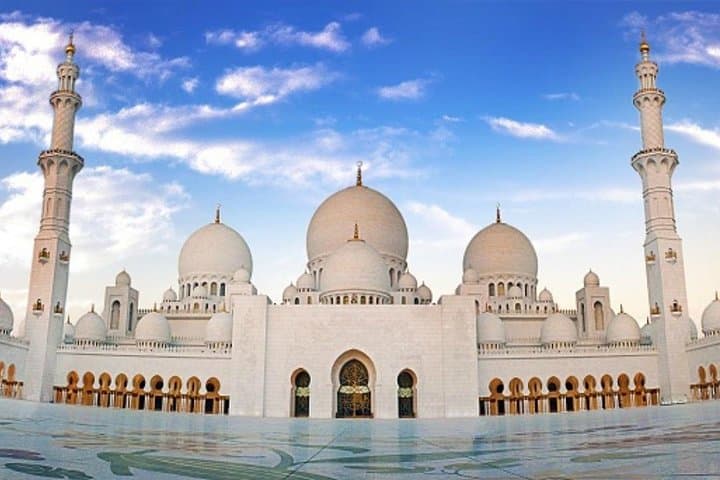
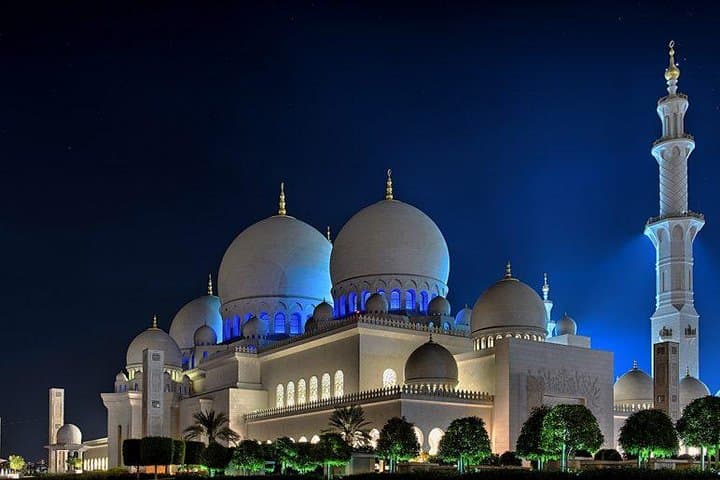
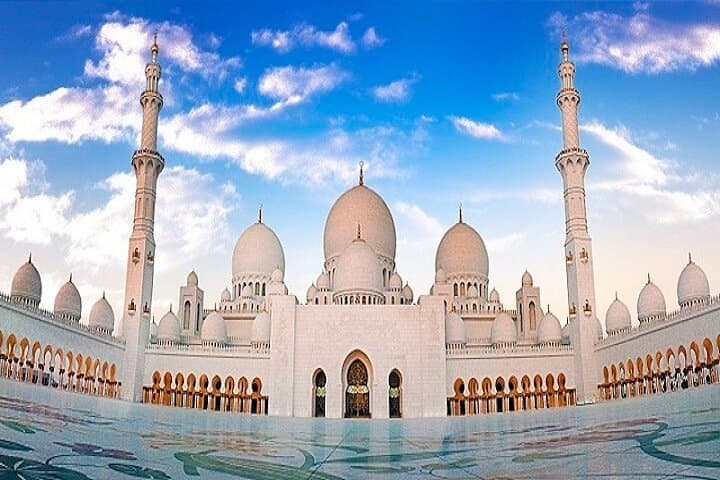
You arrive from Dubai on a low, sunlit highway and the mosque rises white and cool against a flat coastal plain — domes and minarets cutting clean lines into the sky. Reflective pools skirt its perimeter and the marble seems to drink the light; footsteps and voices fall into the hush of the courtyard.
Verified experiences and guided adventures in the surrounding area.
Operated by Bedouin Heritage Tourism L.L.C · Abu Dhabi, Abu Dhabi
You arrive from Dubai on a low, sunlit highway and the mosque rises white and cool against a flat coastal plain — domes and minarets cutting clean lines into the sky. Reflective pools skirt its perimeter and the marble seems to drink the light; footsteps and voices fall into the hush of the courtyard.
Built over 11 years and inaugurated in 2007, the Sheikh Zayed Grand Mosque is a modern statement of Islamic architecture: Sivec marble clads its facades, vast hand-woven carpets stretch under cavernous domes, and chandeliers bedazzled with Swarovski glass hang in the prayer halls. The complex reflects Abu Dhabi’s mid-20th-century oil wealth and the late Sheikh Zayed’s vision to create a place that welcomes all visitors. Geologically the site sits on the Abu Dhabi coastal plain — the white marble contrasts with the ochre desert beyond and the Persian Gulf nearby.
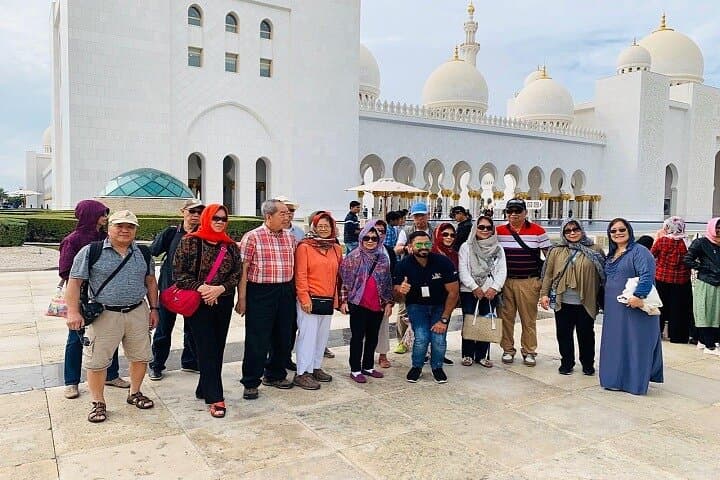
Culturally, expect formal etiquette: modest dress, quiet conversation, and an observant atmosphere during prayer times. Local guides often explain calligraphy, mosaic techniques and the symbolism woven into the floral inlays.
Practical guidance: tours last about five hours door-to-door from Dubai; plan early-morning or late-afternoon visits to avoid heat and crowds. Bring water, sun protection, and easy-to-remove shoes for prayer-hall entry. Women are provided abayas if needed; men must cover knees and shoulders. Photography is allowed in most areas but be mindful of worshippers. If you’re traveling in summer, schedule the mosque stop for the cooler window around sunrise or sunset, and leave time for traffic between emirates.
easy.
5 hours.
Light walking on flat surfaces; accessible to most fitness levels though some standing is required
Yes — modest dress is mandatory: women should cover hair, arms and legs (abayas are available), and men must cover shoulders and knees; failure to comply can mean denied entry.
Typical shared tours run about five hours total, including pickup, transit (roughly 1.5–2 hours each way depending on traffic) and about one hour inside the mosque.
Photography is permitted in most public areas but avoid photographing worshippers and follow staff guidance in restricted zones.
Yes — the mosque has level pathways and accessible facilities, and tour operators note stroller accessibility in booking information.
The mosque was commissioned by Sheikh Zayed and built from 1996 to 2007, combining international materials and artisans to create a contemporary national landmark.
The complex requires intensive maintenance—visitors are asked to minimize waste and follow guidelines; local teams manage marble cleaning and water use to preserve the site.
Bedouin Heritage Tourism L.L.C operates guided outdoor trips and adventures with an emphasis on safety, stewardship, and memorable experiences.
You arrive from Dubai on a low, sunlit highway and the mosque rises white and cool against a flat coastal plain — domes and minarets cutting clean lines into the sky. Reflective pools skirt its perimeter and the marble seems to drink the light; footsteps and voices fall into the hush of the courtyard.
You arrive from Dubai on a low, sunlit highway and the mosque rises white and cool against a flat coastal plain — domes and minarets cutting clean lines into the sky. Reflective pools skirt its perimeter and the marble seems to drink the light; footsteps and voices fall into the hush of the courtyard.
Built over 11 years and inaugurated in 2007, the Sheikh Zayed Grand Mosque is a modern statement of Islamic architecture: Sivec marble clads its facades, vast hand-woven carpets stretch under cavernous domes, and chandeliers bedazzled with Swarovski glass hang in the prayer halls. The complex reflects Abu Dhabi’s mid-20th-century oil wealth and the late Sheikh Zayed’s vision to create a place that welcomes all visitors. Geologically the site sits on the Abu Dhabi coastal plain — the white marble contrasts with the ochre desert beyond and the Persian Gulf nearby.
Culturally, expect formal etiquette: modest dress, quiet conversation, and an observant atmosphere during prayer times. Local guides often explain calligraphy, mosaic techniques and the symbolism woven into the floral inlays.
Practical guidance: tours last about five hours door-to-door from Dubai; plan early-morning or late-afternoon visits to avoid heat and crowds. Bring water, sun protection, and easy-to-remove shoes for prayer-hall entry. Women are provided abayas if needed; men must cover knees and shoulders. Photography is allowed in most areas but be mindful of worshippers. If you’re traveling in summer, schedule the mosque stop for the cooler window around sunrise or sunset, and leave time for traffic between emirates.