THE ADVENTURE COLLECTIVE® · Independent discovery and booking for outdoor travel

Explore 119 acres of continent-themed habitats at Dubai Safari Park—home to roughly 3,000 animals and designed for family-friendly conservation learning. This guide helps you plan a 2–3 hour visit or a full day of shows, workshops and optional safari drives.
Explore 119 acres of continent-themed habitats at Dubai Safari Park—home to roughly 3,000 animals and designed for family-friendly conservation learning. This guide helps you plan a 2–3 hour visit or a full day of shows, workshops and optional safari drives.
You enter under a wide, sunlit canopy and the city noise slips away—the air shifts and the park’s habitats open like pages in a field guide. Paths thread through the Asian Village, African Village, Al Wadi and the Arabian Desert Zone; enclosures and planted landscapes feel intentionally open, animals seen against horizons rather than behind dense barriers. The park’s 119-acre layout gives space for herds, flocks and solitary predators to move with purpose, and birds of prey arc overhead as if scouting.
Verified experiences and guided adventures in the surrounding area.
Operated by POINT CLICK TOURISM · Dubai, Dubai
You enter under a wide, sunlit canopy and the city noise slips away—the air shifts and the park’s habitats open like pages in a field guide. Paths thread through the Asian Village, African Village, Al Wadi and the Arabian Desert Zone; enclosures and planted landscapes feel intentionally open, animals seen against horizons rather than behind dense barriers. The park’s 119-acre layout gives space for herds, flocks and solitary predators to move with purpose, and birds of prey arc overhead as if scouting.
Dubai Safari Park replaced the older Dubai Zoo and opened as a modern wildlife facility focused on rescue, breeding and educational programs; its design borrows ecological cues from the regions represented, using planted native flora to support animal welfare and microclimates. Culturally, it’s a family-focused attraction: Young Explorers workshops and live presentations aim to connect visitors with conservation practices in the UAE’s rapid urban context.
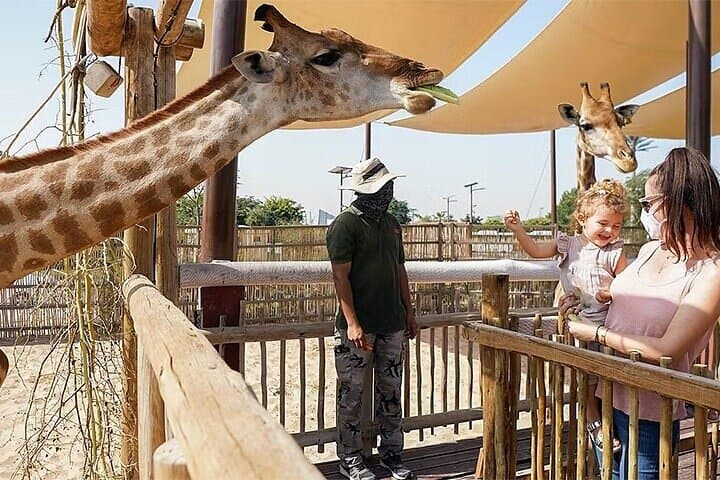
Practical guidance: allow 2–3 hours for a concise visit or a full day to attend three live presentations and the 15-minute Arabian Desert safari tour. Start early or late afternoon to avoid peak sun—pathways are paved and stroller/wheelchair accessible, with complimentary parking and food options. Bring sun protection, a refillable bottle and comfortable walking shoes; expect short walks between village areas and shaded seating spots near exhibits. If you opt for the paid safari drive inside the park, budget extra time and cash. For families, the kids’ farm offers supervised feeding sessions. Conservation-minded visitors should follow signage, avoid feeding wildlife, and use bins—small choices that keep habitats healthy and animals thriving.
easy.
2–3 hours.
Suitable for all fitness levels; mostly walking on paved, stroller- and wheelchair-friendly paths
A quick visit can take 2–3 hours; plan a full day if you want to see live presentations, attend workshops and take the optional safari drive.
Yes—paths and most areas are stroller- and wheelchair-accessible, and transport options included with some tickets are also wheelchair-accessible.
Yes—there are multiple dining options and kiosks across the park; you may also bring your own food, but please use bins and follow signage.
This ticket includes access to the Arabian Desert Zone and a 15-minute safari tour; longer safari drives inside the park or outside excursions may be extra.
Dubai Safari Park opened as the successor to the older Dubai Zoo, expanding into a 119-acre modern facility designed for species-specific habitats, rescue and breeding programs.
The park emphasizes rescue and breeding of endangered species and runs education programs; visitors help by following no-feed rules, staying on paths and using waste bins.
POINT CLICK TOURISM operates guided outdoor trips and adventures with an emphasis on safety, stewardship, and memorable experiences.

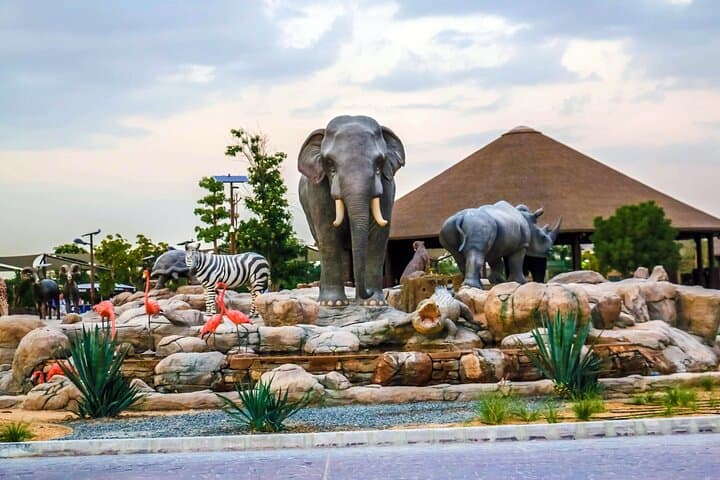
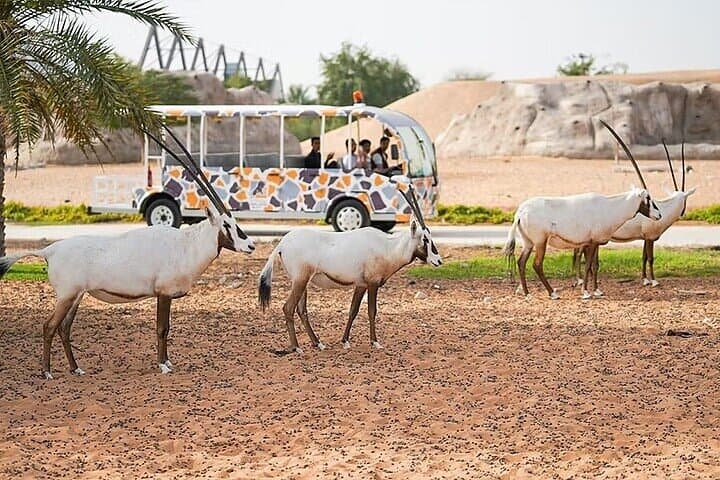
You enter under a wide, sunlit canopy and the city noise slips away—the air shifts and the park’s habitats open like pages in a field guide. Paths thread through the Asian Village, African Village, Al Wadi and the Arabian Desert Zone; enclosures and planted landscapes feel intentionally open, animals seen against horizons rather than behind dense barriers. The park’s 119-acre layout gives space for herds, flocks and solitary predators to move with purpose, and birds of prey arc overhead as if scouting.
You enter under a wide, sunlit canopy and the city noise slips away—the air shifts and the park’s habitats open like pages in a field guide. Paths thread through the Asian Village, African Village, Al Wadi and the Arabian Desert Zone; enclosures and planted landscapes feel intentionally open, animals seen against horizons rather than behind dense barriers. The park’s 119-acre layout gives space for herds, flocks and solitary predators to move with purpose, and birds of prey arc overhead as if scouting.
Dubai Safari Park replaced the older Dubai Zoo and opened as a modern wildlife facility focused on rescue, breeding and educational programs; its design borrows ecological cues from the regions represented, using planted native flora to support animal welfare and microclimates. Culturally, it’s a family-focused attraction: Young Explorers workshops and live presentations aim to connect visitors with conservation practices in the UAE’s rapid urban context.
Practical guidance: allow 2–3 hours for a concise visit or a full day to attend three live presentations and the 15-minute Arabian Desert safari tour. Start early or late afternoon to avoid peak sun—pathways are paved and stroller/wheelchair accessible, with complimentary parking and food options. Bring sun protection, a refillable bottle and comfortable walking shoes; expect short walks between village areas and shaded seating spots near exhibits. If you opt for the paid safari drive inside the park, budget extra time and cash. For families, the kids’ farm offers supervised feeding sessions. Conservation-minded visitors should follow signage, avoid feeding wildlife, and use bins—small choices that keep habitats healthy and animals thriving.