THE ADVENTURE COLLECTIVE® · Independent discovery and booking for outdoor travel

Move from Dubai’s skyline to open sand on a 4-hour small-group morning safari that mixes dune-bashing, camel riding, and sandboarding. Ideal for morning light and cooler temperatures, this short trip pairs adrenaline with cultural context.
Move from Dubai’s skyline to open sand on a 4-hour small-group morning safari that mixes dune-bashing, camel riding, and sandboarding. Ideal for morning light and cooler temperatures, this short trip pairs adrenaline with cultural context.
Golden air lifts off the sand as your 4x4 threads between wind-scoured ridges; the morning desert in Dubai feels wide and candid, dunes rolling like a slow ocean. The vehicle climbs a crest, the engine hums and the skyline of the city drops behind you—this is the contrast the experience sells: urban glass to raw sand in less than an hour.
Verified experiences and guided adventures in the surrounding area.
Golden air lifts off the sand as your 4x4 threads between wind-scoured ridges; the morning desert in Dubai feels wide and candid, dunes rolling like a slow ocean. The vehicle climbs a crest, the engine hums and the skyline of the city drops behind you—this is the contrast the experience sells: urban glass to raw sand in less than an hour.
This stretch of Arabian Desert was shaped by Pleistocene winds and coastal processes, leaving fine, mobile dunes commonly found around the Lahbab and Dubai Desert Conservation Reserve. Bedouin routes once stitched these sands into trade and camel culture; today camel rides offer a living link to that heritage while modern guides explain traditional navigation and survival skills.
Expect a short interpretive stop for photos, a guided camel ride that demonstrates why camels were the region's transport, and an intro to sandboarding on gentler slopes. The dune-bash section is an adrenaline spine—drivers use 4x4 suspension and controlled slides to carve the landscape, with the vehicle’s rhythm matching the dune contours.
Practical guidance: morning trips are cooler and offer softer light for photography; wear closed-toe shoes and bring layered sun protection. Hydrate before you go and secure loose items—the sand will challenge zippers and hair. If you’re prone to motion sickness, request a gentler route or sit near the center of the vehicle.
The trip is short but sensory: wind that seems to rearrange the dunes overnight, a camel’s steady patience, and the sudden, bright geometry of sand against sky. It’s an accessible way to meet the desert’s motion and still return to the city by midday.
moderate.
4 hours.
Light to moderate fitness; must be able to climb into a 4x4 and mount a camel with brief assistance.
Most morning small-group departures include pickup from central Dubai hotels; confirm your pickup point and time when booking.
Camel rides on this type of morning tour are usually short—10 to 20 minutes—designed for photos and cultural context rather than long treks.
Basic sandboarding on gentle slopes is suitable for beginners; instructors typically give a quick demonstration and equipment for short runs.
Operators commonly advise that pregnant travelers and people with serious back or heart conditions avoid dune-bashing; check specific policies and disclose health concerns when booking.
This region has long been part of Bedouin routes; camels provided reliable transport and trade links across the Arabian sands.
The desert is an arid ecosystem with fragile vegetation and wildlife; stay on designated tracks, avoid littering, and choose operators that support local conservation.
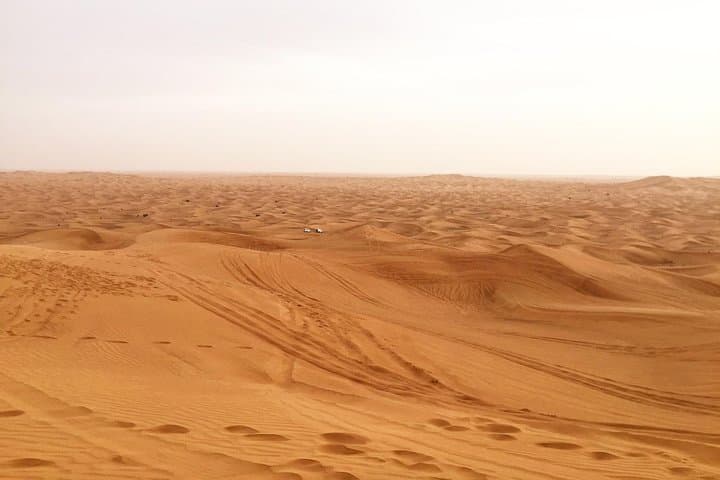
Golden air lifts off the sand as your 4x4 threads between wind-scoured ridges; the morning desert in Dubai feels wide and candid, dunes rolling like a slow ocean. The vehicle climbs a crest, the engine hums and the skyline of the city drops behind you—this is the contrast the experience sells: urban glass to raw sand in less than an hour.
Golden air lifts off the sand as your 4x4 threads between wind-scoured ridges; the morning desert in Dubai feels wide and candid, dunes rolling like a slow ocean. The vehicle climbs a crest, the engine hums and the skyline of the city drops behind you—this is the contrast the experience sells: urban glass to raw sand in less than an hour.
This stretch of Arabian Desert was shaped by Pleistocene winds and coastal processes, leaving fine, mobile dunes commonly found around the Lahbab and Dubai Desert Conservation Reserve. Bedouin routes once stitched these sands into trade and camel culture; today camel rides offer a living link to that heritage while modern guides explain traditional navigation and survival skills.
Expect a short interpretive stop for photos, a guided camel ride that demonstrates why camels were the region's transport, and an intro to sandboarding on gentler slopes. The dune-bash section is an adrenaline spine—drivers use 4x4 suspension and controlled slides to carve the landscape, with the vehicle’s rhythm matching the dune contours.
Practical guidance: morning trips are cooler and offer softer light for photography; wear closed-toe shoes and bring layered sun protection. Hydrate before you go and secure loose items—the sand will challenge zippers and hair. If you’re prone to motion sickness, request a gentler route or sit near the center of the vehicle.
The trip is short but sensory: wind that seems to rearrange the dunes overnight, a camel’s steady patience, and the sudden, bright geometry of sand against sky. It’s an accessible way to meet the desert’s motion and still return to the city by midday.