THE ADVENTURE COLLECTIVE® · Independent discovery and booking for outdoor travel

Walk among sculpted arches, floral airplanes, and millions of flowers at Dubai Miracle Garden. This two-hour visit blends engineered horticulture with practical planning — best timed for late afternoon light and cooler temperatures.
Walk among sculpted arches, floral airplanes, and millions of flowers at Dubai Miracle Garden. This two-hour visit blends engineered horticulture with practical planning — best timed for late afternoon light and cooler temperatures.
You step through a low gate and the desert exhales a different breath — a corridor of colors pushes the heat into soft focus as thousands of blooms lean toward the sun. Pathways curve between sculpted arches of petunias and towering floral installations; even the wind seems to pause to let a scent pass.
Verified experiences and guided adventures in the surrounding area.
Operated by Mam Holidays · Dubai, Dubai
You step through a low gate and the desert exhales a different breath — a corridor of colors pushes the heat into soft focus as thousands of blooms lean toward the sun. Pathways curve between sculpted arches of petunias and towering floral installations; even the wind seems to pause to let a scent pass.
Opened on Valentine’s Day 2013, the Dubai Miracle Garden transformed a patch of Dubailand into the world’s largest natural flower garden, occupying roughly 72,000 square metres. The site is an engineered green space on reclaimed desert soil, reliant on treated water and precise irrigation rather than native groundwater. Culturally it’s a weekend ritual for families and photographers, a deliberate contrast to Dubai’s glass-and-steel skyline and a demonstration of horticulture in an arid climate.
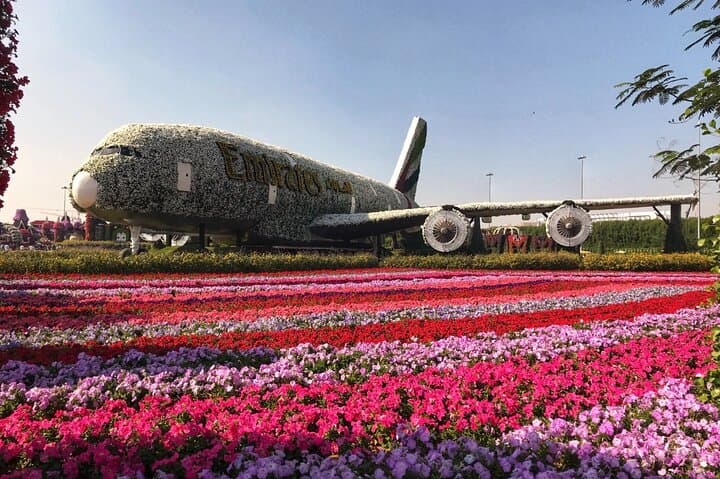
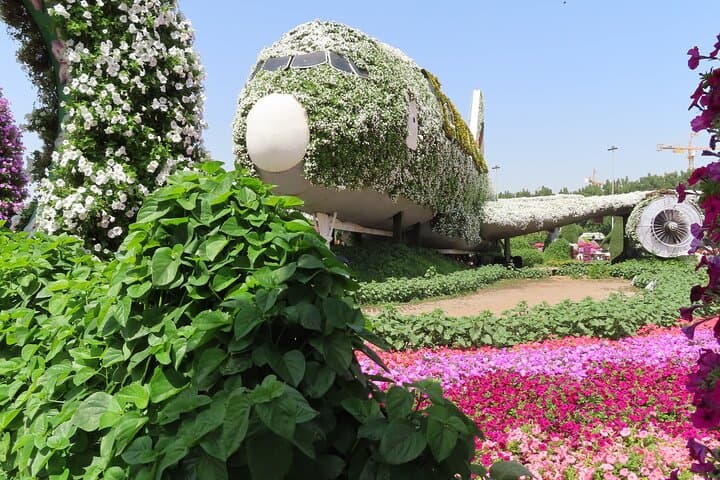
Geology is subtle here — sand and reclaimed fill support planted terraces — but human design is loud: floral airplanes, heart tunnels, and themed pavilions that change each season. Locals time visits for late afternoons when the light flattens shadows and the crowd eases.
Practical guidance: tickets grant a timed two-hour visit on most days — plan for shade breaks, wear sun protection, and bring a refillable bottle; outside food is not permitted and re-entry is disallowed. Paths are flat and wheelchair accessible, but surfaces can get hot in direct sun. Expect standard photography queues at signature displays and modest walking distances on packed gravel and paved walkways.
The experience balances spectacle and logistics: arrive early or late in the day, move slowly to follow the floral narratives, and leave with a clearer idea of what careful irrigation and design can coax from the desert.
easy.
2 hours.
Suitable for all fitness levels; minimal walking on flat, paved or packed-gravel paths.
Most tickets are for a two-hour visit window; check the confirmation for exact entry time and arrive within that window.
The garden operates seasonally — traditionally open during the cooler months and closed during the hottest summer period; verify current opening dates before booking.
Yes — paths and surfaces are wheelchair- and stroller-accessible, with accessible facilities available on-site.
Outside food, drinks, and pets are not allowed inside the garden; concessions are available on-site.
Launched on 14 February 2013, the garden was built in Dubailand and grew quickly into a seasonal attraction showcasing more than 50 million flowers and 250 million plants across its footprint.
Maintaining a large botanical display in the desert requires treated and recycled water plus precise drip irrigation; visitors are asked to avoid disturbing plantings and follow on-site rules to minimize impact.
Mam Holidays operates guided outdoor trips and adventures with an emphasis on safety, stewardship, and memorable experiences.
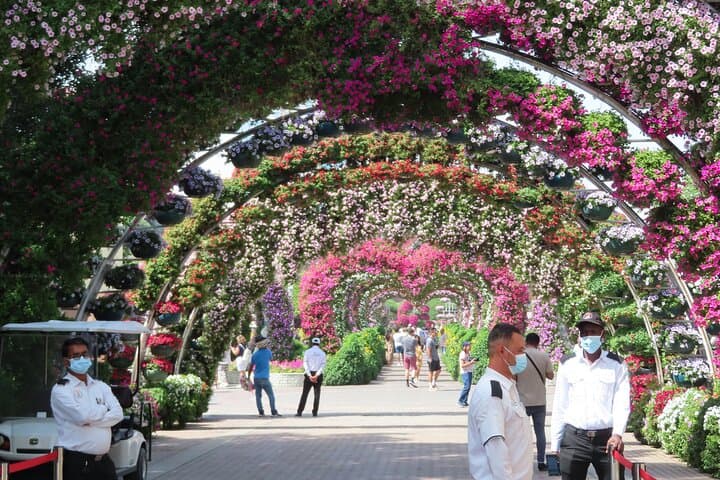
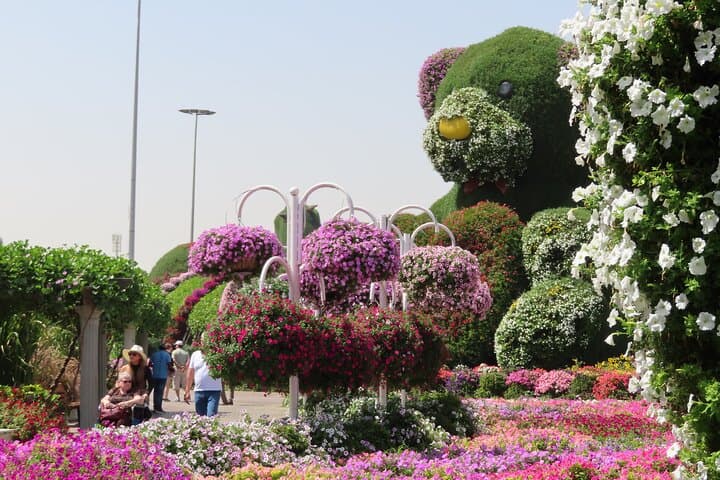
You step through a low gate and the desert exhales a different breath — a corridor of colors pushes the heat into soft focus as thousands of blooms lean toward the sun. Pathways curve between sculpted arches of petunias and towering floral installations; even the wind seems to pause to let a scent pass.
You step through a low gate and the desert exhales a different breath — a corridor of colors pushes the heat into soft focus as thousands of blooms lean toward the sun. Pathways curve between sculpted arches of petunias and towering floral installations; even the wind seems to pause to let a scent pass.
Opened on Valentine’s Day 2013, the Dubai Miracle Garden transformed a patch of Dubailand into the world’s largest natural flower garden, occupying roughly 72,000 square metres. The site is an engineered green space on reclaimed desert soil, reliant on treated water and precise irrigation rather than native groundwater. Culturally it’s a weekend ritual for families and photographers, a deliberate contrast to Dubai’s glass-and-steel skyline and a demonstration of horticulture in an arid climate.
Geology is subtle here — sand and reclaimed fill support planted terraces — but human design is loud: floral airplanes, heart tunnels, and themed pavilions that change each season. Locals time visits for late afternoons when the light flattens shadows and the crowd eases.
Practical guidance: tickets grant a timed two-hour visit on most days — plan for shade breaks, wear sun protection, and bring a refillable bottle; outside food is not permitted and re-entry is disallowed. Paths are flat and wheelchair accessible, but surfaces can get hot in direct sun. Expect standard photography queues at signature displays and modest walking distances on packed gravel and paved walkways.
The experience balances spectacle and logistics: arrive early or late in the day, move slowly to follow the floral narratives, and leave with a clearer idea of what careful irrigation and design can coax from the desert.