THE ADVENTURE COLLECTIVE® · Independent discovery and booking for outdoor travel

Explore Dubai Miracle Garden’s vast floral installations—72,000 m² of color and engineered gardens launched in 2013. This practical guide covers what to expect, the Flower Parade spectacle, and tips for timing, tickets, and comfort.
Explore Dubai Miracle Garden’s vast floral installations—72,000 m² of color and engineered gardens launched in 2013. This practical guide covers what to expect, the Flower Parade spectacle, and tips for timing, tickets, and comfort.
You step under an arch of marigolds and the air changes—perfume of cut stems and warm sun replace the city’s glass-and-concrete heat. Paths curve between heart-shaped installations and giant topiary planes; blooms lean and sway as if nudging you toward the next tableau. In peak season the garden reads like a lived postcard of color, with the Flower Parade adding moving floats, dancers and music on select days.
Verified experiences and guided adventures in the surrounding area.
Operated by Booketto DMC · Dubai, Dubai
You step under an arch of marigolds and the air changes—perfume of cut stems and warm sun replace the city’s glass-and-concrete heat. Paths curve between heart-shaped installations and giant topiary planes; blooms lean and sway as if nudging you toward the next tableau. In peak season the garden reads like a lived postcard of color, with the Flower Parade adding moving floats, dancers and music on select days.
Opened on February 14, 2013, Dubai Miracle Garden transformed reclaimed desert into 72,000 square meters of planted displays. Organizers report more than 250 million plants and about 50 million blossoms across sculpted frames and living walls. Geologically the site sits on engineered fill in the Dubailand district; irrigation and shading systems are the real backbone here, turning arid substrate into sustained bloom.
Culturally, the garden is part spectacle and part family outing—seasonal themes, national-day displays and corporate sponsorships shape each year’s layout. The Flower Parade and themed installations showcase both local celebration and global horticultural trends.
Practical guidance: plan a three-hour visit in cooler months (the garden is typically open November–May). Buy timed tickets to avoid lines, arrive early for softer light and fewer crowds, and follow shaded routes if midday heat spikes. Paths are paved and largely stroller- and wheelchair-friendly, but exposed expanses offer little shade. Hydrate, carry sun protection and allow time to circle favorite displays—photography queues form quickly around signature arches.
easy.
3 hours.
Light walking on paved, flat paths—suitable for most fitness levels and families
The garden operates seasonally—typically from late autumn through spring (around November–May); dates can vary yearly so check official schedules before visiting.
Timed-entry tickets are strongly recommended—buy online to secure an entry window and reduce wait times at the gate.
Most main paths are paved and accessible, but some displays can get crowded; contact the garden for specific accessibility services or route advice.
Outside food policies change; small snacks are generally allowed but large picnics may be restricted—there are vendors and cafés inside during the season.
Launched on February 14, 2013, the garden was designed as a large-scale floricultural attraction in the Dubailand development and has since evolved with seasonal themes and public events.
The garden relies on intensive irrigation and engineered soils—visitors are encouraged to follow signage, avoid touching delicate displays, and dispose of waste properly to reduce impact.
Booketto DMC operates guided outdoor trips and adventures with an emphasis on safety, stewardship, and memorable experiences.
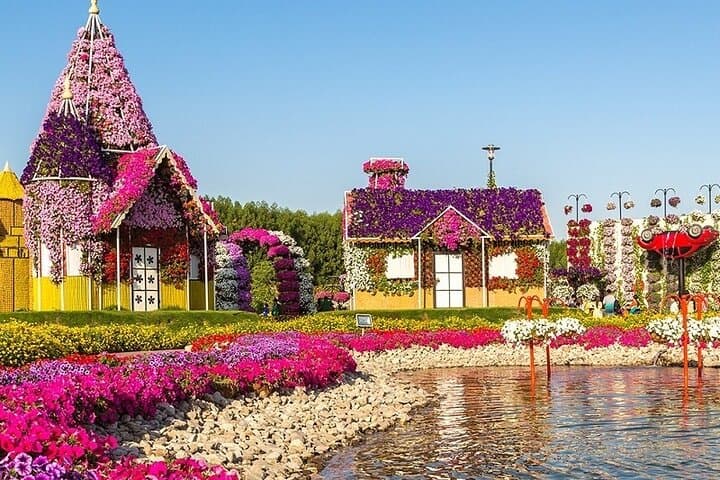
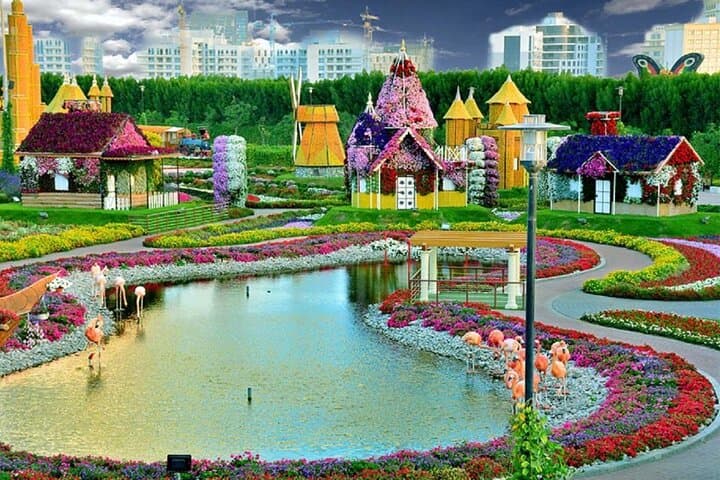
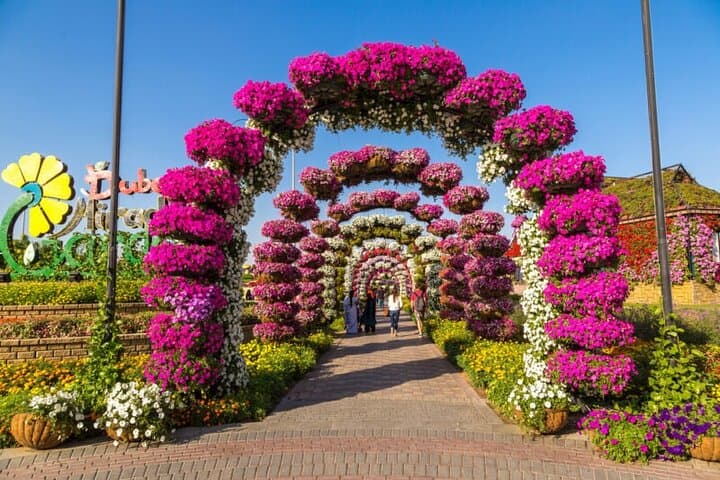
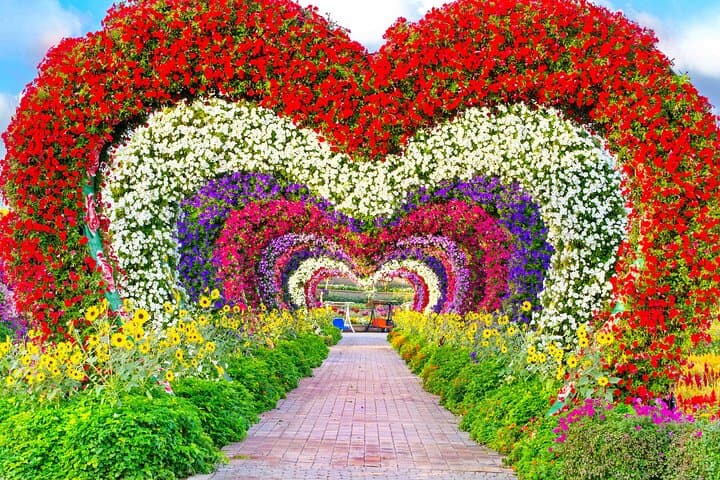
You step under an arch of marigolds and the air changes—perfume of cut stems and warm sun replace the city’s glass-and-concrete heat. Paths curve between heart-shaped installations and giant topiary planes; blooms lean and sway as if nudging you toward the next tableau. In peak season the garden reads like a lived postcard of color, with the Flower Parade adding moving floats, dancers and music on select days.
You step under an arch of marigolds and the air changes—perfume of cut stems and warm sun replace the city’s glass-and-concrete heat. Paths curve between heart-shaped installations and giant topiary planes; blooms lean and sway as if nudging you toward the next tableau. In peak season the garden reads like a lived postcard of color, with the Flower Parade adding moving floats, dancers and music on select days.
Opened on February 14, 2013, Dubai Miracle Garden transformed reclaimed desert into 72,000 square meters of planted displays. Organizers report more than 250 million plants and about 50 million blossoms across sculpted frames and living walls. Geologically the site sits on engineered fill in the Dubailand district; irrigation and shading systems are the real backbone here, turning arid substrate into sustained bloom.
Culturally, the garden is part spectacle and part family outing—seasonal themes, national-day displays and corporate sponsorships shape each year’s layout. The Flower Parade and themed installations showcase both local celebration and global horticultural trends.
Practical guidance: plan a three-hour visit in cooler months (the garden is typically open November–May). Buy timed tickets to avoid lines, arrive early for softer light and fewer crowds, and follow shaded routes if midday heat spikes. Paths are paved and largely stroller- and wheelchair-friendly, but exposed expanses offer little shade. Hydrate, carry sun protection and allow time to circle favorite displays—photography queues form quickly around signature arches.