THE ADVENTURE COLLECTIVE® · Independent discovery and booking for outdoor travel

Soar above Palm Jumeirah and step inside the Burj Al Arab on one combined luxury experience. This three-hour trip pairs a 12-minute scenic helicopter flight with a 90-minute guided tour through areas ordinarily reserved for royalty.
Soar above Palm Jumeirah and step inside the Burj Al Arab on one combined luxury experience. This three-hour trip pairs a 12-minute scenic helicopter flight with a 90-minute guided tour through areas ordinarily reserved for royalty.
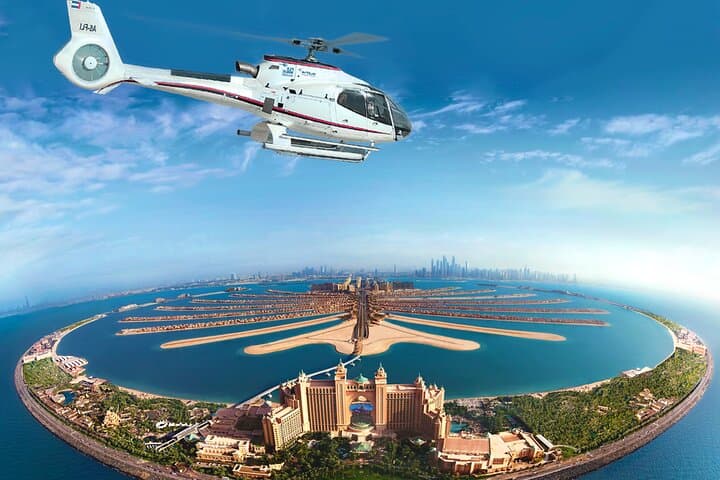
A rotor's low hum builds into a citywide chorus as the helicopter lifts from Atlantis The Palm, glass and water shrinking beneath you while the Palm’s fronds splay like a graphic on the Arabian Gulf. The Burj Al Arab appears next—the sail-shaped hotel set offshore—its private beaches and helipad outlined against shimmering blue. From 600–1,000 feet the desert edge and downtown skyline read like architectural chapters: the Burj Khalifa rising needle-thin, man-made islands carving the sea.
Verified experiences and guided adventures in the surrounding area.
Operated by Arabia Horizons · Dubai, Dubai
A rotor's low hum builds into a citywide chorus as the helicopter lifts from Atlantis The Palm, glass and water shrinking beneath you while the Palm’s fronds splay like a graphic on the Arabian Gulf. The Burj Al Arab appears next—the sail-shaped hotel set offshore—its private beaches and helipad outlined against shimmering blue. From 600–1,000 feet the desert edge and downtown skyline read like architectural chapters: the Burj Khalifa rising needle-thin, man-made islands carving the sea.
Dubai’s rapid transformation—oil wealth channeled into ambitious reclamation projects and iconic architecture—frames this experience. The Palm Jumeirah is engineered land; Burj Al Arab, opened in 1999, was built to project Dubai’s hospitality-driven future. Culturally, the tour pairs modern spectacle with Emirati ceremonial hospitality: the Burj Al Arab tour highlights gold-plated interiors and private suites where service traditions meet contemporary excess.
Practical guidance: arrive 45 minutes early for helicopter check-in with a valid passport; weight limits and seat assignments are strictly enforced for balance and safety. Dress smart-casual for the Burj Al Arab—no beachwear—and be prepared for strong air-conditioning inside. Bring a camera with a polarizing filter for reduced glare over water, and expect tight security and locker use for personal items.
Timing matters: morning flights offer clearer air and softer light for photos; late-afternoon slots can deliver dramatic sunset colors over the Gulf. Combine the open-dated hotel tour with your flight day for flexibility, but allocate roughly three hours for the full experience including transfers and orientation.
easy.
3 hours.
Minimal fitness required; passengers should be able to board a helicopter and walk short distances within the hotel tour.
The scenic flight lasts about 12 minutes and follows a set route over Palm Jumeirah, Burj Al Arab, and Burj Khalifa; total booking time is roughly three hours to include orientation and hotel tour.
Yes; the Burj Al Arab visit is open-dated within provided time slots (10:00–11:30 or 17:30–19:00) and does not need to coincide with your helicopter date.
Yes; seat weight limit is 110 kg per seat for helicopter balance. Travelers with serious heart or spinal conditions, or pregnant visitors past 32 weeks, are not recommended to fly.
Full refunds are available if you cancel at least 24 hours before departure; flights may be canceled due to bad weather and refunded accordingly.
Burj Al Arab opened in 1999 as a purpose-built luxury landmark; Palm Jumeirah is a large-scale land-reclamation project completed in stages from the early 2000s onward.
Aircraft operations are subject to strict weight-and-balance rules and local aviation noise regulations; visitors are asked to respect hotel interiors and avoid drone use near the helipad and hotel's private island.
Arabia Horizons operates guided outdoor trips and adventures with an emphasis on safety, stewardship, and memorable experiences.
A rotor's low hum builds into a citywide chorus as the helicopter lifts from Atlantis The Palm, glass and water shrinking beneath you while the Palm’s fronds splay like a graphic on the Arabian Gulf. The Burj Al Arab appears next—the sail-shaped hotel set offshore—its private beaches and helipad outlined against shimmering blue. From 600–1,000 feet the desert edge and downtown skyline read like architectural chapters: the Burj Khalifa rising needle-thin, man-made islands carving the sea.
A rotor's low hum builds into a citywide chorus as the helicopter lifts from Atlantis The Palm, glass and water shrinking beneath you while the Palm’s fronds splay like a graphic on the Arabian Gulf. The Burj Al Arab appears next—the sail-shaped hotel set offshore—its private beaches and helipad outlined against shimmering blue. From 600–1,000 feet the desert edge and downtown skyline read like architectural chapters: the Burj Khalifa rising needle-thin, man-made islands carving the sea.
Dubai’s rapid transformation—oil wealth channeled into ambitious reclamation projects and iconic architecture—frames this experience. The Palm Jumeirah is engineered land; Burj Al Arab, opened in 1999, was built to project Dubai’s hospitality-driven future. Culturally, the tour pairs modern spectacle with Emirati ceremonial hospitality: the Burj Al Arab tour highlights gold-plated interiors and private suites where service traditions meet contemporary excess.
Practical guidance: arrive 45 minutes early for helicopter check-in with a valid passport; weight limits and seat assignments are strictly enforced for balance and safety. Dress smart-casual for the Burj Al Arab—no beachwear—and be prepared for strong air-conditioning inside. Bring a camera with a polarizing filter for reduced glare over water, and expect tight security and locker use for personal items.
Timing matters: morning flights offer clearer air and softer light for photos; late-afternoon slots can deliver dramatic sunset colors over the Gulf. Combine the open-dated hotel tour with your flight day for flexibility, but allocate roughly three hours for the full experience including transfers and orientation.