THE ADVENTURE COLLECTIVE® · Independent discovery and booking for outdoor travel

Rise above Dubai’s shoreline for a private 20-minute gyrocopter flight and see Palm Jumeirah, Burj Al Arab, Atlantis and Ain Dubai from an open cockpit. Learn what to expect, safety limits, best light for photos, and how to prepare for a short but unforgettable aerial tour.
Rise above Dubai’s shoreline for a private 20-minute gyrocopter flight and see Palm Jumeirah, Burj Al Arab, Atlantis and Ain Dubai from an open cockpit. Learn what to expect, safety limits, best light for photos, and how to prepare for a short but unforgettable aerial tour.
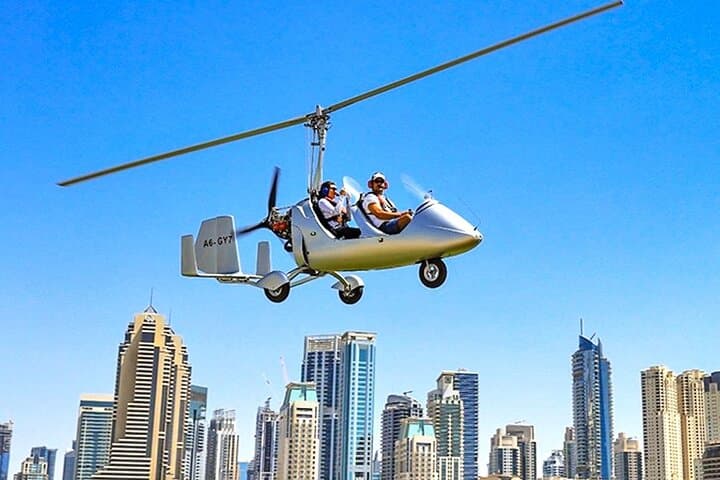
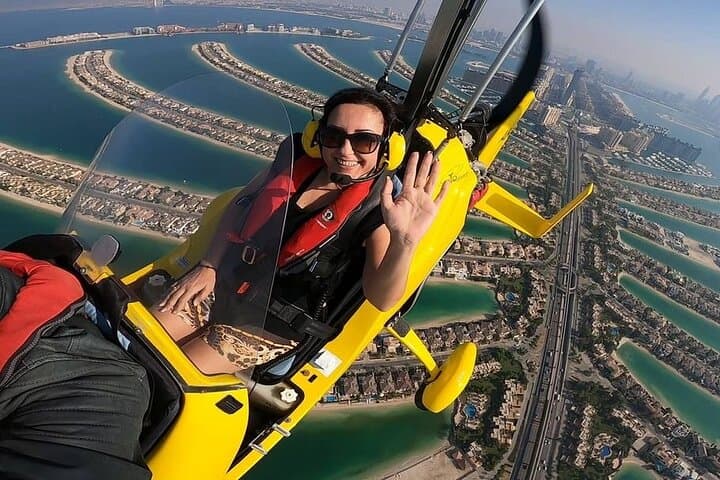
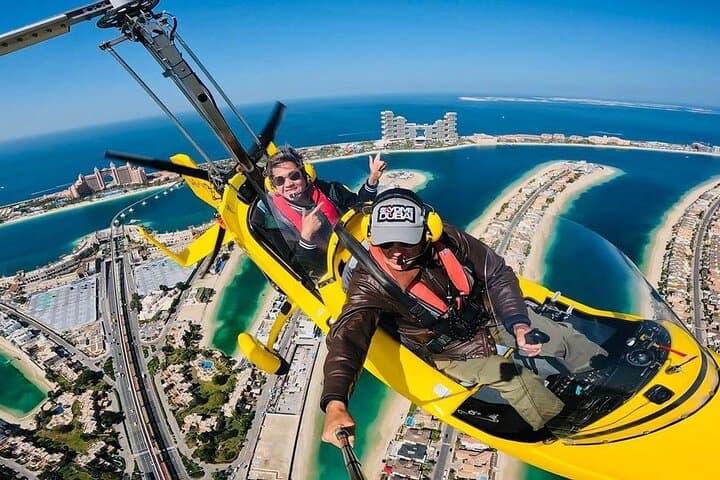
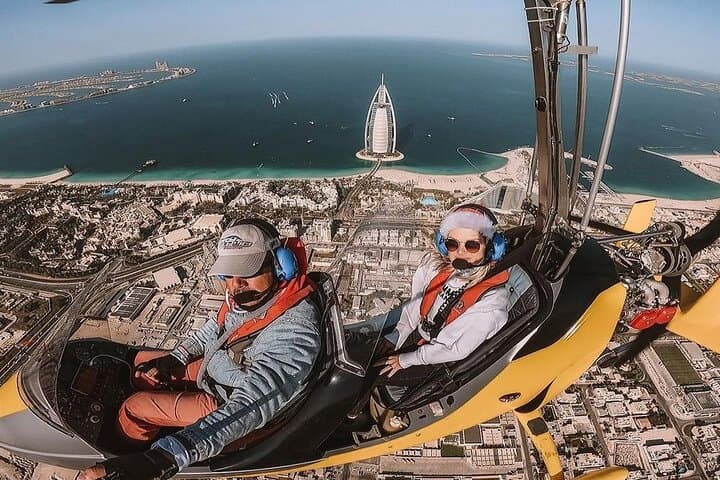
The wind arrives first — a clean, saline slap as the open cockpit lifts off the tarmac and Dubai unfurls beneath you. Buildings shrink into ordered geometry: the fronds of Palm Jumeirah, the crescent of its breakwater, and the slim spear of the Burj Al Arab. From twenty minutes aloft the city reads like a freshly drawn map and the Arabian Sea dares you to look farther.
Verified experiences and guided adventures in the surrounding area.
Operated by Tripline Tourism · Dubai, Dubai
The wind arrives first — a clean, saline slap as the open cockpit lifts off the tarmac and Dubai unfurls beneath you. Buildings shrink into ordered geometry: the fronds of Palm Jumeirah, the crescent of its breakwater, and the slim spear of the Burj Al Arab. From twenty minutes aloft the city reads like a freshly drawn map and the Arabian Sea dares you to look farther.
This short flight is a lesson in recent history and engineered landscape: Dubai’s shoreline has been reshaped over decades with massive reclamation projects like Palm Jumeirah and Bluewaters Island. Geologically, the coastline is a low-lying coastal plain and sabkha where sand and sea were rearranged to meet ambitious urban design. Culturally, the skyline reflects a trading port turned global hub — glass and steel layered over Bedouin routes and pearling-era settlements.
Practical guidance follows the poetry. Flights are private, piloted by certified operators; expect a strict 105 kg weight limit, no children under 17, and quiet but firm safety briefings. Morning and late-afternoon slots give the best light for photography and cooler conditions; midday can be windy and bright. Bring a secure camera or phone strap, sunglasses, and a windproof layer. If you’re prone to motion sickness, brief exposure at low altitude is gentler than a helicopter, but consider medication.
Because flights are short, plan logistics — allow 45–60 minutes for check-in, weight checks, and transfers. Operations obey aviation corridors and conservation rules; pilots balance spectacle with safety, giving you a sharp, intimate view of Dubai’s most iconic coastal scenes.
easy.
20 minutes (flight); allow 45–60 minutes total.
Able to sit and step in/out of a low cockpit; operators request at least moderate mobility for boarding and brief safety procedures
Yes — flights are operated by certified pilots with safety gear and pre-flight briefings; however there are strict weight and age rules to ensure safety.
Passengers must weigh 105 kg or less on the day of flight; children under 17 are not permitted and infants must sit on an adult’s lap as specified by the operator.
Absolutely — the open cockpit gives unobstructed views. Use a secure strap and set fast shutter speeds to compensate for motion.
All sales are final per operator policy — there are no refunds for cancellations, so confirm plans before booking.
Dubai transformed from a trading and pearling port into a global city in the late 20th century; many coastal landmarks are products of rapid reclamation and development.
Operators follow regulated flight corridors to minimize disturbance to wildlife and coastal communities; lighter, private flights reduce per-passenger emissions compared with large tours.
Tripline Tourism operates guided outdoor trips and adventures with an emphasis on safety, stewardship, and memorable experiences.
The wind arrives first — a clean, saline slap as the open cockpit lifts off the tarmac and Dubai unfurls beneath you. Buildings shrink into ordered geometry: the fronds of Palm Jumeirah, the crescent of its breakwater, and the slim spear of the Burj Al Arab. From twenty minutes aloft the city reads like a freshly drawn map and the Arabian Sea dares you to look farther.
The wind arrives first — a clean, saline slap as the open cockpit lifts off the tarmac and Dubai unfurls beneath you. Buildings shrink into ordered geometry: the fronds of Palm Jumeirah, the crescent of its breakwater, and the slim spear of the Burj Al Arab. From twenty minutes aloft the city reads like a freshly drawn map and the Arabian Sea dares you to look farther.
This short flight is a lesson in recent history and engineered landscape: Dubai’s shoreline has been reshaped over decades with massive reclamation projects like Palm Jumeirah and Bluewaters Island. Geologically, the coastline is a low-lying coastal plain and sabkha where sand and sea were rearranged to meet ambitious urban design. Culturally, the skyline reflects a trading port turned global hub — glass and steel layered over Bedouin routes and pearling-era settlements.
Practical guidance follows the poetry. Flights are private, piloted by certified operators; expect a strict 105 kg weight limit, no children under 17, and quiet but firm safety briefings. Morning and late-afternoon slots give the best light for photography and cooler conditions; midday can be windy and bright. Bring a secure camera or phone strap, sunglasses, and a windproof layer. If you’re prone to motion sickness, brief exposure at low altitude is gentler than a helicopter, but consider medication.
Because flights are short, plan logistics — allow 45–60 minutes for check-in, weight checks, and transfers. Operations obey aviation corridors and conservation rules; pilots balance spectacle with safety, giving you a sharp, intimate view of Dubai’s most iconic coastal scenes.