THE ADVENTURE COLLECTIVE® · Independent discovery and booking for outdoor travel

A modern icon and a short museum experience in Zabeel Park, the Dubai Frame puts both old and new Dubai on display from a single bridge. Plan 45–90 minutes, book timed-entry tickets, and aim for golden hour for the best skyline photos.
A modern icon and a short museum experience in Zabeel Park, the Dubai Frame puts both old and new Dubai on display from a single bridge. Plan 45–90 minutes, book timed-entry tickets, and aim for golden hour for the best skyline photos.
Standing beneath the Dubai Frame, the city’s two faces open like a book: to the north, a low-slung, ochre grid of older neighborhoods; to the south, a glittering canyon of skyscrapers pushing skyward. The 150-meter tall rectangular frame—two towers joined by a 93-meter long bridge—functions as both observatory and compact museum, directing attention at Dubai’s rapid transformation.
Verified experiences and guided adventures in the surrounding area.
Operated by BarcaForToursits · Dubai, Dubai
Standing beneath the Dubai Frame, the city’s two faces open like a book: to the north, a low-slung, ochre grid of older neighborhoods; to the south, a glittering canyon of skyscrapers pushing skyward. The 150-meter tall rectangular frame—two towers joined by a 93-meter long bridge—functions as both observatory and compact museum, directing attention at Dubai’s rapid transformation.
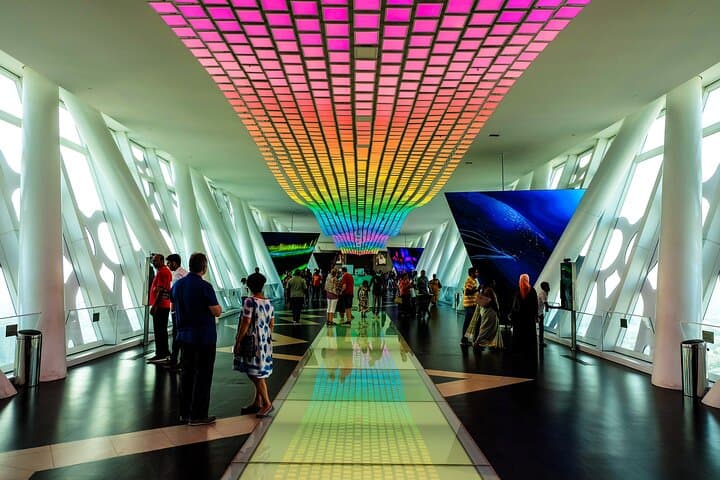
Conceived by the Dubai Municipality and opened in January 2018, the Frame is positioned in Zabeel Park to physically and narratively separate “old” and “new” Dubai. The galleries on the lower levels trace the emirate’s development from pearl-diving and date farms to oil wealth and contemporary urbanism; the top bridge gives a literal vantage on modern skyline geometry.
Geologically the site sits on reclaimed coastal plain and sandy substrate typical of the Arabian Gulf coast; expect flat approaches through manicured parkland rather than steep trails. Culturally, the attraction offers a concise primer in Dubai’s self-directed branding—an architectural punctuation marking progress and memory.
For visitors this is a short, intensive experience: allow 45–90 minutes. Buy timed-entry tickets in advance to avoid queues; visit at golden hour for the best light across both views. Take the elevator to the top, step onto the glass-edged walkway if you’re comfortable with heights, and follow interpretive panels downstairs for context.
Practical tips: wear breathable clothing and sun protection, carry a water bottle from Zabeel Park kiosks, and pair your visit with a stroll through the park or a nearby museum. Security screening is standard; large backpacks are discouraged.
easy.
45–90 minutes.
Suitable for all fitness levels; involves short walks and elevator access to the top
Plan 45–90 minutes to see the galleries and spend time on the bridge; photography and queues can extend that time.
Tickets are timed-entry and this provider lists all sales as final—book a specific slot and confirm details before purchase.
Yes — elevators access the observation bridge and galleries; accessible facilities are available but check with the operator for special assistance needs.
Photography is allowed; the glass walkway offers dramatic views but follow staff instructions if weather or crowds require restricted access.
Opened in January 2018 and commissioned by Dubai Municipality, the Frame was designed to create a literal viewpoint that contrasts the city’s historical neighborhoods with its contemporary skyline.
Zabeel Park is managed as an urban green space—stick to paths, use designated bins, and limit single-use plastics to reduce visitor impact.
BarcaForToursits operates guided outdoor trips and adventures with an emphasis on safety, stewardship, and memorable experiences.
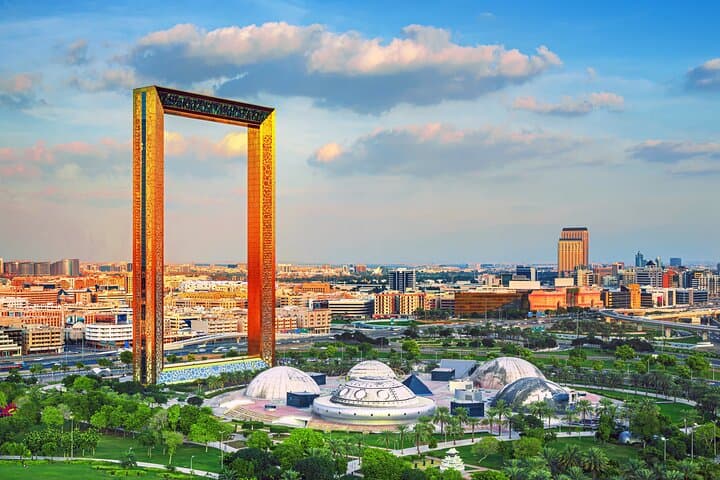
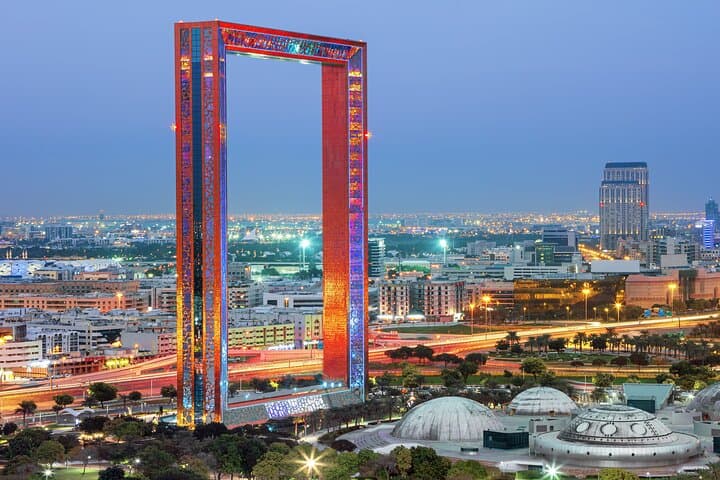
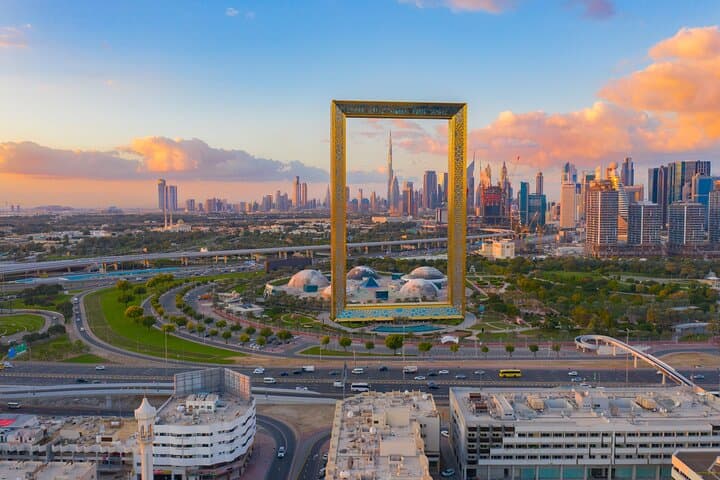
Standing beneath the Dubai Frame, the city’s two faces open like a book: to the north, a low-slung, ochre grid of older neighborhoods; to the south, a glittering canyon of skyscrapers pushing skyward. The 150-meter tall rectangular frame—two towers joined by a 93-meter long bridge—functions as both observatory and compact museum, directing attention at Dubai’s rapid transformation.
Standing beneath the Dubai Frame, the city’s two faces open like a book: to the north, a low-slung, ochre grid of older neighborhoods; to the south, a glittering canyon of skyscrapers pushing skyward. The 150-meter tall rectangular frame—two towers joined by a 93-meter long bridge—functions as both observatory and compact museum, directing attention at Dubai’s rapid transformation.
Conceived by the Dubai Municipality and opened in January 2018, the Frame is positioned in Zabeel Park to physically and narratively separate “old” and “new” Dubai. The galleries on the lower levels trace the emirate’s development from pearl-diving and date farms to oil wealth and contemporary urbanism; the top bridge gives a literal vantage on modern skyline geometry.
Geologically the site sits on reclaimed coastal plain and sandy substrate typical of the Arabian Gulf coast; expect flat approaches through manicured parkland rather than steep trails. Culturally, the attraction offers a concise primer in Dubai’s self-directed branding—an architectural punctuation marking progress and memory.
For visitors this is a short, intensive experience: allow 45–90 minutes. Buy timed-entry tickets in advance to avoid queues; visit at golden hour for the best light across both views. Take the elevator to the top, step onto the glass-edged walkway if you’re comfortable with heights, and follow interpretive panels downstairs for context.
Practical tips: wear breathable clothing and sun protection, carry a water bottle from Zabeel Park kiosks, and pair your visit with a stroll through the park or a nearby museum. Security screening is standard; large backpacks are discouraged.