THE ADVENTURE COLLECTIVE® · Independent discovery and booking for outdoor travel

Step onto the glass sky bridge of the Dubai Frame and watch Old and New Dubai unfold beneath you. This one-hour visit pairs multimedia storytelling with 360-degree city panoramas — plan sunset for the best light.
Step onto the glass sky bridge of the Dubai Frame and watch Old and New Dubai unfold beneath you. This one-hour visit pairs multimedia storytelling with 360-degree city panoramas — plan sunset for the best light.
You ascend through an elevator and emerge into a gleaming rectangular aperture that frames the city like a living photograph. The Dubai Frame stands 150 meters tall and spans a 93-meter-long sky bridge whose glass-central walkway dares you to look down at the pulse of the city beneath your feet. Eastward the low-rise souks and wind-tower roofs of Old Dubai cluster toward the creek; westward a forest of towers marches to the horizon, Burj Khalifa cutting the skyline.
Verified experiences and guided adventures in the surrounding area.
Operated by Night Wings Travel & Tourism · Dubai, Dubai
You ascend through an elevator and emerge into a gleaming rectangular aperture that frames the city like a living photograph. The Dubai Frame stands 150 meters tall and spans a 93-meter-long sky bridge whose glass-central walkway dares you to look down at the pulse of the city beneath your feet. Eastward the low-rise souks and wind-tower roofs of Old Dubai cluster toward the creek; westward a forest of towers marches to the horizon, Burj Khalifa cutting the skyline.
Opened in 2018, the Dubai Frame was conceived as a literal bridge between past and present, a museum-in-minimalist-armor that charts Dubai’s rapid transformation. Built on the landscaped grounds of Zabeel Park, the structure sits where reclaimed coastal plain meets urban parkland, a modern portal anchored in a place of public leisure and sport.
Inside, a multimedia “Virtual Metropolis” recaps the emirate’s rise, while the glass bridge offers unbroken, 360-degree panoramas — a photographer’s dream at golden hour. Local culture is visible in the contrast: dhow masts along the creek, cricket fields in the park, and the steady stream of families and tourists crossing the threshold.
Practical guidance: book timed tickets to avoid queues, plan for 45–90 minutes including exhibits, and arrive early or at sunset for the best light. The site is wheelchair-accessible with elevators and staffed exhibits; those with heart or balance issues should avoid the glass walkway. Use public transport or the optional pickup service to skip parking hassles, and leave time to stroll Zabeel Park after your visit.
easy.
1 hour.
Light walking and standing for up to an hour; elevator access minimizes exertion
Plan 45–90 minutes to view the exhibits, stand on the sky bridge, and savor the panoramas; add more time for Zabeel Park.
Yes — the site has elevator access and is wheelchair-accessible; staff can assist with entry and movement through exhibits.
Yes — photography is permitted and popular; be mindful of other visitors and staff directions around the glass panels.
Pickup and drop-off are offered as optional transfers; check booking details for pickup point, vehicle type, and any additional fees.
Unveiled in 2018, the Dubai Frame was designed to ‘frame’ the city’s two eras — the creek-side legacy and the high-rise future — using museum exhibits and panoramic observation.
Zabeel Park is maintained as public green space; visitors are asked to stick to paths, dispose of litter, and respect planted areas to minimize impact.
Night Wings Travel & Tourism operates guided outdoor trips and adventures with an emphasis on safety, stewardship, and memorable experiences.
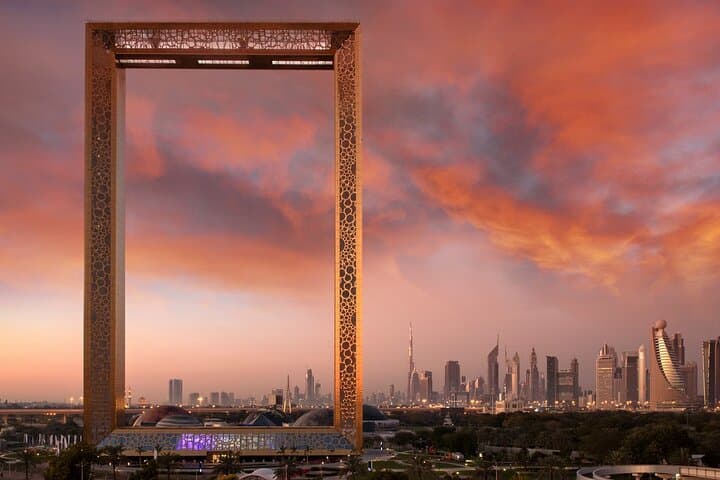
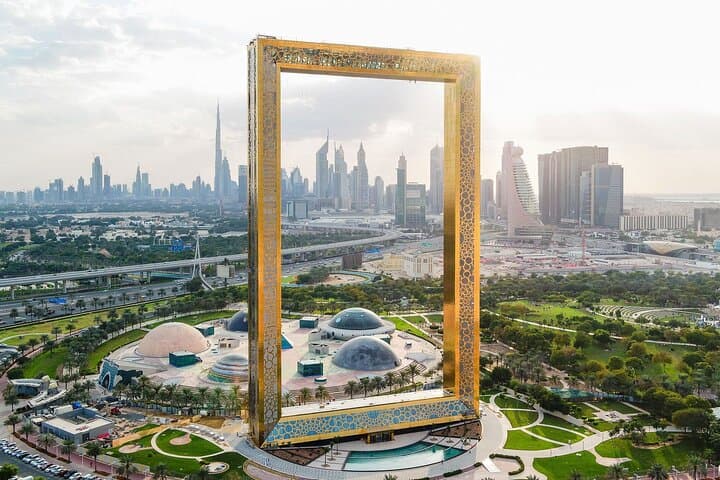
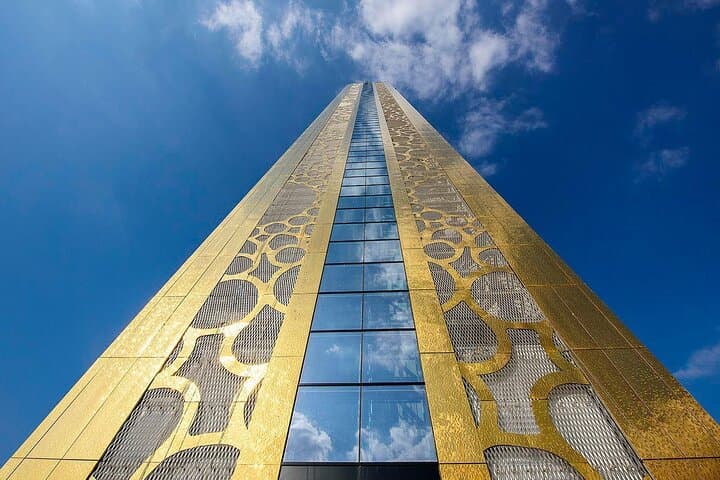
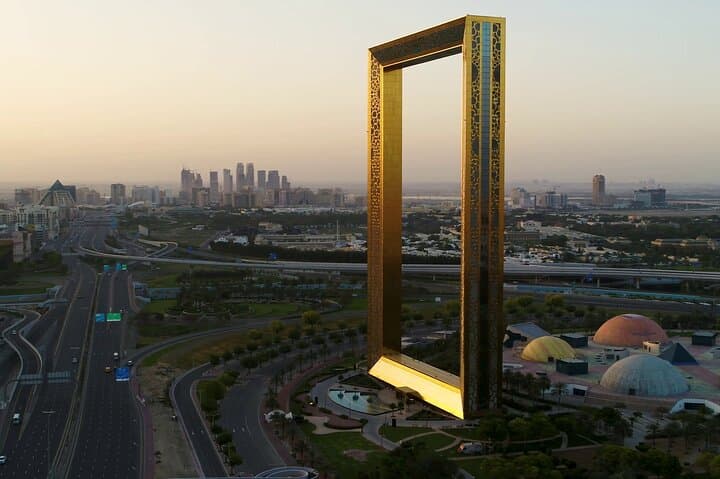
You ascend through an elevator and emerge into a gleaming rectangular aperture that frames the city like a living photograph. The Dubai Frame stands 150 meters tall and spans a 93-meter-long sky bridge whose glass-central walkway dares you to look down at the pulse of the city beneath your feet. Eastward the low-rise souks and wind-tower roofs of Old Dubai cluster toward the creek; westward a forest of towers marches to the horizon, Burj Khalifa cutting the skyline.
You ascend through an elevator and emerge into a gleaming rectangular aperture that frames the city like a living photograph. The Dubai Frame stands 150 meters tall and spans a 93-meter-long sky bridge whose glass-central walkway dares you to look down at the pulse of the city beneath your feet. Eastward the low-rise souks and wind-tower roofs of Old Dubai cluster toward the creek; westward a forest of towers marches to the horizon, Burj Khalifa cutting the skyline.
Opened in 2018, the Dubai Frame was conceived as a literal bridge between past and present, a museum-in-minimalist-armor that charts Dubai’s rapid transformation. Built on the landscaped grounds of Zabeel Park, the structure sits where reclaimed coastal plain meets urban parkland, a modern portal anchored in a place of public leisure and sport.
Inside, a multimedia “Virtual Metropolis” recaps the emirate’s rise, while the glass bridge offers unbroken, 360-degree panoramas — a photographer’s dream at golden hour. Local culture is visible in the contrast: dhow masts along the creek, cricket fields in the park, and the steady stream of families and tourists crossing the threshold.
Practical guidance: book timed tickets to avoid queues, plan for 45–90 minutes including exhibits, and arrive early or at sunset for the best light. The site is wheelchair-accessible with elevators and staffed exhibits; those with heart or balance issues should avoid the glass walkway. Use public transport or the optional pickup service to skip parking hassles, and leave time to stroll Zabeel Park after your visit.