THE ADVENTURE COLLECTIVE® · Independent discovery and booking for outdoor travel

Perched above Zabeel Park, the Dubai Frame frames the city’s past and present from a glass‑floored bridge. This guide covers what to expect—history, timing, accessibility, and tips for the best light.
Perched above Zabeel Park, the Dubai Frame frames the city’s past and present from a glass‑floored bridge. This guide covers what to expect—history, timing, accessibility, and tips for the best light.
You step onto the glass-floored bridge and Dubai’s skyline leans in like a city taking a breath—Burj Khalifa piercing sky, the older creek-side neighborhoods spreading quietly below. The Dubai Frame converts that view into a deliberate composition: one side showing Dubai’s modern towers, the other a softer past around Deira and the creek.
Verified experiences and guided adventures in the surrounding area.
Operated by POINT CLICK TOURISM · Dubai, Dubai
You step onto the glass-floored bridge and Dubai’s skyline leans in like a city taking a breath—Burj Khalifa piercing sky, the older creek-side neighborhoods spreading quietly below. The Dubai Frame converts that view into a deliberate composition: one side showing Dubai’s modern towers, the other a softer past around Deira and the creek.
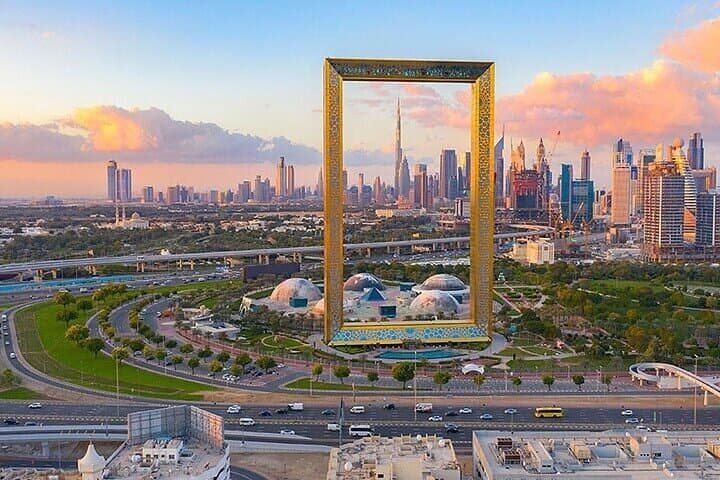
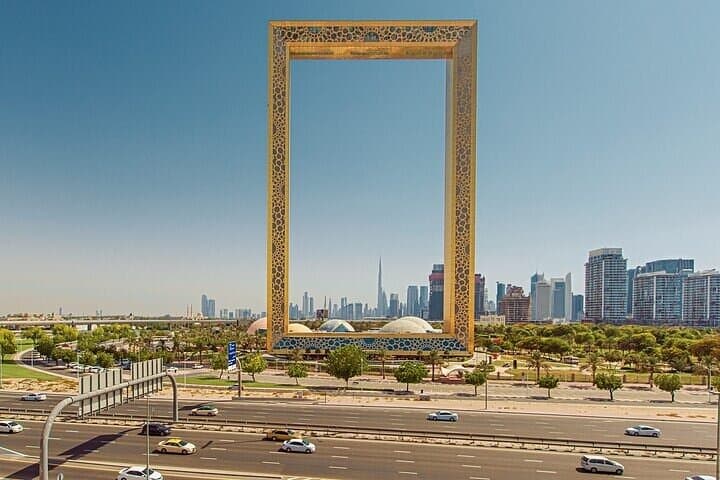
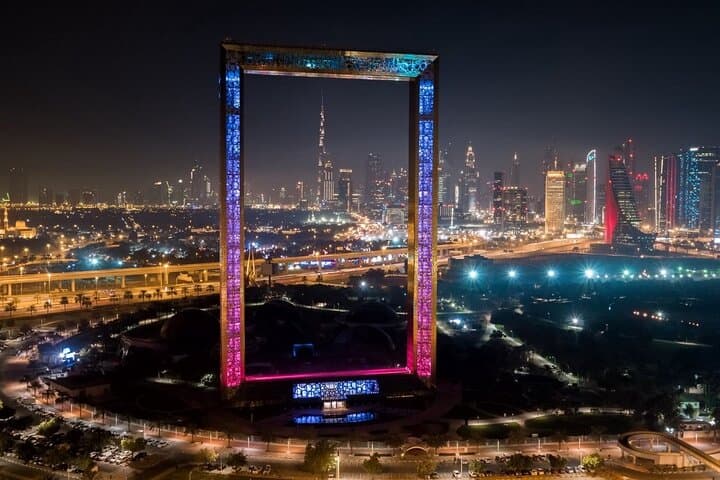
Opened in 2018, the Frame was conceived as a literal bridge between past and future: a 150‑meter tall rectangular structure clad in gilded panels that references regional architectural ornament while using modern steel and glass. It sits inside Zabeel Park, a green lung cut into Dubai’s urban grid, where palms and shaded lawns buffer the traffic and offer a local counterpoint to the high-rises.
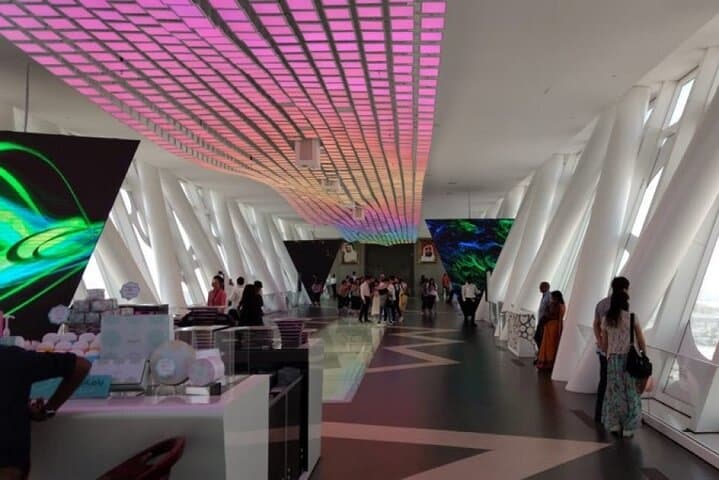
Culturally, the attraction packages history into multimedia exhibits on the ground level—interactive displays that map Dubai’s transformation from pearling and fishing villages to a global hub—then sends you upward to the observation deck where the story reads in concrete and coastline rather than words.
Practical guidance: plan 60–90 minutes for a relaxed visit (the ticket lists two hours). Mid-afternoon light is harsh; golden hour yields the most striking photos. Lines move quickly but buy a timed ticket if you’re visiting during peak tourist season or sunset. The structure is wheelchair accessible; elevators serve the deck and staff can assist with strollers.
Wear comfortable shoes for the park walk, bring sun protection, and expect security screening. If you choose transport, factor in Dubai traffic—allow extra time for peak commute windows. For a compact urban viewpoint that pairs architectural curiosity with usable context, the Dubai Frame delivers a clear, elevated perspective on Dubai’s two faces.
easy.
2 hours.
Suitable for all fitness levels; requires short walks and standing for views
Allow 60–90 minutes to see the exhibits and spend time on the observation bridge; the ticketed window is generally two hours.
Yes—elevators serve the main levels and the observation deck; staff assistance is available if needed.
Walk-up tickets may be available but can sell out during peak times; booking a timed ticket in advance is recommended.
Children are welcome; ticketing policies vary by operator—infants may sit on laps but check age rules when booking.
The Dubai Frame was completed in 2018 as a modern landmark intended to symbolize the emirate’s trajectory from its historical roots to contemporary ambition.
Zabeel Park provides urban green space that reduces heat island effects; visitors are asked to respect landscaping and use designated pathways to protect plantings.
POINT CLICK TOURISM operates guided outdoor trips and adventures with an emphasis on safety, stewardship, and memorable experiences.
You step onto the glass-floored bridge and Dubai’s skyline leans in like a city taking a breath—Burj Khalifa piercing sky, the older creek-side neighborhoods spreading quietly below. The Dubai Frame converts that view into a deliberate composition: one side showing Dubai’s modern towers, the other a softer past around Deira and the creek.
You step onto the glass-floored bridge and Dubai’s skyline leans in like a city taking a breath—Burj Khalifa piercing sky, the older creek-side neighborhoods spreading quietly below. The Dubai Frame converts that view into a deliberate composition: one side showing Dubai’s modern towers, the other a softer past around Deira and the creek.
Opened in 2018, the Frame was conceived as a literal bridge between past and future: a 150‑meter tall rectangular structure clad in gilded panels that references regional architectural ornament while using modern steel and glass. It sits inside Zabeel Park, a green lung cut into Dubai’s urban grid, where palms and shaded lawns buffer the traffic and offer a local counterpoint to the high-rises.
Culturally, the attraction packages history into multimedia exhibits on the ground level—interactive displays that map Dubai’s transformation from pearling and fishing villages to a global hub—then sends you upward to the observation deck where the story reads in concrete and coastline rather than words.
Practical guidance: plan 60–90 minutes for a relaxed visit (the ticket lists two hours). Mid-afternoon light is harsh; golden hour yields the most striking photos. Lines move quickly but buy a timed ticket if you’re visiting during peak tourist season or sunset. The structure is wheelchair accessible; elevators serve the deck and staff can assist with strollers.
Wear comfortable shoes for the park walk, bring sun protection, and expect security screening. If you choose transport, factor in Dubai traffic—allow extra time for peak commute windows. For a compact urban viewpoint that pairs architectural curiosity with usable context, the Dubai Frame delivers a clear, elevated perspective on Dubai’s two faces.