THE ADVENTURE COLLECTIVE® · Independent discovery and booking for outdoor travel

Skip the queues and cross a 150‑meter glass bridge that frames old Dubai against the glittering skyline. This fast-track visit combines rooftop views, interactive exhibits and a compact way to read the city’s dramatic change.
Skip the queues and cross a 150‑meter glass bridge that frames old Dubai against the glittering skyline. This fast-track visit combines rooftop views, interactive exhibits and a compact way to read the city’s dramatic change.
You step out of the heat into a pair of golden legs that rise 150 meters above Zabeel Park — a literal frame that separates two cities. On one side the low-rise alleys and traditional rooftops of old Dubai stretch toward the Creek; on the other, glass towers and cranes puncture the skyline. The glass sky bridge hums with nervous excitement as visitors lean over the transparent floor and watch the city tilt beneath them.
Verified experiences and guided adventures in the surrounding area.
You step out of the heat into a pair of golden legs that rise 150 meters above Zabeel Park — a literal frame that separates two cities. On one side the low-rise alleys and traditional rooftops of old Dubai stretch toward the Creek; on the other, glass towers and cranes puncture the skyline. The glass sky bridge hums with nervous excitement as visitors lean over the transparent floor and watch the city tilt beneath them.
Opened in 2018, the Dubai Frame was conceived as a photographic and narrative device: a place to read the emirate’s rapid transformation. The structure’s cladding reflects sunlight and the exhibitions inside chart Dubai’s past marketplaces, pearl-diving era and the city’s sprint into modern development. Geologically, you’re still on reclaimed coastal plains; culturally, the Frame sits at a crossroads between historic Dubai and its contemporary ambitions.
Practical guidance: skip-the-line tickets save the typical queue on busy days, and a visit normally takes 1–3 hours depending on exhibit time and viewing. Arrive early for softer light on the old city side, or at golden hour to photograph the modern skyline framed in warm tones. Elevators and level pathways make the main platforms accessible, but the glass floor can be unnerving for those with a fear of heights. Security screens bags; large backpacks may be asked to be checked. Combine the visit with a stroll through Zabeel Park or a short taxi ride to the Creek for abra rides.
Hydration, sun protection, and a charged camera will make the experience straightforward — the Frame is cinematic but practical, a compact way to see Dubai’s two faces in a single glance.
easy.
1–3 hours.
Minimal fitness required; ability to stand and walk short distances comfortably
Yes — tickets reserve an arrival window which helps reduce waiting; arrive within the allotted time to keep your slot.
The Frame has elevators and level walkways to the main viewing platforms; contact staff if you need assistance for entry or navigation.
Photography for personal use is allowed, but tripods and professional equipment may need prior permission or are restricted during busy periods.
Small bottled water and snacks are generally permitted, but eating in exhibit spaces is discouraged; larger meals should be taken in the park or nearby cafés.
Designed following an international competition and opened in 2018, the Frame was created to present Dubai’s past and future in a single view.
Visitor pressure is managed through timed tickets and capacity limits; stick to marked paths, dispose of waste responsibly and respect park plantings.
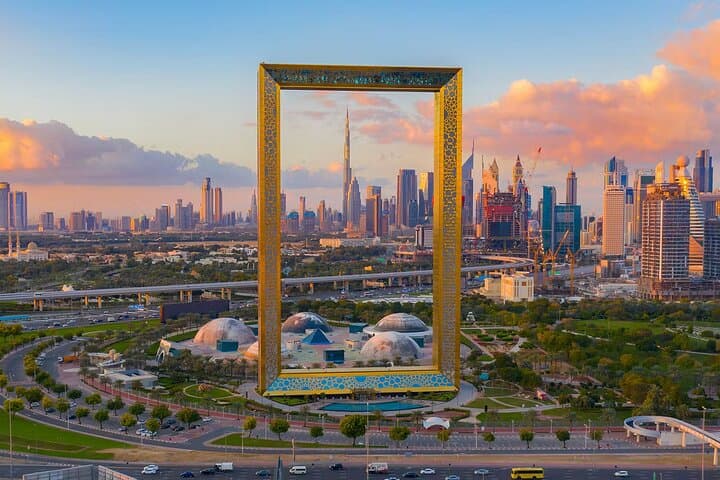
You step out of the heat into a pair of golden legs that rise 150 meters above Zabeel Park — a literal frame that separates two cities. On one side the low-rise alleys and traditional rooftops of old Dubai stretch toward the Creek; on the other, glass towers and cranes puncture the skyline. The glass sky bridge hums with nervous excitement as visitors lean over the transparent floor and watch the city tilt beneath them.
You step out of the heat into a pair of golden legs that rise 150 meters above Zabeel Park — a literal frame that separates two cities. On one side the low-rise alleys and traditional rooftops of old Dubai stretch toward the Creek; on the other, glass towers and cranes puncture the skyline. The glass sky bridge hums with nervous excitement as visitors lean over the transparent floor and watch the city tilt beneath them.
Opened in 2018, the Dubai Frame was conceived as a photographic and narrative device: a place to read the emirate’s rapid transformation. The structure’s cladding reflects sunlight and the exhibitions inside chart Dubai’s past marketplaces, pearl-diving era and the city’s sprint into modern development. Geologically, you’re still on reclaimed coastal plains; culturally, the Frame sits at a crossroads between historic Dubai and its contemporary ambitions.
Practical guidance: skip-the-line tickets save the typical queue on busy days, and a visit normally takes 1–3 hours depending on exhibit time and viewing. Arrive early for softer light on the old city side, or at golden hour to photograph the modern skyline framed in warm tones. Elevators and level pathways make the main platforms accessible, but the glass floor can be unnerving for those with a fear of heights. Security screens bags; large backpacks may be asked to be checked. Combine the visit with a stroll through Zabeel Park or a short taxi ride to the Creek for abra rides.
Hydration, sun protection, and a charged camera will make the experience straightforward — the Frame is cinematic but practical, a compact way to see Dubai’s two faces in a single glance.