THE ADVENTURE COLLECTIVE® · Independent discovery and booking for outdoor travel

Ascend to the Dubai Frame’s sky deck for 360° contrast between Old and New Dubai—walk the glass bridge, tour the Past Gallery, and time your visit for sunset panoramas. This concise guide covers what to expect and how to plan your stop at one of the city’s most striking viewpoints.
Ascend to the Dubai Frame’s sky deck for 360° contrast between Old and New Dubai—walk the glass bridge, tour the Past Gallery, and time your visit for sunset panoramas. This concise guide covers what to expect and how to plan your stop at one of the city’s most striking viewpoints.
Standing at the threshold of the Dubai Frame, visitors step into a framed panorama where the city’s past and future meet across a 150-meter-high sky desk.
Verified experiences and guided adventures in the surrounding area.
Operated by Sham Al Marjan Tours LLC · Dubai, Dubai
Standing at the threshold of the Dubai Frame, visitors step into a framed panorama where the city’s past and future meet across a 150-meter-high sky desk.
From the elevator’s rush—48 floors in 75 seconds—the skyline unfolds: the low-lying ochres of Old Dubai to the east, and a forest of glass and steel to the west. The Frame’s glass bridge briefly makes the city feel like a movable stage; footsteps on the transparent walkway are met by views that push you to the rail and a skyline that obliges with angle after photographic angle.
The structure itself is recent architecture: designed to mark Dubai’s rapid evolution from fishing creek to international hub. Inside, an immersive Past Gallery outlines the creek-side history, while the Virtual Metropolis projects planning ambitions for decades ahead—useful context before you take in the real thing.
Practicalities matter here. Plan for sunset to catch the city at its most cinematic, but expect queues—peak times are busiest. The Frame is wheelchair accessible and family-friendly, though large bags may be checked at a counter. Modest, respectful dress is required in line with local customs. If you opted for transport, air‑conditioned pickup simplifies timing; otherwise public transit and taxis serve Zabeel Park reliably.
Photographers should bring a polarizer for clearer glass reflections and a lightweight jacket for the rooftop breeze. Visits typically occupy 1.5–3 hours, making the Frame an efficient highlight on any Dubai itinerary—equal parts viewpoint, small museum, and urban observatory.
easy.
1.5–3 hours.
Suitable for all fitness levels; involves short walks and elevator access
Yes—tickets are timed and include access to the Past Gallery, Sky Desk, glass bridge and Virtual Metropolis experience.
The bridge meets safety standards and the venue is wheelchair accessible; however, those uneasy with heights can view from adjacent non-transparent areas.
Optional transportation typically offers hotel pickup within Dubai—select the transport package and confirm pickup point during booking.
Large bags and strollers are typically held at a designated counter; infants under three are usually admitted free but must sit on a lap.
The Dubai Frame was conceived as a physical narrative device—explicitly designed to juxtapose views of the emirate’s modest past with its futuristic skyline and rapid urban growth.
Zabeel Park and surrounding public spaces are managed to reduce litter and UV wear; visitors are encouraged to use bins and limit drone usage to protect nearby habitats.
Sham Al Marjan Tours LLC operates guided outdoor trips and adventures with an emphasis on safety, stewardship, and memorable experiences.
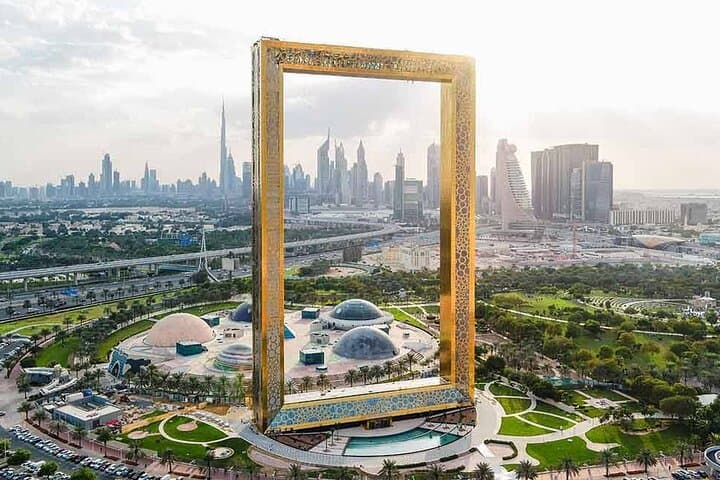
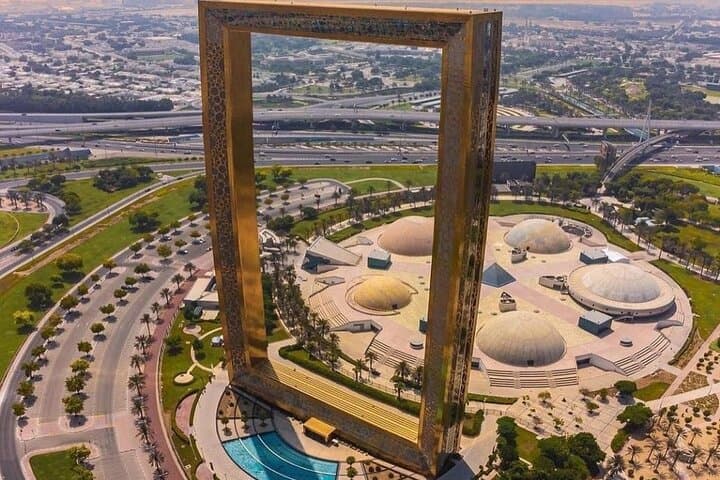
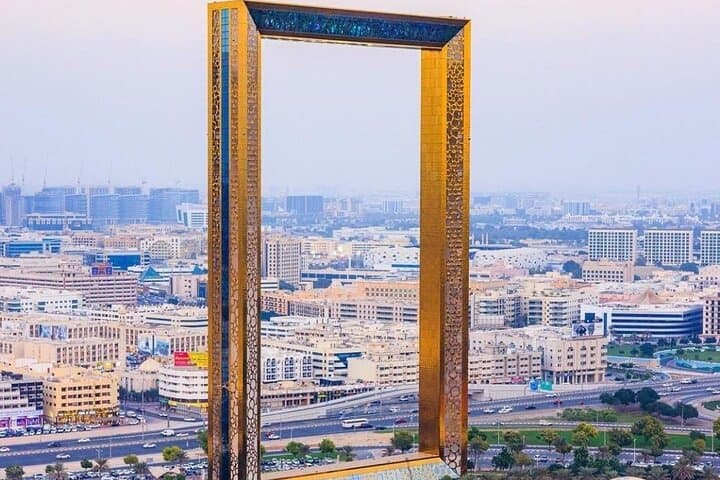
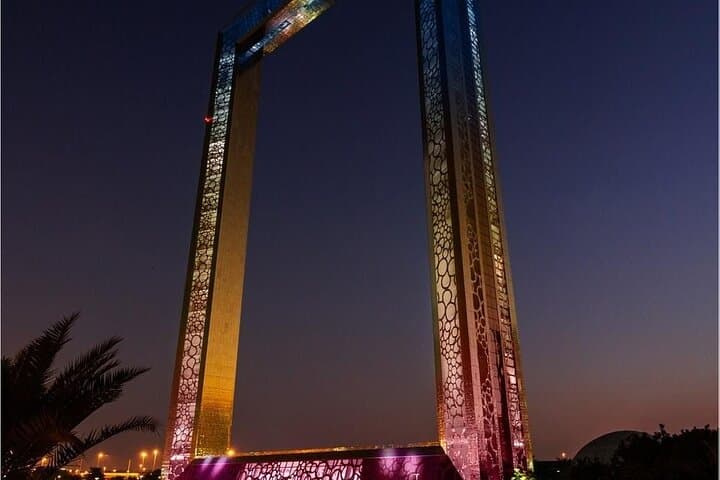
Standing at the threshold of the Dubai Frame, visitors step into a framed panorama where the city’s past and future meet across a 150-meter-high sky desk.
Standing at the threshold of the Dubai Frame, visitors step into a framed panorama where the city’s past and future meet across a 150-meter-high sky desk.
From the elevator’s rush—48 floors in 75 seconds—the skyline unfolds: the low-lying ochres of Old Dubai to the east, and a forest of glass and steel to the west. The Frame’s glass bridge briefly makes the city feel like a movable stage; footsteps on the transparent walkway are met by views that push you to the rail and a skyline that obliges with angle after photographic angle.
The structure itself is recent architecture: designed to mark Dubai’s rapid evolution from fishing creek to international hub. Inside, an immersive Past Gallery outlines the creek-side history, while the Virtual Metropolis projects planning ambitions for decades ahead—useful context before you take in the real thing.
Practicalities matter here. Plan for sunset to catch the city at its most cinematic, but expect queues—peak times are busiest. The Frame is wheelchair accessible and family-friendly, though large bags may be checked at a counter. Modest, respectful dress is required in line with local customs. If you opted for transport, air‑conditioned pickup simplifies timing; otherwise public transit and taxis serve Zabeel Park reliably.
Photographers should bring a polarizer for clearer glass reflections and a lightweight jacket for the rooftop breeze. Visits typically occupy 1.5–3 hours, making the Frame an efficient highlight on any Dubai itinerary—equal parts viewpoint, small museum, and urban observatory.