THE ADVENTURE COLLECTIVE® · Independent discovery and booking for outdoor travel

Ride the dunes in a 4x4, take a 30–60 minute ATV through soft sand, try sandboarding, and finish with a camel trek and BBQ under a desert sky. This six-hour circuit mixes adrenaline with cultural moments and practical safety briefings.
Ride the dunes in a 4x4, take a 30–60 minute ATV through soft sand, try sandboarding, and finish with a camel trek and BBQ under a desert sky. This six-hour circuit mixes adrenaline with cultural moments and practical safety briefings.
The late-afternoon sun slants warm and hard across endless ridges of ochre sand as a convoy of 4x4s climbs a wind-sculpted lip. Dune bashing turns the desert into motion—vehicles rise and fall, the sand tasting the tires—then the scene quiets as you mount a camel and feel the slow, rhythmic sway of a caravan under an open sky.
Verified experiences and guided adventures in the surrounding area.
The late-afternoon sun slants warm and hard across endless ridges of ochre sand as a convoy of 4x4s climbs a wind-sculpted lip. Dune bashing turns the desert into motion—vehicles rise and fall, the sand tasting the tires—then the scene quiets as you mount a camel and feel the slow, rhythmic sway of a caravan under an open sky.
This experience sits on the edge of the Arabian Desert, where mobile dunes formed by persistent northeasterly winds ride over older, cemented sand layers. For centuries Bedouin groups traversed similar landscapes by camel, and modern safaris borrow that route-making tradition while adding mechanical thrills. Evenings at the camp echo a blend of Emirati hospitality and evolving tourist culture: shared meals, music, and storytelling centered on an open fire.
Expect a mix of high-adrenaline and low-key moments—dune runs that demand a steady stomach, then an ATV loop across soft sand that rewards careful technique, capped by sandboarding and a relaxed camel ride. Guides brief riders on safety and operating ATVs; helmets and instruction are standard.
Practical tips: schedule this in late afternoon to avoid midday heat, wear closed-toe shoes and a light scarf for blowing sand, and bring at least 1–2 liters of water. Sunscreen and sunglasses are non-negotiable. If you want photos, ask guides to pause on ridge crests at golden hour.
Book in advance for peak-season evenings, follow guide directions on vehicle spacing and ATV speed, and respect marked conservation zones—the desert recovers slowly from off-track driving.
moderate.
6 hours.
Moderate fitness required—comfortable walking, basic core strength for ATV and camel mounting, and tolerance for bumps.
Yes—operators usually provide a brief training session and helmets; choose the 30-minute option if you’re nervous and follow the guide’s speed limits.
Many operators allow children but age and weight limits apply for ATVs and camels; check the tour’s policy and book child seats if available.
Light, breathable clothes covering the skin to reduce sunburn and sand abrasion, sturdy closed-toe shoes, and layers for cooler evenings.
Tipping is customary in Dubai for good service; small notes for drivers, guides, and camp staff are appreciated but not mandatory.
The Arabian Desert supported nomadic Bedouin trade routes for centuries; modern safaris reinterpret those caravan trails into guided recreational routes.
Stick to designated tracks and follow guide instructions—off-track driving and littering damage fragile dune surfaces that take decades to reform.
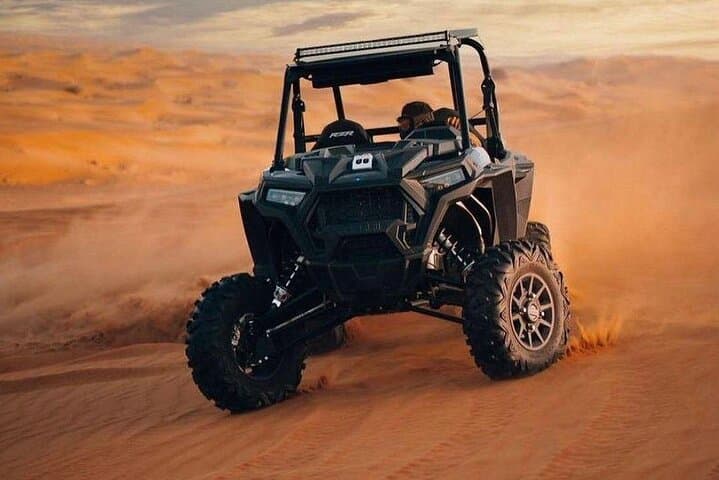
The late-afternoon sun slants warm and hard across endless ridges of ochre sand as a convoy of 4x4s climbs a wind-sculpted lip. Dune bashing turns the desert into motion—vehicles rise and fall, the sand tasting the tires—then the scene quiets as you mount a camel and feel the slow, rhythmic sway of a caravan under an open sky.
The late-afternoon sun slants warm and hard across endless ridges of ochre sand as a convoy of 4x4s climbs a wind-sculpted lip. Dune bashing turns the desert into motion—vehicles rise and fall, the sand tasting the tires—then the scene quiets as you mount a camel and feel the slow, rhythmic sway of a caravan under an open sky.
This experience sits on the edge of the Arabian Desert, where mobile dunes formed by persistent northeasterly winds ride over older, cemented sand layers. For centuries Bedouin groups traversed similar landscapes by camel, and modern safaris borrow that route-making tradition while adding mechanical thrills. Evenings at the camp echo a blend of Emirati hospitality and evolving tourist culture: shared meals, music, and storytelling centered on an open fire.
Expect a mix of high-adrenaline and low-key moments—dune runs that demand a steady stomach, then an ATV loop across soft sand that rewards careful technique, capped by sandboarding and a relaxed camel ride. Guides brief riders on safety and operating ATVs; helmets and instruction are standard.
Practical tips: schedule this in late afternoon to avoid midday heat, wear closed-toe shoes and a light scarf for blowing sand, and bring at least 1–2 liters of water. Sunscreen and sunglasses are non-negotiable. If you want photos, ask guides to pause on ridge crests at golden hour.
Book in advance for peak-season evenings, follow guide directions on vehicle spacing and ATV speed, and respect marked conservation zones—the desert recovers slowly from off-track driving.