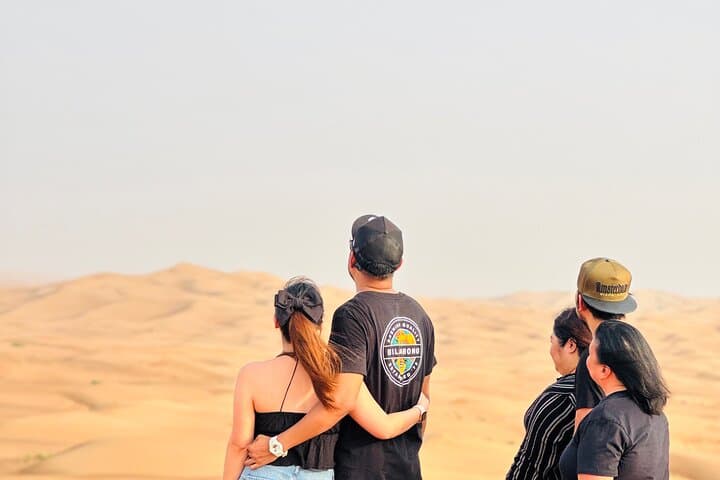
The city shrinks behind you — glass towers become a distant ribbon of light — and the road yields to ridges of iron-red sand.
A Toyota Land Cruiser pulls at the dunes, its tires sinking before launch; then the vehicle climbs and drops, the dunes rolling like a slow, compliant ocean daring you to hang on. By the time the convoy stops on a crest, the sun is a low, molten coin and the shadowed ripples of the desert throw long, dramatic lines across the sand.
This is the rhythm of an evening desert safari in Dubai: adrenaline in the dune bashing, then a deliberate unwind at a Bedouin-style camp. The entertainment — tanoura whirls, belly dance, even a fire show — arrives like chapters in a well-worn story, performed beneath a sky so wide the stars feel within arm’s reach. Falconry and camel rides recall a past when this landscape was the highway and home of nomadic communities that read the weather, routes and fortunes by wind and hoofprints.
Geologically the dunes are young and mobile, shaped by wind-blown sands with a rusty tint from iron minerals. The area sits at the edge of an expansive coastal plain; dunes can shift shape seasonally, creating the photographs that bring people here from across the world.
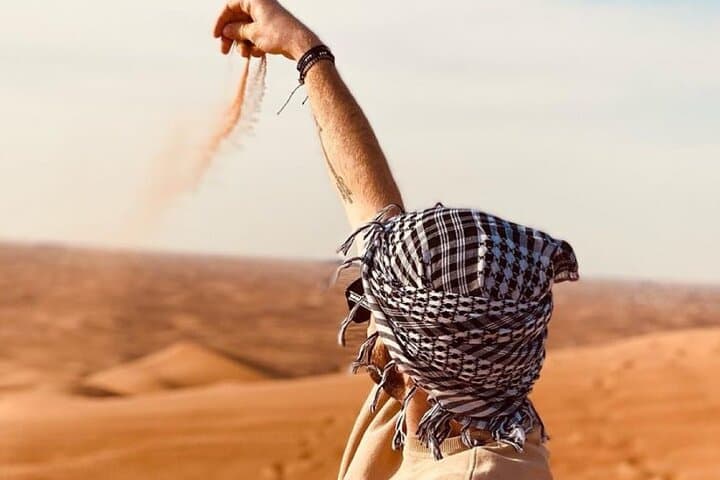
Culturally the evening blends hospitality and spectacle: a shared buffet of Arabic and international dishes, fragrant coffee, henna artists and the chance to wear traditional clothes for a photo. Operators often stage these experiences on private desert land or within conservation areas that have reintroduced species like the Arabian oryx; guides emphasize safe interaction and respect for local customs.
Practical edge: this tour runs about seven hours, with hotel pickup in Dubai, late-afternoon departure and return after sunset. Expect 25–30 minutes of dune bashing in a purpose-fit 4x4; sandboarding, short camel rides and camp activities follow. Bring closed-toe shoes that can handle sand; keep cameras in sealed pockets or zipped bags — a gust of sand travels faster than you think.
Timing matters. Sunset offers the best light for photos and the coolest part of the day. Summer evenings are hot and humid; winter nights can be crisp.
Health and etiquette: dune-bashing is not recommended for those with spinal or heart issues or for pregnant travelers. Follow your guide’s seat-belt and safety briefing and limit alcohol if you’ll be active. Finally, leave nothing but footprints: the desert is fragile and recovering its wildlife and plant life depends on responsible visitation.
Whether you’re chasing the rush of a dune run or the quiet of a desert night, this safari packages both — fast, sensory and, when the convoy slows, quietly expansive.