THE ADVENTURE COLLECTIVE® · Independent discovery and booking for outdoor travel

Begin before the heat with a Michelin-inspired breakfast, then explore the Dubai Desert Conservation Reserve in a Defender with a conservation guide. Spot Arabian oryx, learn restoration science, and visit a quiet desert lake on this morning excursion.
Begin before the heat with a Michelin-inspired breakfast, then explore the Dubai Desert Conservation Reserve in a Defender with a conservation guide. Spot Arabian oryx, learn restoration science, and visit a quiet desert lake on this morning excursion.
The morning opens cool and pale over a sweep of burnished dunes as a Land Rover Defender rolls across tracks that have learned the sand. Light scrapes the crest of each dune, and the private Platinum Camp—low, shaded, quietly modern—offers a breakfast composed to reflect air, water, earth and fire: deliberate flavors, sparse service, and an emptiness outside that fills the senses.
Verified experiences and guided adventures in the surrounding area.
The morning opens cool and pale over a sweep of burnished dunes as a Land Rover Defender rolls across tracks that have learned the sand. Light scrapes the crest of each dune, and the private Platinum Camp—low, shaded, quietly modern—offers a breakfast composed to reflect air, water, earth and fire: deliberate flavors, sparse service, and an emptiness outside that fills the senses.
The Dubai Desert Conservation Reserve protects one of the UAE’s last expanses of native sand desert; its geology is recent and dynamic—wind-sculpted dunes over a hardpan of ancient sediments—and its cultural history ties to Bedouin grazing routes and camel caravanways. Conservation here has shifted the landscape from extractive use to managed restoration, with fences and rewilding programs that support species like the Arabian oryx.
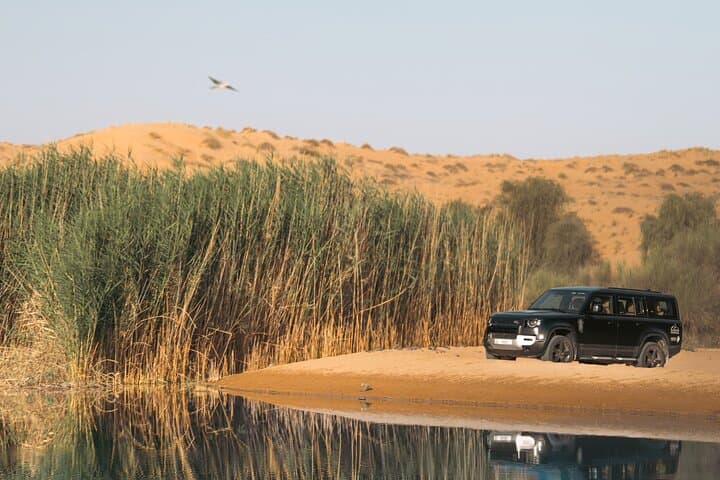
Guests spend the next hours in a purpose-built Defender with a trained conservation guide, cutting across open sand toward a quiet lake where birds gather and sand gazelles appear at a cautious distance. The experience blends wildlife spotting with interpretation: why predators are scarce here, how water management shapes habitat, and the evolving role of tourism in funding protection.
Practicalities: arrive early for the best light and most animal activity; park ruts and soft sand mean vehicles are required for much of the terrain. Dress in breathable layers, bring sun protection and binoculars, and expect brief guided walks rather than long hikes. The program is low-impact but remote—carry water, follow the guide’s instructions, and leave no trace to support the reserve’s recovery.
easy.
5 hours.
Light fitness; mostly vehicle-based with short guided walks requiring basic mobility
Quite likely at dawn—oryx are regularly seen within the reserve but sightings aren’t guaranteed; guides increase chances by knowing recent animal movements.
This specific program typically includes pickup and drop-off when booked through operators—check your booking confirmation for transfer details.
Yes, the itinerary includes short, guided walks to viewpoints and waterholes, but the experience is primarily vehicle-based.
Yes—operators generally accommodate common dietary needs if informed in advance; notify during booking to ensure the Michelin-curated menu is adjusted.
The area was designated the Dubai Desert Conservation Reserve in 2002 to protect native desert habitat, shifting land use from grazing and extraction toward managed conservation and ecotourism.
Tourism in the reserve is managed to fund habitat restoration and anti-poaching patrols; visitors are required to follow strict guidelines to minimize disturbance and support recovery efforts.
The morning opens cool and pale over a sweep of burnished dunes as a Land Rover Defender rolls across tracks that have learned the sand. Light scrapes the crest of each dune, and the private Platinum Camp—low, shaded, quietly modern—offers a breakfast composed to reflect air, water, earth and fire: deliberate flavors, sparse service, and an emptiness outside that fills the senses.
The morning opens cool and pale over a sweep of burnished dunes as a Land Rover Defender rolls across tracks that have learned the sand. Light scrapes the crest of each dune, and the private Platinum Camp—low, shaded, quietly modern—offers a breakfast composed to reflect air, water, earth and fire: deliberate flavors, sparse service, and an emptiness outside that fills the senses.
The Dubai Desert Conservation Reserve protects one of the UAE’s last expanses of native sand desert; its geology is recent and dynamic—wind-sculpted dunes over a hardpan of ancient sediments—and its cultural history ties to Bedouin grazing routes and camel caravanways. Conservation here has shifted the landscape from extractive use to managed restoration, with fences and rewilding programs that support species like the Arabian oryx.
Guests spend the next hours in a purpose-built Defender with a trained conservation guide, cutting across open sand toward a quiet lake where birds gather and sand gazelles appear at a cautious distance. The experience blends wildlife spotting with interpretation: why predators are scarce here, how water management shapes habitat, and the evolving role of tourism in funding protection.
Practicalities: arrive early for the best light and most animal activity; park ruts and soft sand mean vehicles are required for much of the terrain. Dress in breathable layers, bring sun protection and binoculars, and expect brief guided walks rather than long hikes. The program is low-impact but remote—carry water, follow the guide’s instructions, and leave no trace to support the reserve’s recovery.