THE ADVENTURE COLLECTIVE® · Independent discovery and booking for outdoor travel

Explore a 1974 Albanian diving support vessel lying at 25 m off Drymades Beach — a challenging recreational wreck dive with an intact hyperbaric room. Ideal for certified divers seeking history, clear visibility and multi-day coastal camping.
Explore a 1974 Albanian diving support vessel lying at 25 m off Drymades Beach — a challenging recreational wreck dive with an intact hyperbaric room. Ideal for certified divers seeking history, clear visibility and multi-day coastal camping.
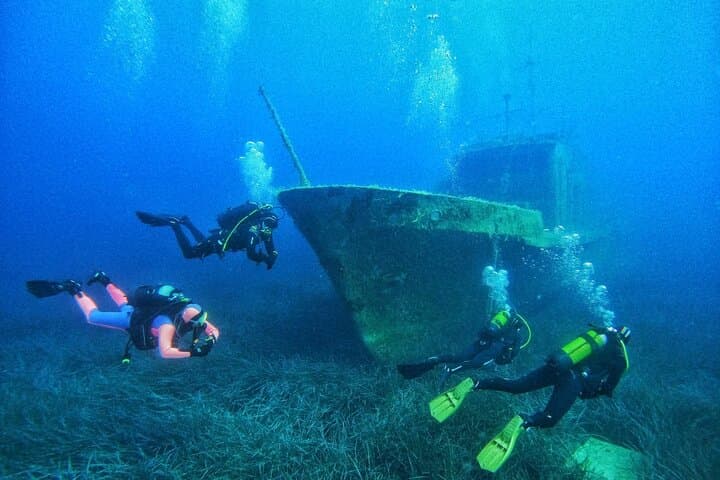
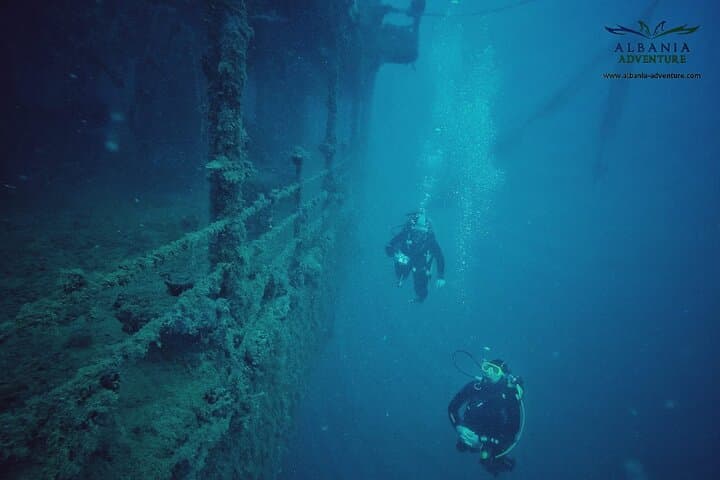
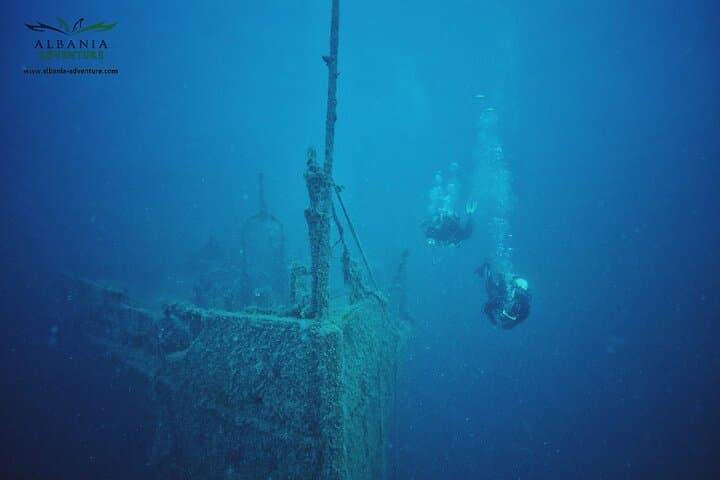
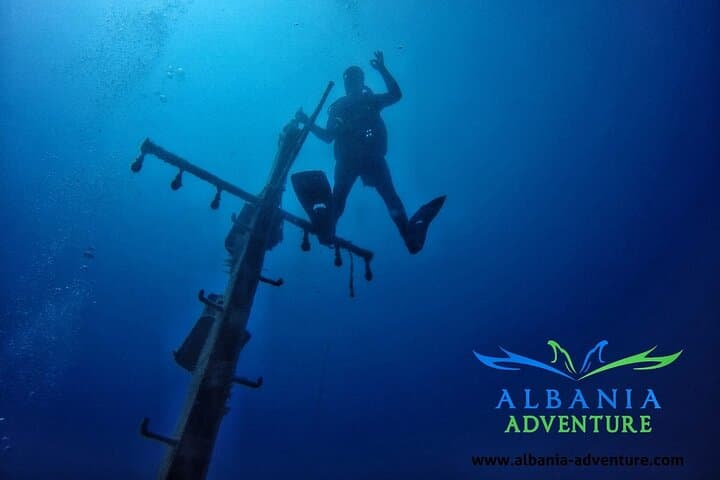
The sea flattens into glass as you walk off Drymades’ pale sand and climb into a small dive boat; the shoreline slips away and the hull of a 1974 Albanian marine diving support vessel rises from the blue like a rusted storybook. At 350 metres offshore the wreck lies on a sandy bottom, its 28.4 m length and 5.4 m beam sitting at a maximum depth of about 25 m — close enough to feel the pull of the current but deep enough for a serious, committed dive.
Verified experiences and guided adventures in the surrounding area.
Operated by Albania Adventure · Himarë, Vlorë County
The sea flattens into glass as you walk off Drymades’ pale sand and climb into a small dive boat; the shoreline slips away and the hull of a 1974 Albanian marine diving support vessel rises from the blue like a rusted storybook. At 350 metres offshore the wreck lies on a sandy bottom, its 28.4 m length and 5.4 m beam sitting at a maximum depth of about 25 m — close enough to feel the pull of the current but deep enough for a serious, committed dive.
Built in China in 1974, this support vessel became an unlikely museum: its intact hyperbaric room is one of the only examples remaining in the Mediterranean, a cold metal chamber that hints at the history of regional diving and maritime medicine. The seabed here alternates sand and patches of Posidonia meadows; the coast around Drymades is formed by folded limestone cliffs that reveal fossils and small sea caves along the shore.
Local culture in the villages along the Albanian Riviera blends Orthodox and Ottoman coastal traditions; fishermen still mend nets on concrete ramps while olive trees cling to terraces above the beach.
Practical guidance: this is a dive for certified, experienced divers — plan a maximum depth near 25 m with a controlled ascent and 3‑5 minute safety stop. Expect excellent visibility and warm, calm water most of the year, but check daily sea conditions. Use a dive computer, redundant air plan and a slate for communicating around wreck features (the hyperbaric room, stern machinery and galley are key points). Accommodation is basic — tent camp a short walk from the beach — so pack layers for evenings and secure camera housings and surface-marker buoys for ascent safety.
challenging.
2 days.
Moderate to strong cardiovascular fitness and comfort with repeated dives; should be able to carry ~15–20 kg of kit and manage surface swims.
Yes — penetration is only recommended for divers with formal wreck or overhead environment training and the right equipment; many parts are best viewed from outside.
The wreck sits to about 25 m; Open Water-certified divers can visit but should be experienced with deeper recreational profiles and controlled ascents.
Drymades is known for warm, calm water and generally excellent visibility year-round, though it can vary with weather and seasonal winds — mornings are typically clearest.
Yes — the tour includes tent-camp accommodation close to the beach and meals (breakfast, lunch and dinner) over the multi-day itinerary.
The vessel was built in China in 1974 and served as Albania’s early marine diving support ship; its onboard hyperbaric chamber is a rare surviving feature in the Mediterranean.
Divers should avoid touching structure or stirring sediment — the area’s seagrass beds (Posidonia) are ecologically important and recover slowly from damage.
Albania Adventure operates guided outdoor trips and adventures with an emphasis on safety, stewardship, and memorable experiences.
The sea flattens into glass as you walk off Drymades’ pale sand and climb into a small dive boat; the shoreline slips away and the hull of a 1974 Albanian marine diving support vessel rises from the blue like a rusted storybook. At 350 metres offshore the wreck lies on a sandy bottom, its 28.4 m length and 5.4 m beam sitting at a maximum depth of about 25 m — close enough to feel the pull of the current but deep enough for a serious, committed dive.
The sea flattens into glass as you walk off Drymades’ pale sand and climb into a small dive boat; the shoreline slips away and the hull of a 1974 Albanian marine diving support vessel rises from the blue like a rusted storybook. At 350 metres offshore the wreck lies on a sandy bottom, its 28.4 m length and 5.4 m beam sitting at a maximum depth of about 25 m — close enough to feel the pull of the current but deep enough for a serious, committed dive.
Built in China in 1974, this support vessel became an unlikely museum: its intact hyperbaric room is one of the only examples remaining in the Mediterranean, a cold metal chamber that hints at the history of regional diving and maritime medicine. The seabed here alternates sand and patches of Posidonia meadows; the coast around Drymades is formed by folded limestone cliffs that reveal fossils and small sea caves along the shore.
Local culture in the villages along the Albanian Riviera blends Orthodox and Ottoman coastal traditions; fishermen still mend nets on concrete ramps while olive trees cling to terraces above the beach.
Practical guidance: this is a dive for certified, experienced divers — plan a maximum depth near 25 m with a controlled ascent and 3‑5 minute safety stop. Expect excellent visibility and warm, calm water most of the year, but check daily sea conditions. Use a dive computer, redundant air plan and a slate for communicating around wreck features (the hyperbaric room, stern machinery and galley are key points). Accommodation is basic — tent camp a short walk from the beach — so pack layers for evenings and secure camera housings and surface-marker buoys for ascent safety.