THE ADVENTURE COLLECTIVE® · Independent discovery and booking for outdoor travel

Explore Alberta’s badlands on a full‑day tour that combines the dramatic rims of Horseshoe Canyon with the Royal Tyrrell Museum’s world‑class dinosaur exhibits. Expect hoodoos, rim walks, and hands‑on paleontology history in a single, purposeful day.
Explore Alberta’s badlands on a full‑day tour that combines the dramatic rims of Horseshoe Canyon with the Royal Tyrrell Museum’s world‑class dinosaur exhibits. Expect hoodoos, rim walks, and hands‑on paleontology history in a single, purposeful day.
You step out of the air‑conditioned van onto sunbaked clay and the canyon exhales a dry, mineral-scented wind. Horseshoe Canyon opens like a scar in the prairie—steep walls, layered strata, and a rim that gives wide views of eroded gullies cutting toward the horizon.
Verified experiences and guided adventures in the surrounding area.
Operated by Tourland · Drumheller, Alberta
You step out of the air‑conditioned van onto sunbaked clay and the canyon exhales a dry, mineral-scented wind. Horseshoe Canyon opens like a scar in the prairie—steep walls, layered strata, and a rim that gives wide views of eroded gullies cutting toward the horizon.
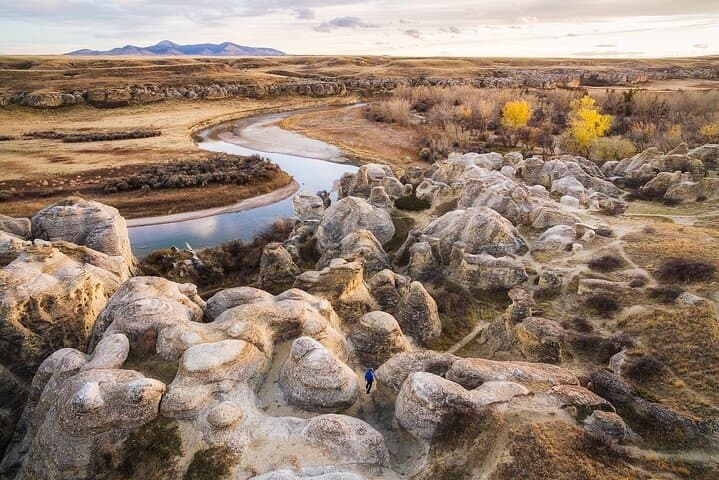
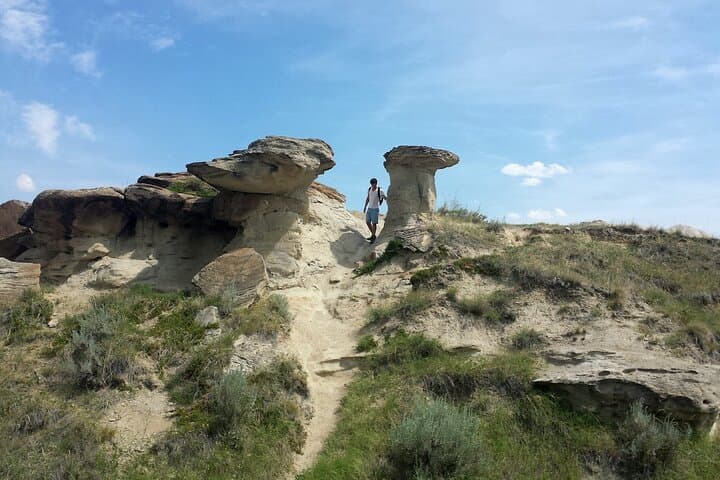
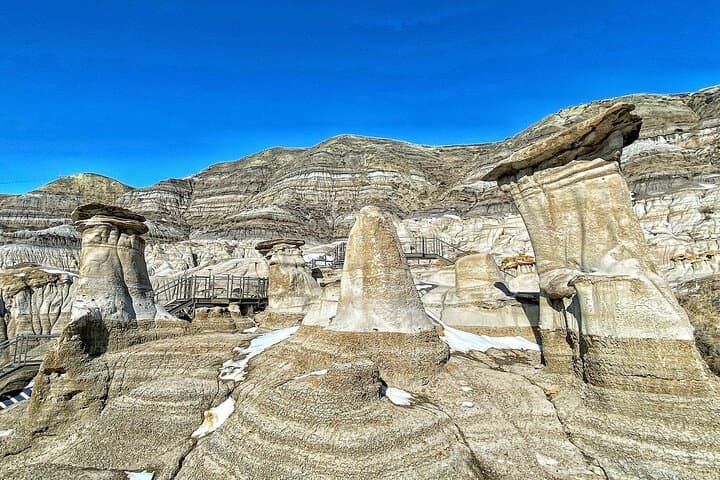
This full-day tour follows landscapes carved during the Late Cretaceous and shaped by glacial meltwaters. The badlands here are rich in sedimentary rock that preserved dinosaurs; Joseph Tyrrell’s early discoveries spawned the Royal Tyrrell Museum, which now houses more than 110,000 fossil specimens and several complete skeletons. Hoodoos—mushroom-shaped pillars of softer clay beneath harder capstones—illustrate differential erosion in plain language, while nearby towns reflect a coal-mining and ranching past that built the region’s culture.
You’ll visit Horseshoe Canyon for short rim walks and photo stops, explore the internationally known Drumheller hoodoos, and have time at the Royal Tyrrell Museum to see expansive paleontology galleries. Expect uneven trails, loose rock at canyon edges, and open prairie exposed to sun and wind.
Practical notes: plan for an eight-hour day, bring 2+ liters of water, sturdy footwear with traction, sun protection, and a layered windbreaker. Photography favors low sun—early morning or late afternoon—while midday heat demands extra hydration. Respect signage: fossil removal is illegal and fragile features are protected. For visitors based in Calgary, the drive is about 90–100 minutes each way; those staying in Drumheller can shorten transit and explore further at leisure.
easy.
8 hours.
Light walking on short trails; suitable for most fitness levels but requires mobility for uneven terrain and steps.
Many organized tours include museum admission—confirm on booking; otherwise tickets are available on site with guided galleries and timed exhibits.
No—collecting fossils from badland sites is illegal and damages scientific context; trained paleontologists work under permits at designated digs.
The drive from Calgary to Drumheller is roughly 90–100 minutes each way by car or tour coach, depending on traffic and stops.
Walks are short but involve uneven ground and exposed edges; families and seniors can participate but should exercise caution and bring support if needed.
The badlands preserve Late Cretaceous sediments and extensive fossil beds; Drumheller’s development was later driven by coal mining in the early 20th century and the area’s paleontological finds led to the creation of the Royal Tyrrell Museum.
Paleontological sites are protected—leave fossils in place and stay on trails; the museum and local groups support research and public education to reduce impact.
Tourland operates guided outdoor trips and adventures with an emphasis on safety, stewardship, and memorable experiences.
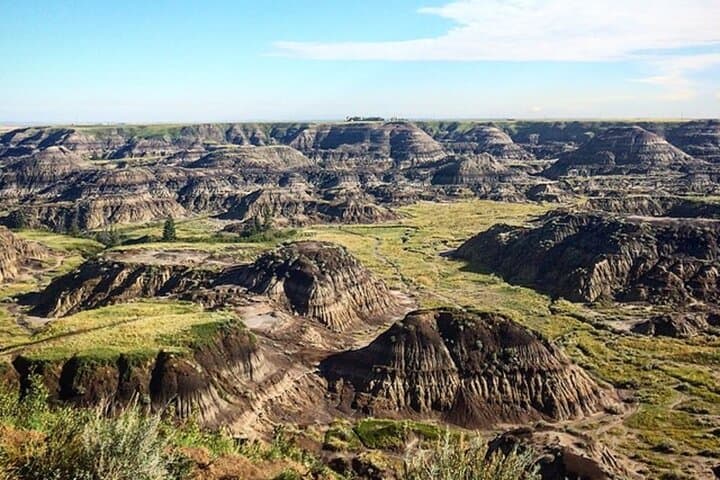
You step out of the air‑conditioned van onto sunbaked clay and the canyon exhales a dry, mineral-scented wind. Horseshoe Canyon opens like a scar in the prairie—steep walls, layered strata, and a rim that gives wide views of eroded gullies cutting toward the horizon.
You step out of the air‑conditioned van onto sunbaked clay and the canyon exhales a dry, mineral-scented wind. Horseshoe Canyon opens like a scar in the prairie—steep walls, layered strata, and a rim that gives wide views of eroded gullies cutting toward the horizon.
This full-day tour follows landscapes carved during the Late Cretaceous and shaped by glacial meltwaters. The badlands here are rich in sedimentary rock that preserved dinosaurs; Joseph Tyrrell’s early discoveries spawned the Royal Tyrrell Museum, which now houses more than 110,000 fossil specimens and several complete skeletons. Hoodoos—mushroom-shaped pillars of softer clay beneath harder capstones—illustrate differential erosion in plain language, while nearby towns reflect a coal-mining and ranching past that built the region’s culture.
You’ll visit Horseshoe Canyon for short rim walks and photo stops, explore the internationally known Drumheller hoodoos, and have time at the Royal Tyrrell Museum to see expansive paleontology galleries. Expect uneven trails, loose rock at canyon edges, and open prairie exposed to sun and wind.
Practical notes: plan for an eight-hour day, bring 2+ liters of water, sturdy footwear with traction, sun protection, and a layered windbreaker. Photography favors low sun—early morning or late afternoon—while midday heat demands extra hydration. Respect signage: fossil removal is illegal and fragile features are protected. For visitors based in Calgary, the drive is about 90–100 minutes each way; those staying in Drumheller can shorten transit and explore further at leisure.