THE ADVENTURE COLLECTIVE® · Independent discovery and booking for outdoor travel

Ride a dromedary across shifting dunes, sleep under a star-filled desert sky in a luxury tent, and test your balance on sandboard runs as the sun drops. This two-day Djerba expedition pairs cultural insight with active desert fun.
Ride a dromedary across shifting dunes, sleep under a star-filled desert sky in a luxury tent, and test your balance on sandboard runs as the sun drops. This two-day Djerba expedition pairs cultural insight with active desert fun.
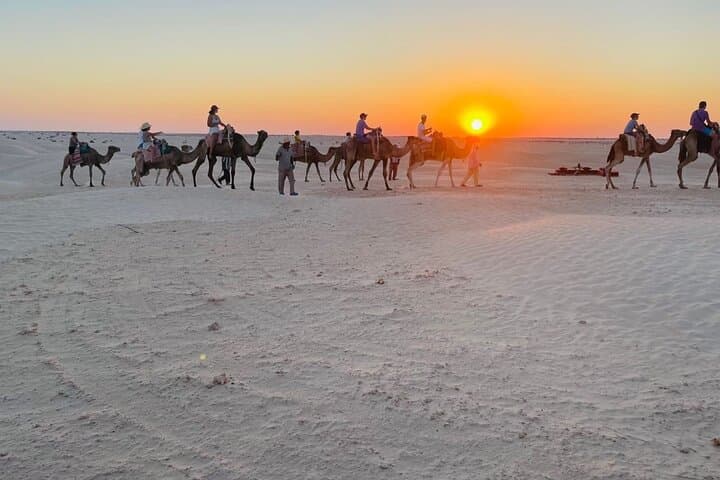
A line of dromedaries moves against a low sun, their slow rhythm matching the dune’s rise and fall as the island’s wind sketches new ridges behind them.
Verified experiences and guided adventures in the surrounding area.
Operated by VirSem Fun & Travel · Houmt Souk, Medenine Governorate
A line of dromedaries moves against a low sun, their slow rhythm matching the dune’s rise and fall as the island’s wind sketches new ridges behind them.
This two-day expedition off Djerba’s eastern shore blends simple, ancient transport with modern camp comforts: daytime camel trekking across silvery sand, a luxury tent for the night, and the rush of sandboarding off steep slopes at sunset. The geology here is young Quaternary sand—wind-scoured ridges that shift overnight—so every slope feels fresh underfoot and underboard.
Djerba has been a crossroads for Phoenicians, Romans and Ottoman traders; the desert routes were once practical links between oases and ports, and guides still pass on local lore about caravan trails and Berber markings. Culture is tactile—tea served in small glasses, nearby villages with whitewashed houses, and guides who translate the landscape into stories.
Practical guidance: expect 48 hours in mild exertion—saddled rides, short walks, and repeated climbs to board dunes. Temperatures swing, so plan breathable layers and a head covering for daytime sun and a warm layer after dusk. Hydrate often: desert air and activity accelerate fluid loss. Sandboarding requires balance but no prior expertise; instructors typically offer basic technique and a gentle run to start.
Timing matters: choose late afternoon for dune runs to avoid peak heat and to catch colors that the low light reveals. Leave heavy packs behind—the camp handles overnight gear—so you move light and focus on the ground beneath your feet and board.
moderate.
2 days (approx. 48 hours).
Suitable for travelers in average fitness—able to mount a camel, climb dunes, and stand for short sandboard runs.
No—guides give basic instruction and gentle practice runs; beginners can learn on gradual slopes.
Camel rides are low-impact; mounting involves brief balance work and walking on sand between saddles, suitable for most people without spine issues.
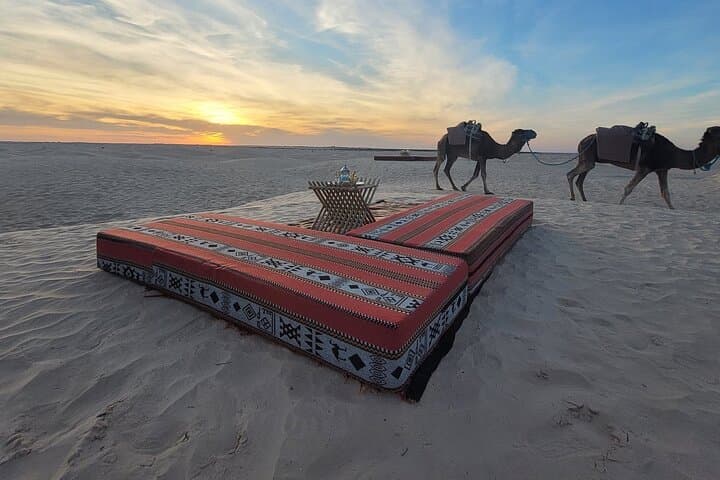
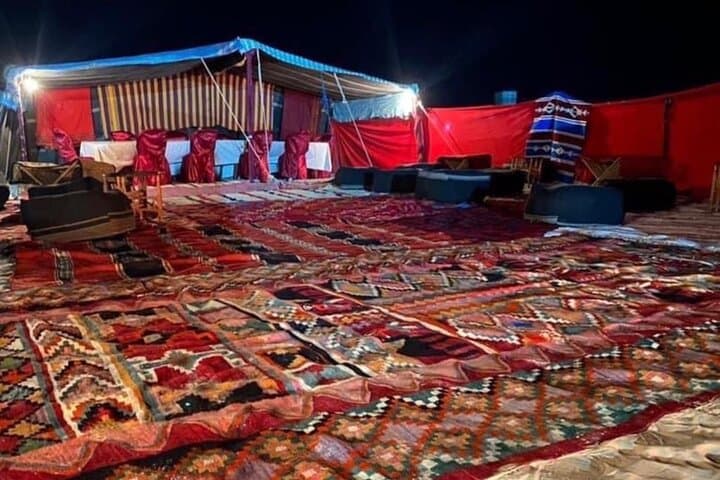
Accommodation is a luxury desert camp with tents, provided dinner and breakfast, and basic bedding—comfortable but rustic.
An air-conditioned vehicle is included for transfers as noted in the tour inclusions; confirm pickup point when booking.
Djerba’s coasts and nearby desert routes have hosted Phoenician and Roman traders; camel travel reflects centuries-old regional transport traditions.
Stay on established routes and avoid disturbing sparse desert vegetation; camps follow local waste protocols to minimize impact on shifting dune ecosystems.
VirSem Fun & Travel operates guided outdoor trips and adventures with an emphasis on safety, stewardship, and memorable experiences.

A line of dromedaries moves against a low sun, their slow rhythm matching the dune’s rise and fall as the island’s wind sketches new ridges behind them.
A line of dromedaries moves against a low sun, their slow rhythm matching the dune’s rise and fall as the island’s wind sketches new ridges behind them.
This two-day expedition off Djerba’s eastern shore blends simple, ancient transport with modern camp comforts: daytime camel trekking across silvery sand, a luxury tent for the night, and the rush of sandboarding off steep slopes at sunset. The geology here is young Quaternary sand—wind-scoured ridges that shift overnight—so every slope feels fresh underfoot and underboard.
Djerba has been a crossroads for Phoenicians, Romans and Ottoman traders; the desert routes were once practical links between oases and ports, and guides still pass on local lore about caravan trails and Berber markings. Culture is tactile—tea served in small glasses, nearby villages with whitewashed houses, and guides who translate the landscape into stories.
Practical guidance: expect 48 hours in mild exertion—saddled rides, short walks, and repeated climbs to board dunes. Temperatures swing, so plan breathable layers and a head covering for daytime sun and a warm layer after dusk. Hydrate often: desert air and activity accelerate fluid loss. Sandboarding requires balance but no prior expertise; instructors typically offer basic technique and a gentle run to start.
Timing matters: choose late afternoon for dune runs to avoid peak heat and to catch colors that the low light reveals. Leave heavy packs behind—the camp handles overnight gear—so you move light and focus on the ground beneath your feet and board.